Vietnamese, Japanese communist parties convene 11th theoretical exchange

Thang described the exchange as a platform to share ideological and theoretical perspectives, and a clear testament to the strong friendship and comprehensive cooperation between Vietnam and Japan, contributing to reinforcing the role and position of the communist parties in each country’s socio-political and security life, with ripple effects across East Asia and globally.

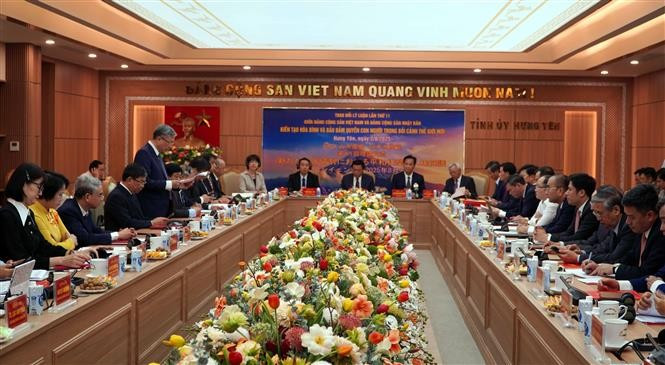
At the theoretical exchange between the CPV and JCP on August 2. (Photo: VNA)

Hung Yen (VNA) - The Communist Party of Vietnam (CPV) and the Japanese Communist Party (JCP) convened their 11th theoretical exchange in the northern province of Hung Yen on August 2.

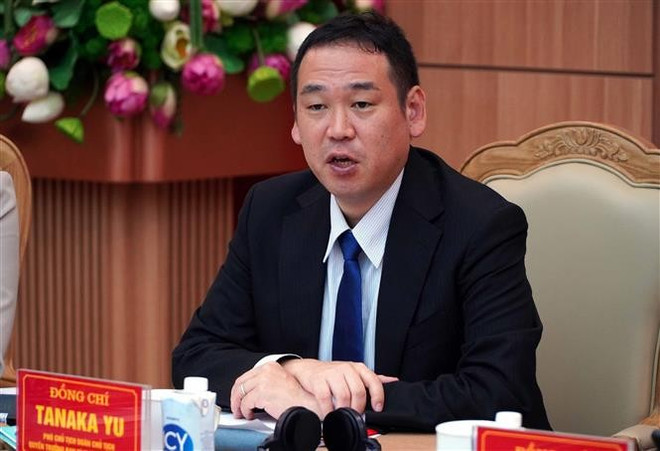
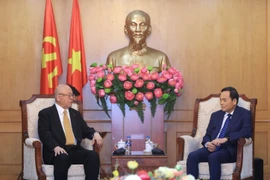
The Vietnamese delegation was led by Politburo member, Chairman of the Central Theoretical Council, and President of the Ho Chi Minh National Academy of Politics Nguyen Xuan Thang, while the Japanese delegation was headed by Vice Chairman of the JCP Presidium Tanaka Yu.

In his opening remarks, Thang described the exchange as a platform to share ideological and theoretical perspectives, and a clear testament to the strong friendship and comprehensive cooperation between Vietnam and Japan, contributing to reinforcing the role and position of the communist parties in each country’s socio-political and security life, with ripple effects across East Asia and globally.

Amid growing global challenges, including regional conflicts, climate change, social inequality, and human rights concerns, the two parties share a strong commitment to building and sustaining global peace based on mutual respect and the protection of human rights, he said, calling peace building and human rights protection core missions and universal norms of the international community and global governance institutions.

The CPV attaches importance to peace building by continuously strengthening national capacity and improving living standards, actively and proactively expanding global integration for the sake of peace, stability, and development in the region and the world, Thang added.

The Vietnamese official further stressed that the CPV has been renewing and refining its understanding, stance, and policies on human rights in recent years.
jeo.jpg
Vice Chairman of the JCP Presidium Tanaka Yu speaks at the event. (Photo: VNA)

Tanaka, for his part, praised the resumption of the exchange after a three-year hiatus. He conveyed a message from Chairman of the JCP Central Committee Shii Kazuo expressing his appreciation for cooperation in strengthening party-to-party relations and acknowledging the relevance of this year’s theme amid global and regional shifts.

Congratulating Vietnam on major national milestones in 2025, including the 50th anniversary of the liberation of the South and national reunification, and the 80th anniversary of the August Revolution and National Day (September 2), he described these as monumental and historically significant victories, saying that Vietnam’s Declaration of Independence in 1945 was a "prelude" to a new era of national liberation that expanded across Asia and Africa, ultimately contributing to the global collapse of colonialism.

Tanaka said despite unpredictable global developments, the tendency toward peace and progress remains dominant.

He praised ASEAN’s “Outlook on the Indo-Pacific” (AOIP), adopted in 2019, and the key principles reaffirmed at the ASEAN Future Forum held in Hanoi in February 2025. These include upholding ASEAN’s centrality, promoting a rules-based international order, and advancing cooperation in regional peace building.

ASEAN cooperation stands out as a bright spot, making a meaningful contribution to global and regional peace, the official said.

He stressed the urgency and significance of the exchange of views between the two parties on peace-building and the protection of human rights, issues that hold profound significance to not only the people of Vietnam and Japan, but also across East Asia and beyond.

Commending Vietnam’s foreign policy approach built on the pillars of Party, State, and people-to-people diplomacy, he affirmed that the JCP’s commitment to deepening solidarity and cooperation with the CPV for global peace and progress.

Both sides agreed to step up their theoretical exchange mechanism with practical, tailored formats and hold the next meeting in Japan in 2026./.
VNA

See more

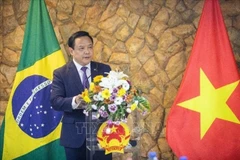
Vietnamese Ambassador to Brazil and Guyana Bui Van Nghi speaks at the event. (Photo courtesy of the Vietnamese Embassy in Brazil)

Vietnam highlights diplomatic gains, growing ties with Brazil, Guyana

On the occasion of the 50th anniversary of Vietnam – Guyana diplomatic ties, Ambassador Bui Van Nghi described the milestone as an opportunity for both sides to deepen political trust, broaden cooperation in potential areas, and make positive contributions to peace, cooperation and sustainable development in the regions and beyond.

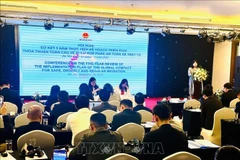
Prime Minister Pham Minh Chinh addresses the third National Forum on Digital Economy and Digital Society in Hanoi on December 20. (Photo: VNA)

Digital economy as driver, digital society as foundation of growth: PM

The forum, themed “Developing an inclusive and comprehensive digital economy and digital society to achieve double-digit GDP growth in the 2026–2030 period,” brought together leaders of ministries and localities, technology enterprises, research institutions, experts and representatives of international organisations in Vietnam.

Deputy Minister of Foreign Affairs Le Thi Thu Hang (R) and Benoit Guidée, Director of the Asia–Oceania Department at the French Ministry for Europe and Foreign Affairs meet in Hanooi on December 19. (Photo: VNA)

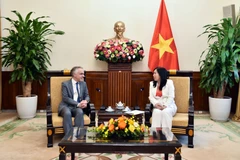
Deputy FM meets French official

Deputy Minister of Foreign Affairs Le Thi Thu Hang stressed that Vietnam attaches great importance to its relationship with France, the first European Union country with which Vietnam has established a Comprehensive Strategic Partnership, noting that the two sides enjoy a solid foundation and significant potential for further cooperation.

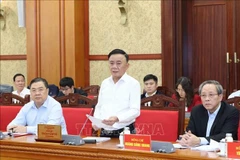
Politburo member and permanent member of the Party Central Committee’s Secretariat Tran Cam Tu speaks at the event in Hanoi on December 19 (Photo: VNA)

Senior Party official reviews preparations for 14th National Party Congress

Politburo member and permanent member of the Party Central Committee’s Secretariat Tran Cam Tu expressed his belief that relevant agencies will continue to make efforts to basically complete organisation- and service-related preparations by December 31, ensuring readiness for the final rehearsals ahead of the opening of the 14th National Party Congress.

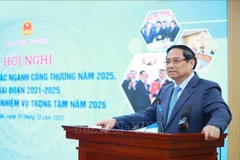
Prime Minister Pham Minh Chinh addressing the conference of the the Ministry of Industry and Trade on December 19 (Photo: VNA)

PM urges industry, trade sector to pioneer in six key areas

Prime Minister Pham Minh Chinh stressed that to make a substantive contribution to national development, the industry and trade sector must also achieve double-digit growth, generate new jobs, strengthen traditional growth drivers such as export and consumption, and accelerate emerging engines of growth, including the green, digital, circular, knowledge-based and sharing economies.

State President Luong Cuong (middle) presents congratulatory flowers to the two promoted officers (Photo: VNA)

Two military officers promoted to rank of Senior Lieutenant General

Lieutenant General Do Xuan Tung, Vice Director of the General Department of Politics of the Vietnam People’s Army (VPA), and Lieutenant General Do Van Banh, Political Commissar of the National Defence Academy were promoted to the rank of Senior Lieutenant General at a ceremony in Hanoi on December 19.

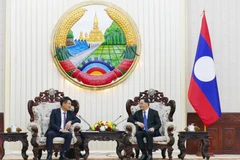
Lao Prime Minister Sonexay Siphandone (R) hosts a reception for Prosecutor General of the Supreme People’s Procuracy of Vietnam Nguyen Huy Tien. (Photo: VNA)

Vietnam–Laos step up cooperation in procuracy sector

They highly valued the effective and substantive cooperation results achieved by the Supreme People’s Procuracies of Vietnam and Laos in recent years, and called on both sides to continue enhancing coordination, stepping up exchanges of delegations at all levels, sharing professional and technical experience, and maintaining and expanding training and capacity-building programmes for officials.