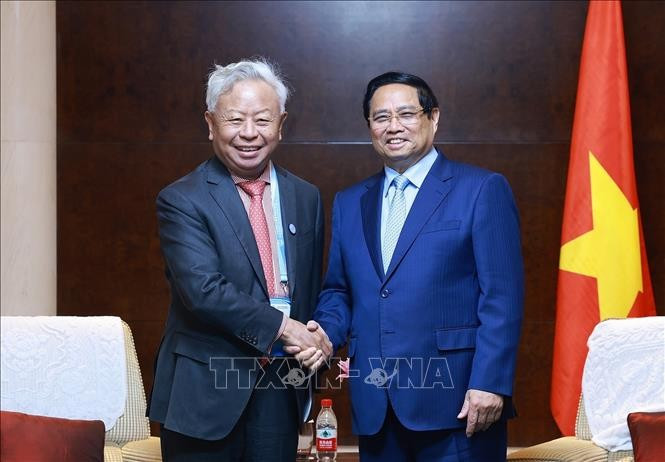
Tianjin (VNA) – Vietnamese Prime Minister Pham Minh Chinh on August 31 held working sessions with leaders of leading Chinese corporations in the fields of energy, infrastructure, electric vehicles and banking in Tianjin, as part of his working trip to attend the Shanghai Cooperation Organisation (SCO) Summit 2025.
At the meetings, both sides reviewed the progress of previously agreed projects and identified tasks to further strengthen cooperation through specific programmes, projects and timelines. Discussions covered support for Vietnam’s energy ecosystem and transition to green transport, financial backing for Vietnam’s connection to the ASEAN power grid, and enhancing transport links with China.
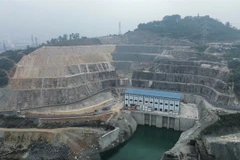
Peng Gangping, Chairman of China Huadian Engineering Co., Ltd. – a subsidiary of China Huadian Corporation Ltd. (CHD) and a Fortune Global 500 enterprise for 13 consecutive years, affirmed the CHD’s long-term investment strategy in Vietnam under the formula “1+1+1+N” (one business entity, one research centre, one manufacturing base, plus multiple cooperation projects). So far, Huadian has invested a cumulative 2.8 billion USD in Vietnam, including Duyen Hai 2 power plant in former Tra Vinh province (now part of Vinh Long province) and wind power projects in Dak Lak.
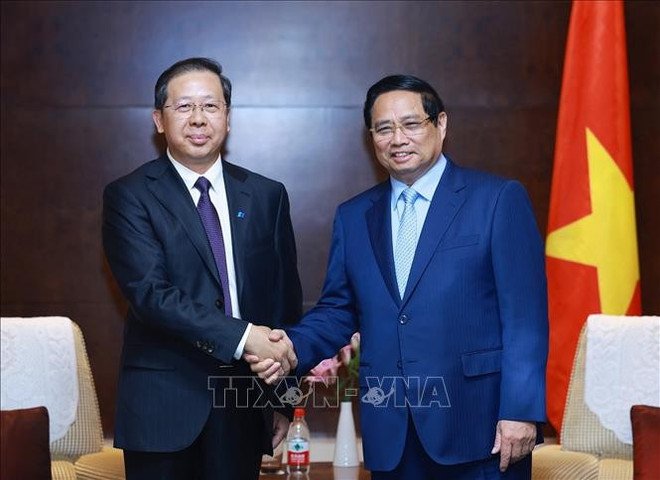
Peng said the group is actively training Vietnamese human resources, sharing expertise, transferring technology, and supporting the Southeast Asian nation’s energy security and green transition. He noted its intention to expand investment in areas such as wind power, green hydrogen, pumped storage, solar energy, and grid and power plant upgrades, while calling for close coordination from Vietnamese ministries and agencies to build a sustainable long-term investment plan.
PM Chinh welcomed Huadian’s long-term commitment and lauded the group’s contributions to social welfare and workforce development in Vietnam. Stressing the spirit of “harmonising interests and sharing risks; words must be matched with deeds, and commitments must yield concrete results,” he urged Huadian to continue supporting Vietnam’s energy ecosystem, introduce innovative projects, transfer technology and governance models, and attract capital from global funds and financial institutions.
The PM affirmed that the Vietnamese Government is committed to creating the best possible conditions for Chinese enterprises, including Huadian, to invest effectively, lawfully and for mutual benefit.
Wang Jiazhong, Senior Vice President of Yadea Group Holdings Ltd. – a leading two-wheeler electric vehicle (EV) manufacturer whose products are distributed in more than 100 countries and territories, said that since 2019, Yadea has operated an EV factory in Vietnam’s Bac Giang province and is now expanding investment to raise its designed capacity to 2 million vehicles per year for the country and Southeast Asia. The group has also established a research and development (R&D) centre in Vietnam.
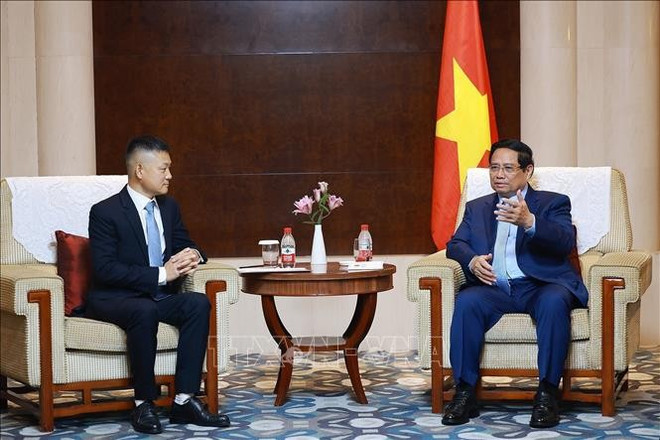
Yadea pledged to increase localisation, train Vietnamese personnel, and bring world-class core technologies to Vietnam to supply customers with high-quality green vehicles. Wang suggested that the Vietnamese side develop a clear national strategy, regulatory framework, and standards for the electric vehicle ecosystem to provide a basis for the company’s investment and cooperation.
PM Chinh welcomed Yadea’s green and sustainable development strategy, noting its alignment with Vietnam’s own priorities. He encouraged the group to support the nation in developing a full EV ecosystem, including two, three and four-wheel vehicles, hardware and software production, and charging station infrastructure.
The Government leader also invited Yadea to study proposals to support the transition to electric transport for Vietnamese citizens, such as offering vehicle exchange schemes or converting petrol-powered to electric vehicles.
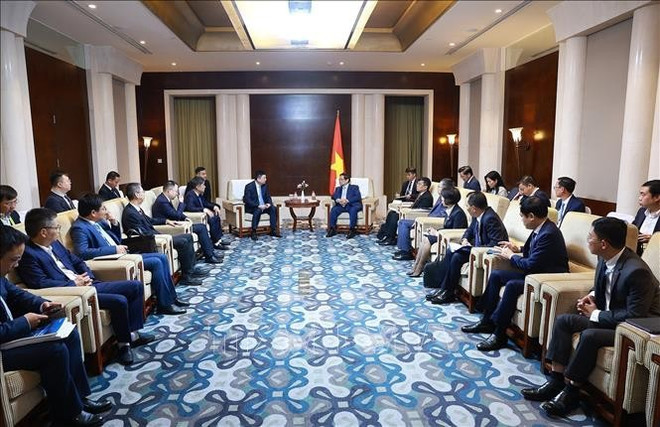
On technology transfer and joint investment in cross-border transport projects, PM Chinh held a working session with leaders of China Design Group Co. Ltd. (Huatie). Chairman of the Board of Directors Yang Weidong highlighted the group’s global reach, saying that it ranks third in China and 15th globally in transport design. With expertise spanning road, rail, waterway, and aviation infrastructure, the group is already collaborating with Vietnam’s Deo Ca Group on infrastructure projects in Vietnam, leveraging its technical consulting prowess.
PM Chinh welcomed the group's cooperation with Vietnamese firms and its introduction of advanced technologies into the country’s infrastructure projects. He urged the company to adopt a long-term investment strategy and assist local companies in designing transport, telecommunications, energy, and digital infrastructure, aiming to foster a robust domestic consulting and design ecosystem. He also suggested joint ventures as a model for technology transfers to ensure quality and safe construction under Vietnam’s challenging terrain and weather, while meeting tight project timelines.
The PM singled out Cao Bang – Lang Son expressway and other roads linking Vietnam and China as priority projects for the group's involvement. He also encouraged the firm to explore development along the Red River corridor, particularly the sections through Hanoi and the Red River Delta, and engage in Vietnam’s planned International Financial Centre.
Stressing the importance of efficiency, expertise, and decisiveness, he pledged all possible support for Chinese enterprises, including the China Design Group Co. Ltd., to operate successfully within Vietnam’s legal framework. Any obstacles during the process should be reported to relevant authorities, or directly to himself, for consideration and settlement, PM Chinh said.
The same day, PM Chinh met with the Asian Infrastructure Investment Bank (AIIB)'s leaders to discuss expanding cooperation on infrastructure connectivity, logistics, and socio-economic development projects, with AIIB financing open to both state-owned and private enterprises.
The PM briefed AIIB President Jin Liqun and his team on Vietnam’s development priorities, stressing the urgency of accelerating Lao Cai – Hanoi – Hai Phong railway project linking Vietnam with China, and expanding Vietnam’s electricity grid connections with ASEAN countries. He called on the AIIB to focus resources on supporting these two strategic projects.
To boost the private sector's involvement, the Vietnamese leader urged the bank to continue financing key infrastructure projects and provide preferential loans with low interest rates and grace periods for Vietnamese companies. He also invited Jin to visit Vietnam in September 2025 for direct discussions with local partners
Congratulating Vietnam on its recent socio-economic achievements, Jin expressed confidence that with sound macroeconomic policies and effective mobilisation of external resources, Vietnam could achieve its double-digit growth target.
Sharing his profound affection for Vietnam, he agreed with the PM’s proposals and pledged that the AIIB would continue to help Vietnam with major infrastructure projects, particularly in renewable energy and climate change response, through continued funding efforts./.