Vietnam–Indonesia ties: Seven decades of partnership and strategic vision for prosperous Southeast Asia

In his article, Professor Sakhuja offered an in-depth assessment of more than 70 years of Vietnam–Indonesia relations, noting that over seven decades of formation and development, the relationship has transcended the confines of conventional bilateral cooperation to emerge as a key pillar of the regional architecture.

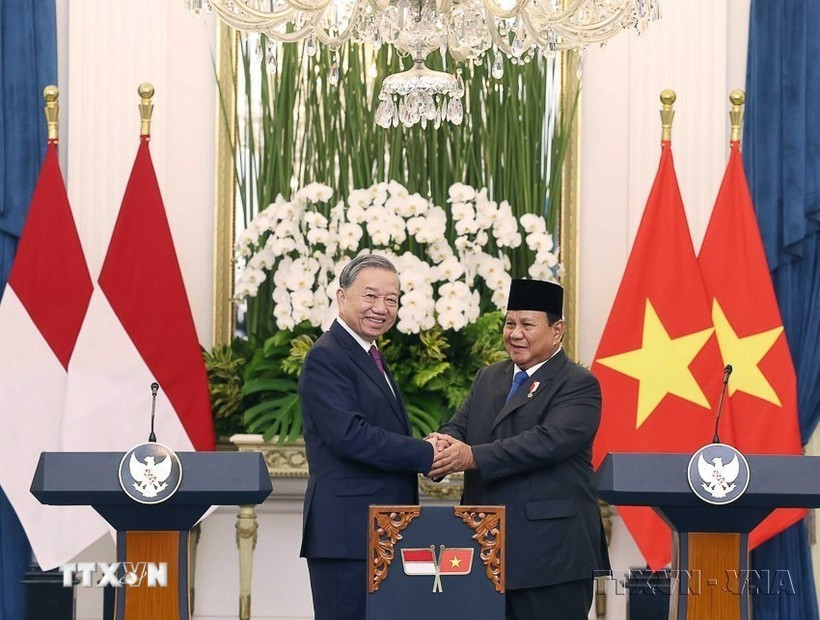
Party General Secretary To Lam (L) and Indonesian President and Chairman of the Great Indonesia Movement Party (Gerindra) Prabowo Subianto announce the elevation of Vietnam – Indonesia relations to a Comprehensive Strategic Partnership in Jakarta, on March 10, 2025. (Photo: VNA)

Hanoi (VNA) – Professor Vijay Sakhuja, a renowned scholar of geopolitics and international relations and former Director of the National Maritime Foundation of India, has characterised Vietnam–Indonesia ties as among the most exemplary and strategically profound bilateral relationships in Southeast Asia.

In his article entitled “Vietnam–Indonesia: Cherishing Seven Decades of Bilateral Relations,” published in the Policy Brief Special Edition, Professor Sakhuja offered an in-depth assessment of more than 70 years of Vietnam–Indonesia relations, noting that over seven decades of formation and development, the relationship has transcended the confines of conventional bilateral cooperation to emerge as a key pillar of the regional architecture.

Established in the 1950s, at a time when both nations were emerging from prolonged struggles for national independence, the relationship has been forged by deep political trust, converging strategic interests, and a shared vision of peace, stability, and sustainable development in the region.

The two countries share rare commonalities in modern history, as both secured independence through arduous and protracted struggles, nurturing a strong sense of national self-reliance and an enduring determination to safeguard sovereignty. According to the scholar, these shared historical experiences and aspirations have fostered a profound mutual understanding, laying a solid foundation for the official establishment of diplomatic relations on December 30, 1955.

From a traditional friendship, the two countries have progressively elevated their relationship, reaching the Strategic Partnership level in 2013 and, notably, the Comprehensive Strategic Partnership in March 2025 during Party General Secretary To Lam’s visit to Indonesia. Professor Sakhuja described this upgrade as a “historic turning point,” reflecting the highest degree of political trust between the two nations.
vietnam-indonesia-2.jpg
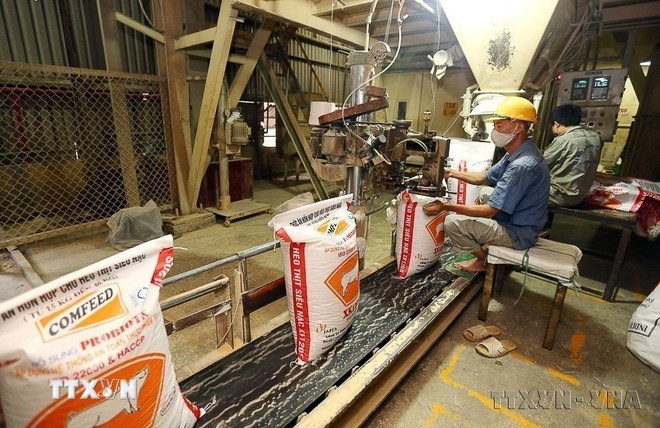
A production and packaging line for animal feed at the Phuc Khanh Industrial Park branch of Indonesian-invested Rapfa Confeed Vietnam Co., Ltd. (Photo: VNA)

Geopolitically, both Vietnam and Indonesia hold key positions in the Indo-Pacific. Vietnam lies along vital maritime routes and supply chains linking Northeast Asia with mainland Southeast Asia, while Indonesia – the world’s largest archipelagic state – commands strategic sea lanes such as the Malacca, Sunda, and Lombok Straits. This strategic complementarity positions the two countries as natural partners in advancing regional economic connectivity.

Economics, the author observed, has emerged as the most dynamic pillar of bilateral relations. Indonesia is currently Vietnam’s second-largest trading partner within ASEAN, while the latter ranks as the former’s fourth-largest. Both sides aim to raise bilateral trade to 18 billion USD by 2028. Strategic investment cooperation also features prominently, exemplified by VinFast’s planned 1.2 billion USD investment in an electric vehicle manufacturing plant in Indonesia. Beyond its economic value, the project symbolises Vietnam’s growing capabilities in green technology and innovation, aligning closely with Indonesia’s energy transition and sustainable development goals.

As a maritime security expert, Professor Sakhuja underscores the importance of defence and security cooperation, assessing that Vietnam and Indonesia share a common vision of a free, open, and rules-based Indo-Pacific, with the 1982 United Nations Convention on the Law of the Sea (UNCLOS) as a fundamental legal cornerstone. The successful conclusion of negotiations on the delimitation of the exclusive economic zone (EEZ) stands as a compelling testament to both countries’ commitment to resolving sensitive issues peacefully, contributing to stability and order in the East Sea.

At a broader level, they are core members of ASEAN, jointly bearing responsibility for maintaining intra-bloc unity and ASEAN centrality amid intensifying major power competition. According to Professor Sakhuja, close coordination between Hanoi and Jakarta is crucial in shaping a coherent Southeast Asian voice at regional and global forums.

After seven decades of partnership, the author concluded, Vietnam and Indonesia are entering a new phase of bilateral relations. Beyond serving their national interests, this relationship reflects the increasingly prominent role of both countries as responsible middle powers, actively contributing to the shaping of the region’s security and economic architecture./.
VNA

See more

State President Luong Cuong offers incense in commemoration of President Ho Chi Minh at House 67 in Hanoi on February 13, 2026. (Photo: VNA)

State leader pays tribute to President Ho Chi Minh at House 67

President Cuong expressed his profound gratitude for the immense contributions of President Ho Chi Minh - the beloved leader of the Vietnamese nation, who dedicated and sacrificed his entire life for the independence and freedom of the country and the happiness of the people.

The festive atmosphere welcoming the Year of the Horse 2026 fills communities across the country. (Photo: VNA)

The Year of the Horse is in the air across Vietnam

In a January interview with the Vietnam News Agency shortly after the congress, Party General Secretary To Lam emphasised the determination of the entire political system to turn its resolution into tangible outcomes, bringing clear benefits to the people as quickly as possible.

Minister of Foreign Affairs Le Hoai Trung meets with Canada's Minister of International Trade Maninder Sidhu on February 12, 2026. (Photo: Ministry of Foreign Affairs)

Vietnam–Canada ties gain fresh momentum after ministerial meeting

The two ministers agreed on measures to advance the Comprehensive Partnership, pledging to facilitate cooperation in trade and investment, defence and security, official development assistance, tourism and people-to-people exchanges, while expanding collaboration in emerging areas such as supply chains, AI, semiconductors, quantum technology, clean energy transition, renewable energy, green agriculture, environmental protection and climate change response.

From right: National Assembly Chairman Tran Thanh Man (2nd) visits and extends New Year greetings to former State President Nguyen Minh Triet (3rd) on February 12. (Photo: VNA)

NA Chairman pays pre-Tet visits to former Party, state leaders

On behalf of the NA Standing Committee, the top legislator expressed deep appreciation for the significant contributions made by the former leaders to the revolutionary cause of the Party and the State, as well as to the national construction and development during the Doi Moi (Renewal) period.

A delegation led by PM Pham Minh Chinh pays respect to former Deputy Chairman of the Council of Ministers Doan Duy Thanh (Photo: VNA)

Memorial service for former Government leader in Hanoi

The Central Committee of the Communist Party of Vietnam, the National Assembly, the State President, the Government, the Central Committee of the Vietnam Fatherland Front (VFF) held a state-protocol memorial service for former Deputy Chairman of the Council of Ministers (now the Government) Doan Duy Thanh in Hanoi on February 12.

Party General Secretary To Lam speaks at the working session (Photo: VNA)

Dak Lak must link Central Highlands with south central coast: Party chief

During a working session with the provincial Party Organisation, authorities and residents on February 11, which linked virtually with 102 local wards and communes, Party General Secretary To Lam hailed their achievements last year, urging immediate translation of the 14th National Party Congress's orientations and directives into concrete actions and measurable outcomes from the outset of the new term.