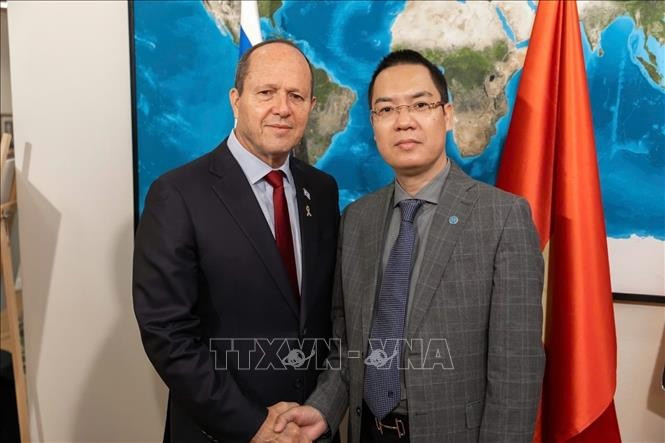
Tel Aviv (VNA) – Two-way trade between Vietnam and Israel could soon exceed 4 billion USD if businesses from both sides fully leverage tariff preferences under the Vietnam–Israel Free Trade Agreement (VIFTA), according to Le Thai Hoa, Vietnamese Trade Counsellor in Israel.
Speaking with Vietnam News Agency correspondents in Tel Aviv on the first anniversary of VIFTA, Hoa suggested the two countries' enterprises enhance market surveys, participate in trade fairs, strengthen direct links and meet Israel’s updated technical standards aligned with EU and US regulations.
He said VIFTA has delivered positive outcomes in its first year, especially in improving market access for both sides. Israel removed more than 66% of tariff lines immediately after the agreement entered into force on November 17, 2024 and is set to liberalise nearly 93% by the end of the roadmap. Vietnam will eliminate close to 86% of its tariff lines over the same period. These reductions have allowed key Vietnamese exports – including seafood, footwear, garments, coffee, cashew nuts, processed agricultural products and construction materials – to strengthen their presence in the Israeli market.
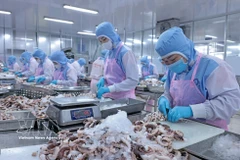
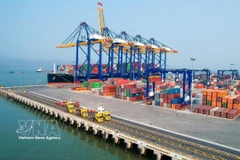
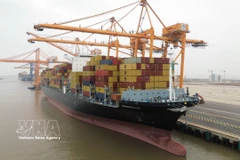
Vietnam’s exports to Israel reached over 700 million USD in the first ten months of 2025 and are projected to total around 880 million USD for the full year, up more than 10% from 2024 assuming market stability. Aquatic products remain a strength, accounting for 12–13% of Israel’s total seafood imports, while Israel remains Vietnam’s largest export destination in the Middle East–Africa region. Other Vietnamese staples such as cashews, instant coffee, fragrant rice and canned foods have also posted steady growth thanks to alignment with Israeli consumer demand and technical requirements.
Hoa noted that Israel’s market offers numerous advantages for Vietnamese exporters, including strong purchasing power, rapid inventory cycles and high demand for fully processed and packaged goods — conditions well matched to Vietnam’s production capabilities. However, exporters still face challenges, including risks stemming from regional conflict, certification requirements such as Kosher or Halal for certain food products, stringent EU- and US-style technical standards and business practices that prioritise direct dealings with producers. Technical discrepancies, such as mismatched scientific names for products like red tilapia, have also caused obstacles in import approval procedures.
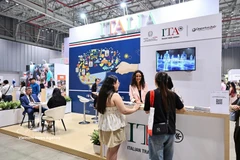
Over the past year, the Vietnam Trade Office in Israel has played an active bridging role, advocating with Israeli authorities to finalise approval processes and confirm the VIFTA implementation timeline, the official said. It has also worked to address rules-of-origin issues to ensure exporters benefit from tariff cuts from their earliest shipments. The office has compiled handbooks on import standards, Technical Barriers to Trade, and Sanitary and Phytosanitary Measures, while regularly updating businesses on regulatory changes. It has also coordinated business delegations from Israel to Vietnam seeking new suppliers amid regional supply-chain disruptions.
Looking ahead, Hoa emphasised that VIFTA carries strategic importance as Vietnam’s first FTA with a Middle Eastern nation and Israel’s first with an ASEAN partner. The agreement is expected to significantly expand bilateral economic cooperation between 2025 and 2030, particularly in processed foods, agricultural products, consumer goods, building materials and high-tech sectors such as smart farming, water management, renewable energy, healthcare and innovation.
He added that the trade office will continue ramping up trade promotion, providing market information, organising seminars, supporting business matching and coordinating with partners to address technical challenges to help Vietnamese firms fully harness VIFTA’s opportunities./.