Vietnam’s drive to extinguish smoking by expanding smoke-free areas

In Vietnam, with about 15 million smokers, cigarette waste amounts to thousands of tonnes annually, worsening the plastic pollution crisis. Additionally, around 4.5 million hectares of land are destroyed yearly for tobacco cultivation and wood for drying.

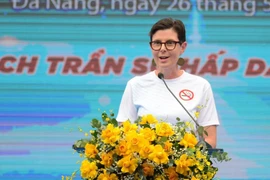
Hanoi (VNA) - Despite significant efforts and some initial results in tobacco harm prevention, Vietnam remains among the 15 countries with the highest rates of adult male smokers in the world.

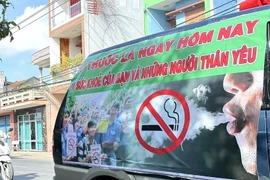
Smoking is not only one of the leading causes of death but also a major source of environmental pollution.

Research shows that cigarette smoke contains more than 7,000 chemicals, including over 69 carcinogens. These substances can inflame and mutate cells, leading to chronic diseases and cancer.

In Vietnam, 25 diseases are linked to tobacco use, such as stroke, coronary artery disease, chronic obstructive pulmonary disease (COPD), and lung cancer, which are among the country’s leading causes of death.

A study by the Vietnam National Cancer Hospital revealed that 96.8% of lung cancer patients had a history of smoking.

Tobacco smoke also harms non-smokers who are regularly exposed to it (passive smoking). These include spouses, children, family members, and colleagues of smokers. Passive smoking can cause severe diseases such as lung cancer, respiratory infections, and cardiovascular disorders. The risk of coronary artery disease among passive smokers is 25-30% higher than among those not exposed to smoke.

Pham Hong Quan, Strategic Adviser at the Centre for Environmental Protection and Response to Climate Change, said the tobacco industry significantly impacts the planet’s environment. Each year, the global tobacco industry produces about 6 trillion cigarettes, generating approximately 840,000 tonnes of cigarette filter waste, the most common plastic litter worldwide.

These filters act as “toxic bombs”, releasing nicotine, cadmium, and arsenic into soil and water, harming ecosystems.

In Vietnam, with about 15 million smokers, cigarette waste amounts to thousands of tonnes annually, worsening the plastic pollution crisis. Additionally, around 4.5 million hectares of land are destroyed yearly for tobacco cultivation and wood for drying. The process also emits roughly 854 million tonnes of CO₂, equivalent to the annual emissions of a country like Finland.

Dr Nguyen Trong Khoa, Deputy Director of the Department of Medical Services Administration under the Ministry of Health, stressed the need for ministries and relevant agencies to review and improve mechanisms, policies, and laws on tobacco harm prevention.

He called for accelerating plans to raise tobacco taxes to meet the World Health Organisation’s recommendation that taxes should account for over 70% of retail prices by 2030.

He also proposed expanding smoke-free areas, strengthening inspections, and strictly enforcing penalties for violations. Public education and communication activities should be diversified and tailored to local contexts and target groups.

Quan further recommended that authorities develop strict regulations and sanctions against the sale, advertising, and use of tobacco products, particularly illegal e-cigarettes and heated tobacco. All forms of advertising, marketing, and sponsorship, especially on social media, should be banned.

He also suggested applying Extended Producer Responsibility (EPR), requiring tobacco companies to bear financial responsibility for collecting and processing cigarette filters they produce, in line with the 2020 Law on Environmental Protection.

Moreover, policies should support farmers in switching from tobacco to more sustainable crops, thereby reducing deforestation and emissions. Research on tobacco’s environmental impact and alternatives such as biodegradable filters should be encouraged.

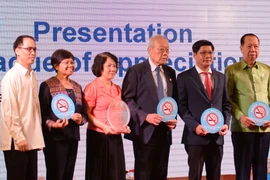
Finally, successful “green zones,” smoke-free areas in schools, offices, and residential communities, should be replicated nationwide to build a healthier, cleaner environment./.
VNA

See more

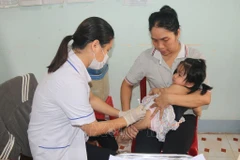
A health worker administer IPV polio vaccine to a child in Dong Thap province. (Photo: VNA)

Vietnam proactively takes polio prevention measures amid outbreak in Laos

The meeting took place following an assessment by the World Health Organisation (WHO) warning that Vietnam is facing a very high risk of polio import and re-emergence. The risk arises after neighbouring Laos officially declared a polio outbreak on October 7, following the detection of circulating vaccine-derived poliovirus type 1 (cVDPV1).

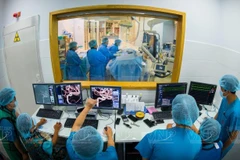
A view of the International Conference on Molecular Diagnostics in Microbiology and Diseases, organised by Rencontres du Vietnam and the International Centre for Interdisciplinary Science and Education (ICISE) in the central province of Gia Lai on December 11. (Photo: VNA)

Nearly 100 international scientists attend molecular diagnostics conference in Vietnam

The conference features almost 80 presentations across plenary sessions, parallel sessions and poster sessions, focusing on leading research trends such as point-of-care diagnostics; predictive biomarkers used to anticipate individual responses to therapy; and the development of new tools and platforms for rapid molecular-level detection and diagnosis.

Digital transformation in healthcare is being strongly promoted. (Photo: Organising Committee of the 2024 “Technology with Heart” Award, co-hosted by Vietnam News Agency and Viettel)

AI and precision medicine: Emerging prospects for Vietnam-Canada cooperation

Canada has strong experience in compiling and analysing genomic data, while Vietnam has a large population with diverse genetic structures. This complementarity can help Vietnam narrow its technological gap and enhance its capacity to treat rare diseases — an area many countries are prioritising for development.

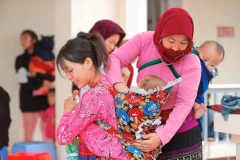
Maternal and child healthcare in Tuyen Quang province. (Photo: VNA)

Vietnam on path to become a healthy nation

Resolution 72 not only focuses on health care but is also closely interlinked with other sectors, helping to build a solid foundation for sustainable national development and create momentum for Vietnam to “take off” and further integrate into the world.

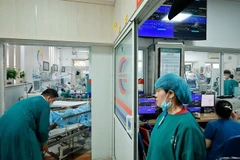
The emergency ward at Bach Mai Hospital, Hanoi. (Photo: VNA)

Health sector targets free hospital fee for all

The total value of medical expenses not covered by the health insurance fund is estimated at around 24.8 trillion VND (942 million USD) per year. Health insurance contributions remain low, at 4.5% of the salary or reference base used for calculation.

Sen. Lieut. Gen. Vongsone Inpanphim, Lao Deputy Minister of National Defence and Director of the General Department of Politics presents the Friendship Order of Laos to Vietnam’s Central Military Hospital 108. (Photo: VNA)

Vietnam, Laos expand cooperation in military medicine

Over the past two decades, many Vietnamese experts have undertaken long-term missions at the Central Hospital 103 to provide training and technical assistance, contributing to the successful treatment of complex cases. The Central Military Hospital 108 has also trained 206 Lao doctors, six nurses and two engineers — a clear demonstration of substantive, long-standing cooperation.

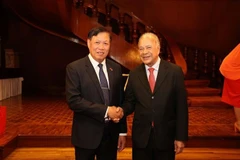
Deputy Minister Do Xuan Tuyen (left) and Alberto Anaya Gutiérrez, General Secretary of the Mexican Workers' Party (PT). (Photo: VNA)

Vietnam, Mexico boost medical cooperation

As both nations look to keep their long-standing partnership in good health, the health ministries of Vietnam and Mexico have been accelerating cooperation, especially in traditional medicines.

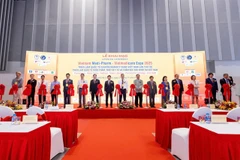
The opening of Vietnam Medi-Pharm 2025 and Vietmedicare Expo in Ho Chi Minh City on November 27, 2025. (Photo: VNA)

Major medical, pharmaceutical exhibitions kick off in HCM City

The 33rd Vietnam International Medical and Pharmaceutical Exhibition (Vietnam Medi-Pharm 2025) and the International Exhibition on Pharmaceuticals, Medical Devices and Healthcare (Vietmedicare Expo 2025) kicked off at the Saigon Exhibition and Convention Centre on November 27.

Doctors Do Thi Ngoc Linh (left) and Le Diep Linh at the RCS membership certificate award ceremony in London. (Photo: VNA)

Vietnamese surgeons honoured with prestigious Royal College Fellowship

The fact that the Vietnamese doctors have been awarded with FRCS certificate proves Vietnam’s surgical expertise has met international standards, contributing to improving the quality of treatment at home, expanding academic cooperation with world leading medical institutions and inspiring younger doctor to pursue higher standards.

Doctors from Military Hospital 175 perform surgery on a patient on Truong Sa Island. (Photo: Military Hospital 175)

First successful open-chest surgery performed at Truong Sa infirmary

The successful emergency operation on a patient with serious chest injuries in Truong Sa showed that Vietnam’s military medical forces are now capable of handling complex emergencies at sea, boosting the confidence of soldiers and fishermen living and working on remote islands.