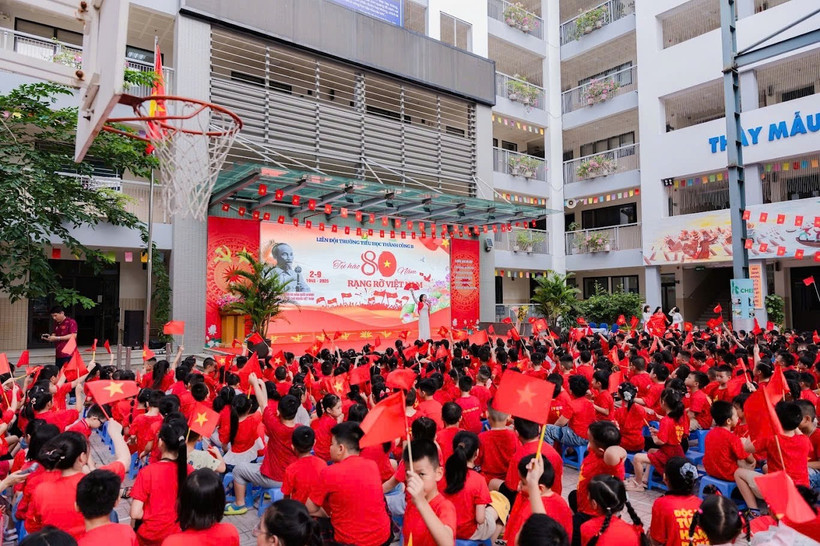
Hanoi (VNA) – Since the founding of the Democratic Republic of Vietnam 80 years ago, the Party and State have consistently regarded education and training as a top national priority, introducing transformative policies and reforms that have driven innovation, progress, and significant achievements across generations.
From fight against illiteracy to three landmark reforms
After the success of the August Revolution and the establishment of the Democratic Republic of Vietnam in 1945, with more than 90% of the population illiterate and the economy in ruins, the Government launched a nationwide campaign to eradicate illiteracy, making Vietnamese language learning free and compulsory all people. At the same time, a new education system was established on the principles of nationalisation, scientification, and popularisation.
From 1945 to 1954, as the resistance war escalated, education transformed into a true front with the motto “Learning to resist.” The highlight of this shift was the comprehensive education reform in 1950, which established a new, unified and interconnected system to serve both wartime needs and future national construction. The reform replaced the 12-year general education system with a more streamlined 9-year system, while revamping curricula and textbooks to be practical, scientific, and infused with national spirit.
During 1954–1975, education was considered a vital front in the revolutionary cause. The educational reform in 1956 introduced a 10-year general education system with comprehensive curricula linking theory with practice, and built a complete national education system from preschool to university. By 1958, Northern Vietnam had basically eliminated illiteracy, with 93.4% of people aged 12–50 in lowland and midland areas able to read and write. Tens of thousands of intellectuals, engineers, doctors, and teachers were trained to rebuild the North and support the South. In liberated areas of the South, revolutionary education operated flexibly and resiliently, building schools, training cadres, and distributing millions of textbooks.
Following the national reunification, Resolution 14-NQ/TW in 1979 marked the third major reform, introducing a 12-year general system nationwide, unifying curricula and textbooks, and emphasising “learning in tandem with practice” to foster socialist citizens with well-rounded qualities.
From 1986 to 2000, along with the national Doi moi (renewal) process, Vietnam’s education sector overcame crises, recovered and developed. Despite limitations, progress in scale expansion, institutional improvement, and international integration laid a firm foundation for future comprehensive reforms.
Building a comprehensive, adaptive education system
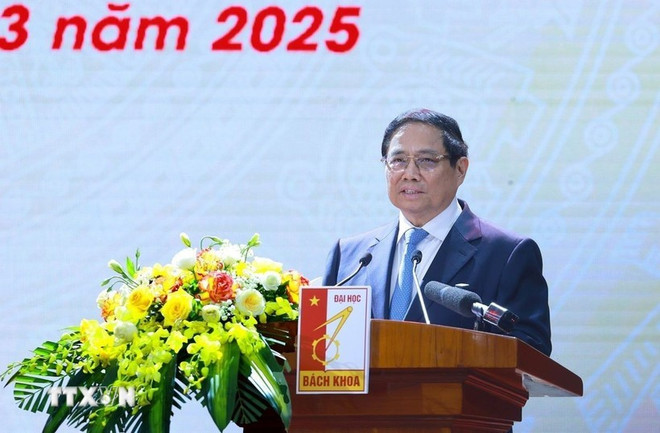
Entering the 21st century, Vietnam’s education system has pursued fundamental and breakthrough reforms, building a comprehensive, adaptive foundation for future development. Resolution 29-NQ/TW on fundamental and comprehensive reform of education and training shifted the focus from imparting knowledge to developing learners’ competencies, equipping younger generations with English proficiency and information technology skills to support the country’s long-term growth.
This period saw a shift from state monopoly to a more socialised education system, from knowledge-based teaching to competency-based training, and from basic IT application to full-scale digital transformation. These policies reaffirmed education as a “top national priority,” while advancing a humanistic, modern, equitable, and globally integrated education system.
According to the Ministry of Education and Training, the past 25 years have witnessed rapid expansion across all levels, forming a consistent system from preschool to postgraduate education, increasingly aligned with regional and international standards.
Milestones include universal preschool for 5-year-old children in 2017 (with nearly 99% enrolment), universalised primary and lower secondary education nationwide, and significant progress towards universal upper secondary education. In higher education, the number of students per 10,000 people rose from 117 in 2000 to over 200 in 2010, and has continued to increase during the 2020 – 2025 period. Universities moved towards autonomy and quality accreditation, and several programmes achieved regional and international standards.
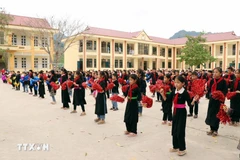
Educational equity improved through policies supporting disadvantaged students, ethnic minorities, and poor households, while digital transformation accelerated after COVID-19, fostering online teaching, digital learning resources, and modern governance as foundations for a national digital education ecosystem.

A new groundbreaking vision
On August 22, Party General Secretary To Lam signed the Politburo's Resolution No. 71-NQ/TW on breakthroughs in education and training development.
The resolution sets ambitious goals: by 2030, ensuring universal preschool education for children aged 3–5, compulsory lower secondary education, and at least 85% of young people in the targeted age group completing upper secondary education nationwide. The education index contributing to the Human Development Index (HDI) is targeted to surpass 0.8, with the education inequality index reduced to below 10%.
At least 80% of general schools and 80% of vocational institutions are expected to meet national standards, with 20% of universities reaching advanced Asian levels, and eight universities entering Asia’s top 200, including one in the global top 100 in selected fields.
By 2035, Vietnam aims to complete universal upper secondary education and see at least two universities ranked among the world’s top 100 in specific fields. Looking to 2045, the target is to establish a modern, equitable, high-quality national education system ranking among the world’s top 20, with at least five universities in the global top 100.
After eight decades of relentless reforms, the new resolution is expected to become a historic milestone, positioning high-quality human resources and scientific talents as Vietnam’s core competitive advantages, firmly bringing the nation into a new era./.