An Giang (VNA) - Amid the proud 80-year history of the Vietnam News Agency (VNA) (1945–2025), the image of reporters in the southwestern region during the resistance war against the US remains vivid. They were not only war correspondents but also witnesses, whose silent sacrifices and contributions became part of the VNA’s history.
Breaking news on fierce battlefields
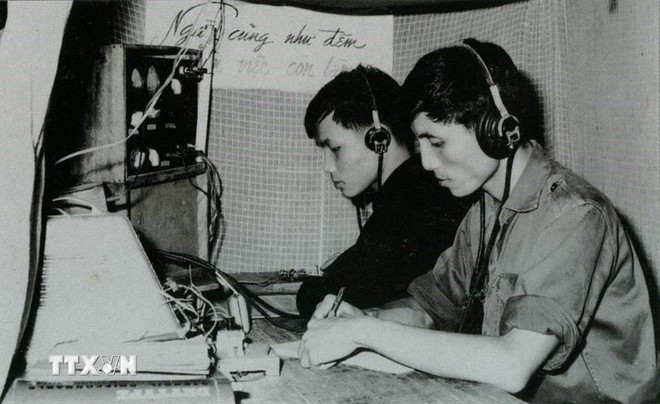
On October 12, 1960, the Liberation Press Agency (LPA) (now the Vietnam News Agency) was established in the fierce battlefields of the South as the press organ of the National Liberation Front (NLF) of South Vietnam. It became the “lifeline” of information under relentless bombings, steadfastly maintaining an “uninterrupted radio wave” to convey the revolution’s policies, expose the enemy’s schemes, and raise awareness and fighting spirit among southern soldiers and people, fueling revolutionary momentum both at home and abroad.
LPA reporters were not only newsmen but also fighters. Their articles and reports fueled the revolutionary spirit, honouring heroic examples and victories of the southern armed forces and people, and stirring patriotism and resolve to drive out the enemy. Closely following the battlefield, they wrote, photographed, and filmed to capture the resilience of revolutionaries and civilians alike. Operating in deep forests and liberated zones, under constant threat of bombs and hardships, they remained steadfast, embodying the spirit of diligence, courage, self-reliance, and perseverance to fulfil their mission.
During the historic Ho Chi Minh Campaign in April 1975, reporters of both LPA and VNA were present at key hotspots in the southwestern region, capturing invaluable images and news of the April 30 Victory that liberated the South and reunified the nation.
Nguyen Thanh Ha, a former telegraph operator of the LPA and former Director of Kien Giang Radio and Television, recalled the hardships faced by war correspondents in transmitting news from resistance bases to the Central Office for South Vietnam, highlighting their silent yet vital contributions to the Great 1975 Spring Victory.
For 15 years (1960–1975), LPA reporters, via pen or weapon, braved dangers on the frontlines to deliver timely and accurate news, boosting the fighting spirit and bringing the just cause of Vietnam to the world. Many fell as true soldiers, while others of both VNA and LPA were wounded for life. However, the flow of news and images from the LPA never stopped.
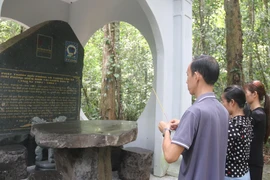
Journalist Ngo Hoang Van, former LPA reporter and Head of the Kien Giang Bureau (now the VNA’s bureau in An Giang), recalled multiple deadly attacks, highlighting that between 1960 and 1975, the Kien Giang bureau lost at least 16 reporters and staff.
Upholding legacy and duty
After 1975, following the national reunification, VNA reporters continued to cover the Southwest border defence war, leaving their mark in Vietnam’s revolutionary journalism. Armed with cameras, pens, and courage, they reported on the Pol Pot genocidal regime's invasion along the southwestern border in late 1978, documenting the conflict and highlighting the victories of the Vietnamese People’s Army.
Many VNA reporters closely followed VPA officers and soldiers during counteroffensive campaigns into Phnom Penh of Cambodia, coordinating with the National United Front of Cambodia to overthrow the genocidal regime. They captured historic moments, scenes of suffering, and the joy of liberation among the Cambodian people. Through their reports, VNA journalists highlighted the humanitarian and internationalist spirit of Vietnamese volunteers, who helped Cambodia rebuild its society.
Journalist Vuong Thoai Trung, former Head of the An Giang bureau of the VNA with over 40 years at the agency, recalled accompanying the province’s delegations to visit and encourage Vietnamese troops serving in Cambodia, saying that each nearly 20-day trip involved significant hardships and dangers.
From the first reports after Vietnam gained independence in 1945 to today’s multimedia news reaching the globe, VNA reporters continue the agency’s proud 80-year tradition with responsibility, creativity, and a dedication to serving the nation. They are soldiers on the intellectual front, contributing to protecting the country and promoting Vietnam’s image to the international community.
With an 80-year history intertwined with the nation, the VNA’s flow of mainstream news never ceases, forming a proud journey alongside historic moments and the country’s development. After 1975, the VNA continued to expand during the “Doi moi” (renewal) and international integration process, and keep pace with global media trends by innovating technology. In the southwestern region, VNA reporters not only documented history but also immersed themselves in the lives and stories of the people.
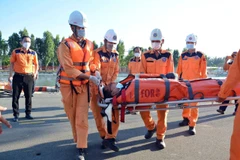
VNA reporters in the Mekong Delta brave harsh conditions in the region, where they face natural disasters and climate change impacts such as floods, salinity, and forest fires, to deliver news that informs the public and supports relief efforts there. They continuously learn and innovate to meet the growing demands of the public while upholding the ethical standards of revolutionary journalism.
On September 15, 1945, Viet Nam Thong tan xa (VNTTX) officially broadcast the historic Declaration of Independence along with the list of members of the Provisional Government of the Democratic Republic of Vietnam. This was the first news bulletin of the VNTTX, marking the establishment of the national news agency. In 1976, the LPA and the VNTTX officially merged to form the VNA.
The 80-year history of the VNA (1945 - 2025) witnesses nearly 260 martyrs and journalists who sacrificed their lives. It can be said that the formation and development of the VNA is closely tied to the struggle for national salvation and defence, led by the Party. Today, the agency is continuously innovating and contributing to the cause of building and protecting the homeland, ensuring that the flow of mainstream news never stops.
The agency stands as a symbol of faith, intellect, and dedication. Today, VNA reporters carry on this golden legacy with a mission to deliver professional, committed, and humane journalism. VNA reporters in the Mekong Delta remain an inseparable part of this heroic journey./.