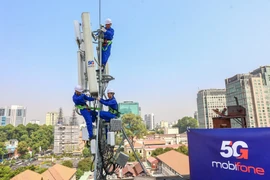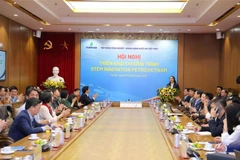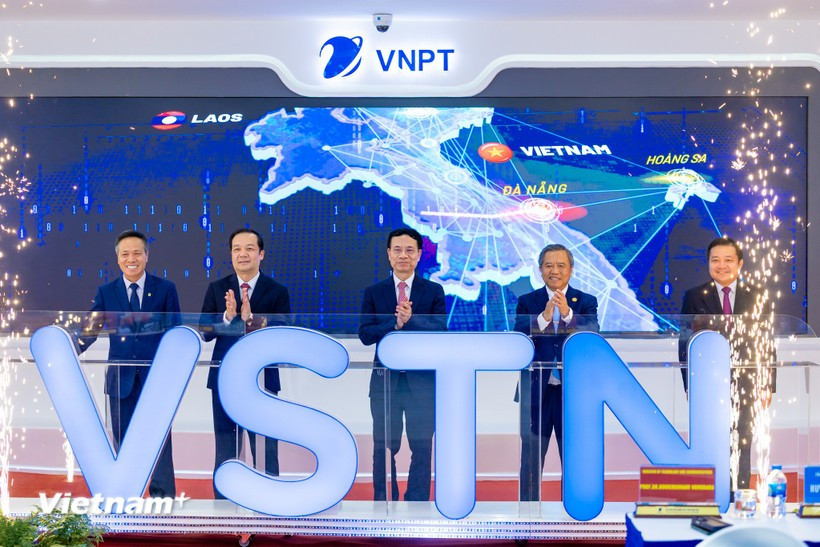
Hanoi (VNA) – The Vietnam Posts and Telecommunications Group (VNPT) on August 4 officially launched VSTN, the first cable line directly connecting Vietnam and Singapore entirely via land.
VSTN, privately owned and operated by VNPT Group, is the first international cable 100% owned by a Vietnamese company, marking an important milestone in the journey to national telecommunications infrastructure autonomy.
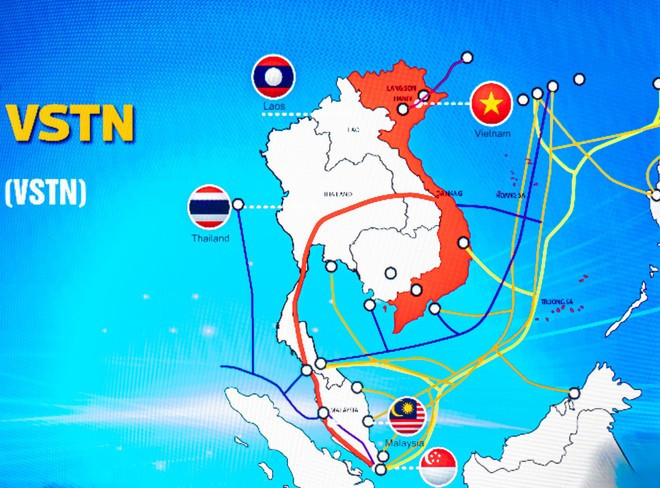
Spanning approximately 3,900 km, the cable passes through five countries – Vietnam, Laos, Thailand, Malaysia, and Singapore. It directly connects the VNPT technical centre in the central city of Da Nang with leading international data centres in the region, incluing IDC Telehouse of Thailand, MY01 Cyberjaya and Equinix JH01 Johor Bahru of Malaysia, and Equinix and Global Switch of Singapore.
VNPT’s full control over the entire route, from the origin in Vietnam to the endpoint in Singapore, allows for independent operation and rapid troubleshooting. Given frequent and prolonged disruptions to undersea cables – which impact the Internet service quality and international connectivity, the VSTN line serves as a critical backup route, strategically complementing existing submarine cables, enhancing the resilience and security of Vietnam’s telecommunications infrastructure.
VSTN is deployed with DWDM technology, with a minimum capacity of 300 Gbps per wavelength and a total system capacity of 4 Tbps, upgradable to 12 Tbps or more. This helps VSTN not only meet current needs but also be ready for strong development in the near future.
VSTN is not only a technical step forward but also a strategic step for Vietnam towards completely mastering the national telecommunications infrastructure, protecting data security, and ensuring that information traffic is transmitted smoothly and safely in all situations.
Currently, VNPT operates four major international undersea cable systems: AAG, APG, AAE-1, and the newly completed SJC-2, with a total length of over 65,000 kilometres. VNPT is also the first and only enterprise in Vietnam to own and operate two telecommunications satellites: Vinasat-1 and Vinasat-2.
With the launch of the new route, it is gradually completing a multi-modal transmission infrastructure ecosystem – via land, sea, and space.
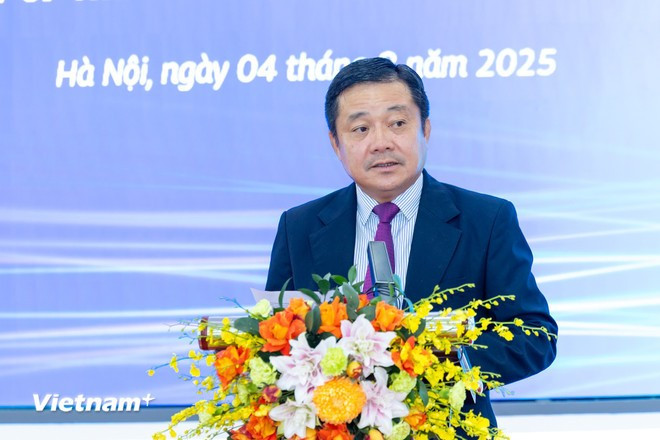
VNPT General Director Huynh Quang Liem said that the new cable not only increases connection capacity but also creates a stable and safe transmission route, minimising the risk of disconnection when incidents occur with submarine cables. This is a strategic move, significantly improving the reliability of the international network and VNPT's ability to serve in all situations.
The cable route is a concrete step, demonstrating VNPT's determination in implementing the Party and Government's policy on continuing to innovate, improve the efficiency of state-owned enterprises, open up new development space. With new cable system, VNPT positions itself in a pioneering role, leading the development of national and regional digital infrastructure, Liem said.
Speaking at the event, Minister of Science and Technology Nguyen Manh Hung emphasised that Vietnam's telecommunications infrastructure has become digital infrastructure, the infrastructure of the economy, thus the safety and sustainability of digital infrastructure are extremely important.
To ensure safety and sustainability, Vietnam must diversify optical cable lines, particularly land ones which are very resilient, he said.
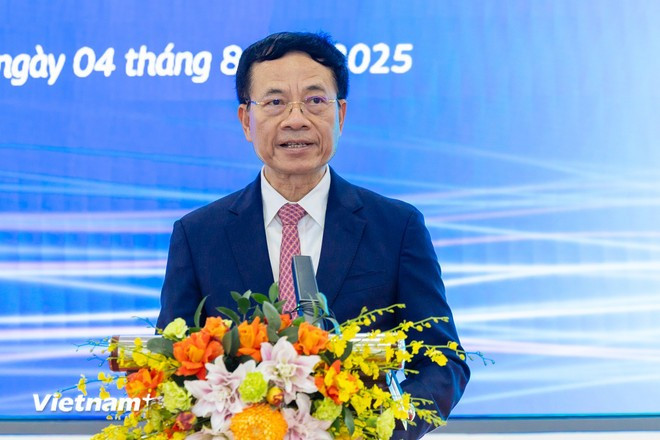
Hung said over the last 30 years, there haven’t been any international cable lines completely invested by Vietnamese people.
It is VNPT that has deployed the first international land optical cable wholly-invested by a Vietnamese enterprise, Hung noted, expecting that internet service providers in Vietnam will continue to build many other international routes./.