Investing in low-carbon technology – a “passport” for businesses in global integration

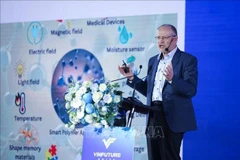
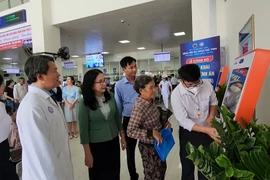
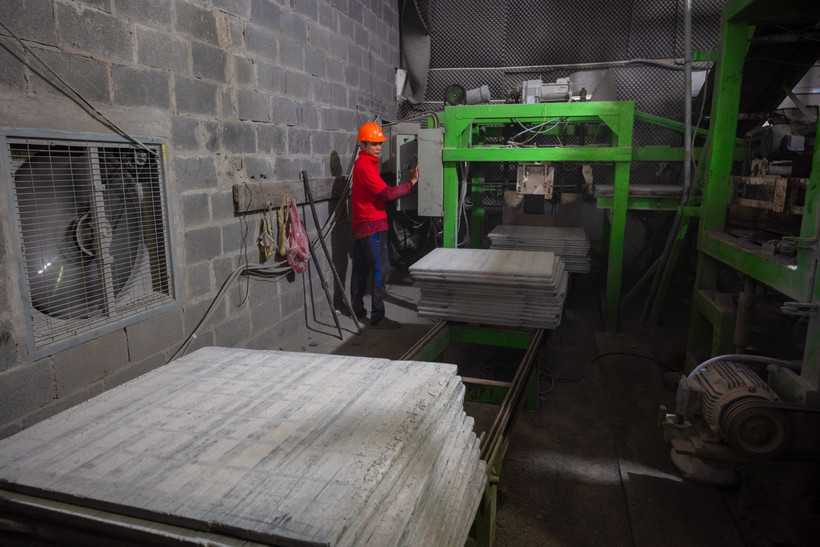
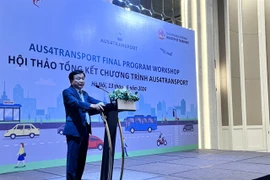
Opportunities and challenges in adopting low-carbon technologies in Vietnam. (Photo: Nguyen Van Anh)

Hanoi (VNA) - Beyond reducing emissions and optimizing costs, low-carbon technologies are becoming the new standard for Vietnamese enterprises to access international markets, attract investment, and reinforce their sustainable positioning.

Global “green pressure” on businesses

In today’s era of global competition, advantages no longer come solely from production technology or pricing, but also from the ability to meet increasingly stringent green standards. From free trade agreements to investor requirements, Vietnamese enterprises are under mounting pressure to transform their development model. Among these shifts, adopting low-carbon technologies is seen as a key that unlocks market access and secures long-term competitiveness.

Under the GEF/ADB Project “Mainstreaming Climate Resilience and Environmental Protection for Secondary Green Cities Development” of the Ministry of Agriculture and Environment, the bidding package “Review, develop greenhouse gas (GHG) inventory methodology and guidance for Measurement – Reporting – Verification (MRV) monitoring; assess low-carbon technology needs and emission reduction potential to propose low-carbon technology portfolio and pilot GHG inventory assessment and MRV inHue, Ha Giang and Vinh Yen” (TA9417-ISP QCBS-02) has assessed and prioritized a list of greenhouse-gas-reduction technologies for the three localities. The priority sectors include energy, transport, agriculture, industry, land use, land use change and forestry (LULUCF) and waste management.

Dual benefits: Emission reduction and efficiency gains

Investing in low-carbon technologies generates two simultaneous benefits. On one hand, businesses reduce operational costs through energy optimization, resource recycling, and improved production efficiency. On the other hand, brand reputation is strengthened, creating advantages in accessing foreign markets and international investors who increasingly prioritize “green” standards.

In Hue city - where the 2030 target is to reduce emissions by 8% compared to a business-as-usual scenario (under Plan No. 386/KH-UBND dated 19 September 2025) - many enterprises have installed rooftop solar systems, adopted smart energy-management technologies, and shifted to electric vehicles for transportation. These examples show that green investment is no longer optional; it has become a strategic requirement tied to business survival.
b.jpg
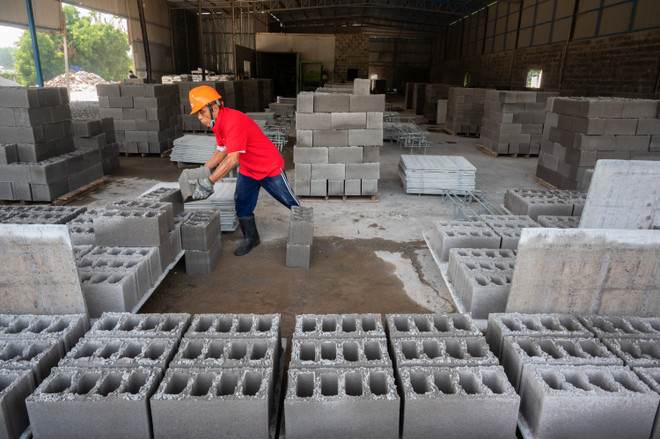
Opportunities and challenges in adopting low-carbon technologies in Vietnam. (Photo: Nguyen Van Anh )

Challenges and opportunities

High upfront investment costs remain a major concern for many enterprises. However, experts emphasize that this should be viewed as a strategic, future-proof investment. As green finance policies and mechanisms and export standards become clearer, early movers will gain a strong competitive advantage.

Nguyen Van Hung, Director of Seny Vietnam Co., Ltd., a construction enteprise in Vinh Yen (now part of Phu Tho), noted:

“If we do not make the transition soon, we will face difficulties in securing international contracts. European partners enforce strict carbon-footprint standards. Therefore, green investment is essential to maintain competitiveness.”

Moreover, businesses can access preferential green finance from climate funds, international organizations, or domestic banks once they demonstrate a solid commitment to sustainable development - creating tangible opportunities to ease the initial financial burden.

An inevitable path forward

Experiences from enteprises show that adopting low-carbon technologies not only reduces emissions but also enhances competitiveness. Implementing solutions such as renewable energy, green mobility, energy efficiency and waste-to-energy technologies will increasingly serve as a “passport” for Vietnamese enterprises in the global integration era.

As Vietnam accelerates its green-growth strategy and moves toward net-zero emissions by 2050, investment in low-carbon technologies must be viewed as an integral part of business development strategies. This is both a social responsibility and a gateway to market expansion, investment attraction, and long-term prosperity./.
VNA

See more

Prime Minister Pham Minh Chinh and delegates visit booths showcasing products at TechFest Vietnam 2025. Photo: VNA

Vietnam to become attractive destination for tech talent, innovative startups: PM

TechFest Vietnam 2025, held from December 12 to 14, is expected to attract more than 60,000 participants both in person and online, with the participation of over 20 corporations, 50 investment funds, more than 100 supporting organisations and incubators, and delegates from Southeast Asia, Northeast Asia, Central Asia, the Middle East, North America, and Europe.

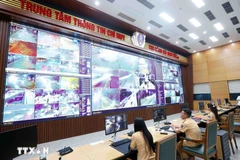
Police offiers mornitor the traffic through AI camera (Photo: VNA)

Applying the Internet of Things in smart transport

The project aims to build a unified, safe and efficient IoT platform to support the management, operation and exploitation of smart transport systems under the Ministry of Construction, with data shared across ministries and localities.

Through long-term commitment, Viettel has brought millions of Burundians into the mobile era and become the first operator to roll out 5G in the country, Viettel Burundi CEO Phan Truong Son noted. (Illustrative photo: VNA)

Viettel secures three prestigious international awards

Viettel has won honours in the “People & Culture” and “Best Operator in a Growth Market” categories at the 2025 World Communication Awards (WCA), alongside the “Best Digital Transformation Project” at the 2025 Global Telecoms Awards (Glotel).

A view of the Can Gio sea-encroaching urban area project (Photo: VNA)

Green-tech push for Can Gio

Vietnam has the capacity, ambition and technological foundation to join the group of leading sustainable coastal urban nations in the coming decade, experts said at a dialogue on "advancing to the sea with ESG++ megacities: breakthroughs through green technology", held on December 9 in Hanoi by the Vietnam Institute for Real Estate Studies (VIRES).

Minister of Science and Technology Nguyen Manh Hung speaks at the meeting (Photo: VNA)

Vietnam turns intellectual property into bankable assets in new law

About AI-generated content, the law draws a clear line: purely autonomous AI creations are not eligible for copyright or patent protection. Those who provide substantial creative input, such as ideas, curation, editing, or selection, qualify as authors or inventors.

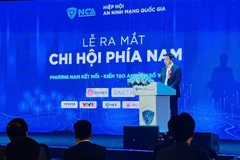
Lieutenant General Nguyen Minh Chinh, NCA Vice Chairman, speaks at the launch ceremony of the southern branch of the National Cybersecurity Association. (Photo: VNA)

National Cybersecurity Association opens branch in HCM City

The southern branch aims to become a coordinating body for cybersecurity tasks, workforce development, awareness-raising and the strengthening of digital defence capabilities across the region, contributing to the safe and sustainable growth of Vietnam’s digital economy.

Viettel exceeds target of 20,000 new 5G stations by more than three weeks. (Illustrative photo: VNA)

Viettel exceeds target of 20,000 new 5G stations by more than three weeks

Viettel plans to continue scaling up its network from now until the end of 2025, with an additional 23,500 stations scheduled for installation, nearly quadruple the number rolled out in 2024. Once completed, Viettel will operate Vietnam’s largest 5G network, with 30,000 stations covering 90% of outdoor areas and 70% of indoor spaces nationwide, from major cities to rural regions.

In Vietnam, demand for infrastructure supporting AI, cloud computing, and digital services is rising at an unprecedented level. (Illustrative photo: VNA)

Vietnam emerges as new hub for data centres

Data centres have surged to become the second most preferred alternative asset class in the region. Vietnam is no exception to this trend as the demand for infrastructure supporting AI, cloud computing, and digital services has risen at an unprecedented level.

Professor Kurt Kremer, from the Max Planck Institute for Polymer Research in Germany, speaks at the event. (Photo: VNA)

Vietnam has advantages to develop versatile humanoid robots: experts

At the symposium, international and Vietnamese experts also discussed the latest trends in robotics, from socially interactive humanoids and collaborative service robots to medical and rehabilitation systems, and examined major challenges surrounding AI safety and ethics to ensure that robotics evolves in a responsible, human-centred and sustainable manner.

The organisers present members of the judging panel of the UAV Cup PV GAS 2025. (Photo: VNA)

UAV Cup PV GAS 2025 promotes Vietnam’s home-grown UAV technology

Jointly organised by Hanoi University of Science and Technology’s Institute of Space and Underwater Technology (ISUT) and Petrovietnam Gas JSC (PV GAS), the competition aims to foster innovation among young people, enhance capabilities in UAV research, design and application, and seek practical technological solutions for smart agriculture, environmental monitoring, logistics, and emergency rescue.