Draft Law on Artificial Intelligence hoped to create enough space for AI to thrive

Vietnam has identified AI as a national priority technology, playing a key role in digital transformation, the development of a knowledge-based economy, and the enhancement of national competitiveness.

nguyen-manh-hung.jpg
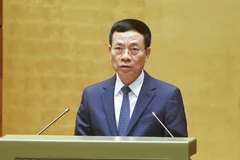
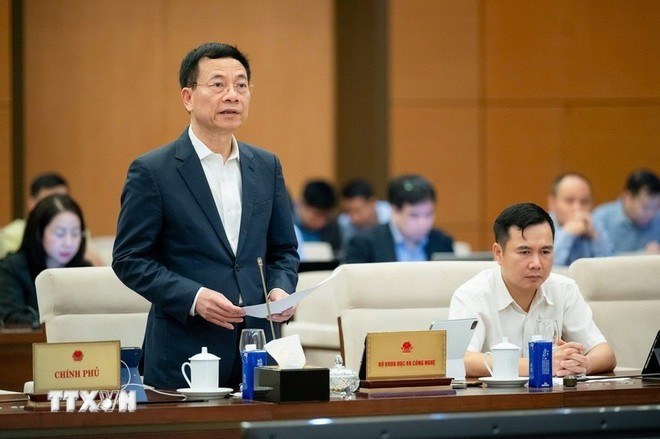
Minister of Science and Technology Nguyen Manh Hung (Photo: VNA)

Hanoi (VNA) – The draft Law on Artificial Intelligence, the first of its kind in Vietnam which is being discussed at the 15th National Assembly’s 10th session, is expected to help establish a legal foundation to promote the research, development, application, and governance of AI in a safe, responsible, and human-centred manner, once it is approved.

Vietnam has identified AI as a national priority technology, playing a key role in digital transformation, the development of a knowledge-based economy, and the enhancement of national competitiveness.

The Politburo’s Resolution No. 57-NQ/TW on breakthroughs in science, technology, innovation, and national digital transformation sets the goal for Vietnam to be among the top three countries in Southeast Asia in AI research and development; gradually master several strategic and digital technologies, including AI; and strongly promote AI applications based on big data across key sectors and fields.

The draft Law on Artificial Intelligence consists of eight chapters and 36 articles, aiming to institutionalise the Party and State policies, create a breakthrough legal framework for AI, and establish a favourable legal environment to promote innovation and enhance national competitiveness. At the same time, it seeks to manage risks and safeguard national interests, human rights, and digital sovereignty.

The bill ensures the institutionalisation of the orientations and policies identified in Party and State documents and resolutions. It is designed as a framework law, flexible and adaptable to technological development, while providing systematic and comprehensive regulations to balance governance with the promotion of AI research, development, deployment, and application in Vietnam.

The draft law places humans at the centre, with the overarching principle that AI must serve humans, not replace them. Humans must oversee AI in critical decision-making processes, and AI systems must be transparent, accountable, and safe.

According to Minister of Science and Technology Nguyen Manh Hung, the draft law inherits and abolishes existing AI-related provisions in the Law on Digital Technology Industry, while adding legal “gaps” that need to be filled to perfect the AI regulatory framework. In addition, it selectively incorporates laws and practical experience from the AI development trends of several countries, ensuring alignment with Vietnam’s actual conditions as well as with the laws and international treaties to which Vietnam is a party.

Assessing the AI application in Vietnam, Tran Vu Ha Minh, Chief Advisor for Responsible AI at FPT Software, stated that AI in Vietnam is developing rapidly but not yet synchronously. Implementation still faces many challenges due to shortages of highly specialised personnel in technology, law, and AI ethics. As Vietnam is still in the early stages, it has a “golden opportunity” to build an AI system that adheres to high standards from the very beginning.

Given that nearly 170,000 Vietnamese enterprises are currently applying AI, accounting for about 18% of all businesses, and the chatbot market is forecast to grow sixfold over the next decade, Minh advised the Government to issue detailed guidelines for responsible AI deployment, starting with widely used tools such as chatbots and virtual assistants.

Offering specific recommendations for the draft law, the expert proposed clarifying the responsibilities of developers within the AI supply chain, rather than only regulating providers or importers; and allowing third-party assessments recognised domestically or internationally./.

VNA

See more

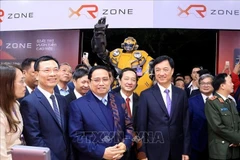
Prime Minister Pham Minh Chinh and delegates visit booths showcasing products at TechFest Vietnam 2025. Photo: VNA

Vietnam to become attractive destination for tech talent, innovative startups: PM

TechFest Vietnam 2025, held from December 12 to 14, is expected to attract more than 60,000 participants both in person and online, with the participation of over 20 corporations, 50 investment funds, more than 100 supporting organisations and incubators, and delegates from Southeast Asia, Northeast Asia, Central Asia, the Middle East, North America, and Europe.

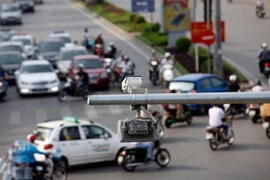
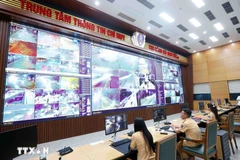
Police offiers mornitor the traffic through AI camera (Photo: VNA)

Applying the Internet of Things in smart transport

The project aims to build a unified, safe and efficient IoT platform to support the management, operation and exploitation of smart transport systems under the Ministry of Construction, with data shared across ministries and localities.

Through long-term commitment, Viettel has brought millions of Burundians into the mobile era and become the first operator to roll out 5G in the country, Viettel Burundi CEO Phan Truong Son noted. (Illustrative photo: VNA)

Viettel secures three prestigious international awards

Viettel has won honours in the “People & Culture” and “Best Operator in a Growth Market” categories at the 2025 World Communication Awards (WCA), alongside the “Best Digital Transformation Project” at the 2025 Global Telecoms Awards (Glotel).

A view of the Can Gio sea-encroaching urban area project (Photo: VNA)

Green-tech push for Can Gio

Vietnam has the capacity, ambition and technological foundation to join the group of leading sustainable coastal urban nations in the coming decade, experts said at a dialogue on "advancing to the sea with ESG++ megacities: breakthroughs through green technology", held on December 9 in Hanoi by the Vietnam Institute for Real Estate Studies (VIRES).

Minister of Science and Technology Nguyen Manh Hung speaks at the meeting (Photo: VNA)

Vietnam turns intellectual property into bankable assets in new law

About AI-generated content, the law draws a clear line: purely autonomous AI creations are not eligible for copyright or patent protection. Those who provide substantial creative input, such as ideas, curation, editing, or selection, qualify as authors or inventors.

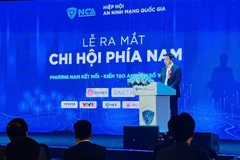
Lieutenant General Nguyen Minh Chinh, NCA Vice Chairman, speaks at the launch ceremony of the southern branch of the National Cybersecurity Association. (Photo: VNA)

National Cybersecurity Association opens branch in HCM City

The southern branch aims to become a coordinating body for cybersecurity tasks, workforce development, awareness-raising and the strengthening of digital defence capabilities across the region, contributing to the safe and sustainable growth of Vietnam’s digital economy.

Viettel exceeds target of 20,000 new 5G stations by more than three weeks. (Illustrative photo: VNA)

Viettel exceeds target of 20,000 new 5G stations by more than three weeks

Viettel plans to continue scaling up its network from now until the end of 2025, with an additional 23,500 stations scheduled for installation, nearly quadruple the number rolled out in 2024. Once completed, Viettel will operate Vietnam’s largest 5G network, with 30,000 stations covering 90% of outdoor areas and 70% of indoor spaces nationwide, from major cities to rural regions.

In Vietnam, demand for infrastructure supporting AI, cloud computing, and digital services is rising at an unprecedented level. (Illustrative photo: VNA)

Vietnam emerges as new hub for data centres

Data centres have surged to become the second most preferred alternative asset class in the region. Vietnam is no exception to this trend as the demand for infrastructure supporting AI, cloud computing, and digital services has risen at an unprecedented level.

Professor Kurt Kremer, from the Max Planck Institute for Polymer Research in Germany, speaks at the event. (Photo: VNA)

Vietnam has advantages to develop versatile humanoid robots: experts

At the symposium, international and Vietnamese experts also discussed the latest trends in robotics, from socially interactive humanoids and collaborative service robots to medical and rehabilitation systems, and examined major challenges surrounding AI safety and ethics to ensure that robotics evolves in a responsible, human-centred and sustainable manner.

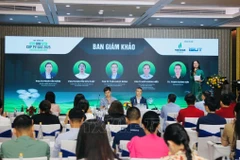
The organisers present members of the judging panel of the UAV Cup PV GAS 2025. (Photo: VNA)

UAV Cup PV GAS 2025 promotes Vietnam’s home-grown UAV technology

Jointly organised by Hanoi University of Science and Technology’s Institute of Space and Underwater Technology (ISUT) and Petrovietnam Gas JSC (PV GAS), the competition aims to foster innovation among young people, enhance capabilities in UAV research, design and application, and seek practical technological solutions for smart agriculture, environmental monitoring, logistics, and emergency rescue.