Culture ministry releases digital transformation strategy for 2025-2030

The digital transformation strategy for the 2025–2030 period focuses on synchronous digital infrastructure, unified sectoral databases, and robust information safety and security to boost state management efficiency and public service delivery.

Visitors use a kiosk system to explore a relic site in Nghe An province (Photo: VNA)

Hanoi (VNA) - The Ministry of Culture, Sports and Tourism has released its digital transformation strategy for the 2025–2030 period.

According to the ministry, digital transformation is defined as an inevitable trend and a strategic driver that directly impacts citizens, businesses, and the creative community across culture, sports, tourism, and family affairs. The strategy focuses on synchronous digital infrastructure, unified sectoral databases, and robust information safety and security to boost state management efficiency and public service delivery.

It is developed in alignment with the data strategy, forming two interconnected, complementary pillars: digital transformation defines goals and directions, while digital data serves as the core foundation to realise them.

By 2030, the ministry aims to fully establish e-government and progress toward digital government in its domains, modernise administrative procedures, overhaul organisational and business models, and foster digital culture and digital citizenship. It also seeks to support broader digital economy growth and the building of a digital society, with a target of delivering all eligible public services fully online and integrated into the National Public Service Portal. Sector-specific digital platforms will be built with openness, security and reliability as their core.

The strategy is structured into two phases. The 2025–2027 period will focus on laying the foundation and accelerating transformation, with priority given to the completion of institutional frameworks, technical infrastructure investment, digitisation of core datasets, and basic digital skill training for officials and citizens. Results from this stage are expected to create critical base for later progress.

From 2028-2030, the emphasis will shift to synchronisation, comprehensiveness and value creation. Building on the established foundation, the phase will drive deeper integration and widespread application of digital technologies and data to generate new value. The goal is to move beyond basic digitisation toward substantive digital transformation, where data becomes a strategic asset, operations are managed intelligently, and digital services deliver high added value to both society and the economy./.
VNA

See more

Illustrative photo (Photo: Ampshireflag)

Promoting cooperation aligned with ASEAN digital priorities

The sixth ASEAN Digital Senior Officials’ Meeting (ADGSOM) and related meetings took place from January 12 to 14 in Hanoi. Delegations exchanged views and reviewed progress in priority cooperation areas, focusing on enhancing coordination and harmonisation of digital policies across ASEAN.

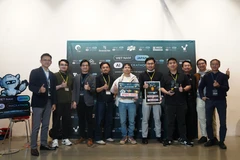
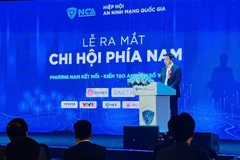
The Au Lac AI Alliance officially announces the inaugural Au Lac Grand Prize on January 12. (Photo: VNA)

Au Lac Grand Prize launched to honour Vietnamese-made AI

The competition is open to all Vietnamese citizens, regardless of age, place of residence or professional background, provided the submitted product or solution is legally protected intellectual property developed and owned by Vietnamese individuals or entities and used in compliance with the law.

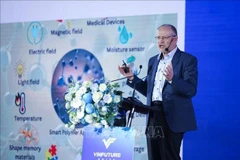
An expert speaks at the International Conference on Semiconductors (ICOS) 2026 (Photo: VNA)

ICOS 2026 highlights pathways for Vietnam’s semiconductor development

This was the first international, specialised semiconductor conference held in central Vietnam and the first time the country hosted a large-scale academic forum dedicated exclusively to this sector. Organised in line with international standards, it featured plenary sessions, technical presentations and industry forums, reflecting major research trends shaping the semiconductor sector.

Resolution No.57: People should be put at centre of AI governance

Resolution No.57: People should be put at centre of AI governance

Assessing the role of AI, Minister of Science and Technology Nguyen Manh Hung emphasised that it is an “intellectual infrastructure.” More than an applied technology, AI is increasingly becoming a form of national infrastructure, comparable to electricity, telecommunications or the Internet.

In Vietnam, 5G technology infrastructure has begun to be widely deployed by domestic network operators (Photo: VNA)

5G technology expansion expected to boost Vietnam’s digital economy

The Ministry of Science and Technology reported that by 2025, 5G had been commercialised nationwide, covering more than 90% of the population. Viettel alone has deployed 30,000 5G base stations, achieving 90% outdoor coverage and 70% indoor coverage, exceeding its commitments to the Government.

At a display of UAVs (Photo: VNA)

HCM City pilots UAVs for delivery services

HCM City aims to promote UAV use in urban delivery - a promising field contributing to smart logistics and postal services for e-commerce, smart cities and high-tech public services, while fostering UAVs as a strategic technology sector underpinning the innovation ecosystem.

Viettel's virtual assistant for searching administrative units helps shorten time and simplify searches for people. (Photo: Viettel)

Viettel’s virtual assistant among Top 10 technology products

The accolade recognises the mastery of core technologies by the Viettel Artificial Intelligence and Data Services Centre (Viettel AI), while reaffirming the group’s capacity to successfully deploy “Make in Vietnam” artificial intelligence solutions in international markets.

Workers are operating a robotic wafer conveyor assembly line in the semiconductor industry. (Illustrative image. Photo VNA)

Innovation – Driver for new development phase

The draft action programme of the Party Central Committee to implement the Resolution of the 14th National Party Congress identifies the shift to a new growth model, economic restructuring, and accelerated industrialisation and modernisation, with science, technology, innovation and digital transformation as the core engines, as key tasks.

Participants at the 5th ASEAN Digital Ministers Meeting (ADGMIN) in Thailand. (Photo: VNA)

Hanoi to host 6th ASEAN Digital Ministers’ Meeting in January

Held annually on a rotating basis among ASEAN member states, the meeting plays a key role in shaping strategic orientations, formulating policies and promoting digital cooperation within ASEAN, while strengthening collaboration with partners and international organisations amid rapid digital and digital-economy transformation globally.

(Illustrative photo: Viettel)

Viettel records breakthrough in first 5G Advanced trial

The achievement, marked as Vietnam’s first 5G Advanced trial, was made possible by carrier aggregation (CA) technology, enabling mobile devices to operate across multiple frequency bands simultaneously instead of a single band.