Vietnam’s textile-garment industry accelerates digital transformation, green transition

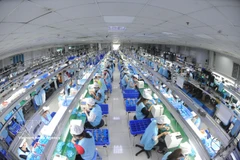
IDC Director Chu Viet Cuong underlined that automation is becoming an inevitable trend in the global garment industry. Technologies such as sewing robots, automated cutting systems, AI-powered line balancing and smart production lines are enabling Vietnamese manufacturers to boost productivity, reduce labour dependence, and enhance product quality and consistency.

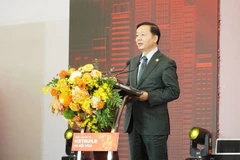
VITAS Vice Chairman and Secretary-General Truong Van Cam speaks at the workshop. (Photo: VNA)

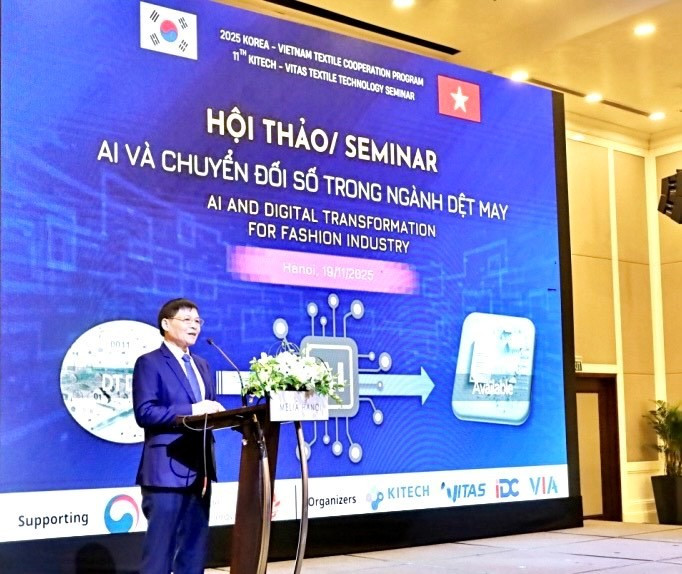
Hanoi (VNA) – The Industrial Development Centre (IDC) under the Ministry of Industry and Trade, in collaboration with the Vietnam Textile and Apparel Association (VITAS) and the Korea Institute of Industrial Technology (KITECH), held an international workshop in Hanoi on November 19, focusing on AI and digital transformation in the textile and garment industry.

IDC Director Chu Viet Cuong underlined that automation is becoming an inevitable trend in the global garment industry. Technologies such as sewing robots, automated cutting systems, AI-powered line balancing and smart production lines are enabling Vietnamese manufacturers to boost productivity, reduce labour dependence, and enhance product quality and consistency.

He added that sustainable fashion supported by AI tools, including 3D design, product lifecycle management, traceability and data-driven production optimisation, is essential for meeting green, circular and low-emission standards.

Vietnam’s textile industry now faces an urgent need to modernise technology, raise productivity and comply with increasingly rigorous environmental requirements amid fast-changing global markets. Access to advanced technologies and modern production models is therefore critical and aligns with Vietnam’s green transition goals and international commitments. IDC, as the ministry’s technical support unit, affirmed it would continue assisting textile enterprises in technological renewal, digital transformation, expert connections and sustainable development.

VITAS Vice Chairman and Secretary-General Truong Van Cam said textile enterprises must now carry out a dual transformation - digitalisation and greening, which has become essential rather than optional. Over the past decades, Vietnam’s economy, including the textile sector, has grown strongly with significant foreign direct investment (FDI), in which the Republic of Korea remains one of the leading investors.

By the end of 2024, total FDI from Korean enterprises in Vietnam is expected to reach around 90 billion USD. In the textile sector alone, Korean investors have contributed nearly 6 billion USD to more than 1,000 active projects, accounting for one-fifth of the sector's total FDI. These enterprises not only operate high-tech projects but also introduce solutions that enhance competitiveness and reduce costs.

Experts noted that while processes such as fabric inspection, cutting and packaging have achieved high levels of automation, sewing continues to lag behind. They outlined a roadmap that includes the use of AI-based vision systems (such as OSHIMA and Morpha AI) for fabric defect detection and KUKA robots for packaging. They emphasised that achieving success relies not only on investing in machinery but also on having a clear strategic direction and adapting hybrid systems to fit each factory's unique conditions.

On sustainability, Cold-Pad-Batch (CPB) dyeing technology is emerging as a key solution for low-emission knit fabric production. This greener method is considered the future of textile dyeing and offers strong economic benefits. Data show that CPB can reduce utility costs for water, steam, electricity and salt by 72.8% and cut emissions by 0.3359 kg of CO₂ per kilogramme of fabric compared with traditional dyeing processes.

Digital transformation and the adoption of AI/3D technologies are also reshaping the fashion industry. Digitalisation is the first essential step in turning data into digital assets, enabling the use of AI and Big Data. Integrating 3D and AI tools from platforms such as Adobe (Substance 3D, GenAI) and CLO Virtual Fashion significantly shortens product development cycles and increases efficiency and sustainability. Adobe technologies can create digital samples four times faster than physical ones, while CLO’s ecosystem with tools like AI Pattern Drafter and Auto Fitting Tool aims to replace up to 90% of physical samples with 3D models.

According to Cam, digital transformation helps enterprises move faster, enhance competitiveness and improve product and process quality. Meanwhile, green transition is a prerequisite for long-term and sustainable development, as is complying with strict global standards. With 85% of Vietnam’s textile output exported, enterprises must meet international requirements on sustainability, labour standards and environmental management across the supply chain.

VITAS expects the workshop to generate practical cooperation opportunities between Vietnamese enterprises and international partners, especially those from the RoK./.

VNA
See more

From early December, major retail chains in Ho Chi Minh City have recorded a noticeable increase in shoppers seeking Tet products. (Photo: VNA)

HCM City businesses ramp up production to meet Lunar New Year demand

From early December, major retail chains in the city have recorded a noticeable increase in shoppers seeking Tet products. Many consumers are taking advantage of promotional programmes to purchase gift items with long shelf lives, such as confectionery, soft drinks and processed foods, well ahead of the holiday peak.

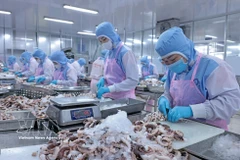
Workers process fish to be tinned for export at KTC Canned Food Factory under Kien Giang Trading JSC. (Photo: VNA)

Vietnam to host seminar on export growth strategies

Vietnam's exports rose 16.1% to 430.2 billion USD in the first 11 months of 2025, while total trade hit 839.8 billion USD during the same period. This strong performance shows that exports remain a key driver of economic growth, boosting Vietnam's standing on the world stage in recent years.

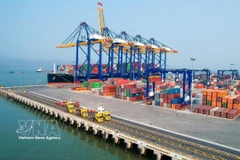
The vessel carrying the 2 millionth TEU arrives at Hai Phong Port. (Photo:VNA)

Hai Phong Port reaches 2-million-TEU milestone

Handling the 2 millionth TEU in 2025 not only demonstrates Hai Phong Port’s operational capacity and the collective efforts of its workforce, but also highlights its increasingly important role in regional and global supply chains, the confidence of shipping lines, logistics firms and the business community, and the effectiveness of policies to improve the investment climate and strengthen maritime infrastructure and services.

Melons labelled with traceability codes on display at the Song Van agricultural produce store in Ninh Binh city, Ninh Binh province. (Photo: VNA)

Tracing origins hindered by fragmented data systems

As the Government accelerates the digital economy, establishing a unified national traceability system has become a crucial move to end data fragmentation and disconnection among ministries, sectors and localities.

Hyundai unveils its new Avante Hybrid model in Seoul, the Republic of Korea, on August 13, 2020. (Photo: Yonhap/VNA)

Tax cuts poised to ignite Vietnam’s hybrid vehicle boom from 2026

Experts forecast that 2026-2030 will mark a period of strong growth for hybrid vehicles in Vietnam, a trend that will invigorate the automotive sector while supporting national objectives on emissions reduction, sustainable development and the broader transition to green mobility.

Illustrative image (Photo: VNA)

Vietnam targets 1 billion USD in banana exports

Bananas have been identified as a priority product under the Project for the Development of Key Fruit Crops to 2025, with a vision to 2030, approved in October 2022. Under the plan, banana acreage is projected to reach 165,000–175,000ha by 2030, with output of 2.6–3 million tonnes.

Deputy Minister of Foreign Affairs Nguyen Minh Hang (Photo: VNA)

Event connects Vietnamese businesses with African countries

Deputy Foreign Minister Nguyen Minh Hang held that to develop Vietnam – Africa ties more strongly and substantively, it is necessary to promote the engagement of businesses, and that the Government will create favourable conditions for them to enhance fruitful cooperation.

Deputy Prime Minister Ho Duc Phoc (R) and Independent Non-executive Chairman of AIA Mark Tucker at their meeting in Hanoi on December 12. (Photo: VNA)

AIA Group envisions long-term investment, cooperation in Vietnam

Over 25 years of operation in Vietnam, AIA has achieved positive results. Its premium revenue ranks among the top five life insurers, reaching nearly 14.83 trillion VND (563.71 million USD) in 2024 and an estimated 15.73 trillion VND in 2025, equivalent to around 10% of the market share.

A view of the 2025 Japan business roundtable in HCM City on December 12. (Photo: VNA)

Ho Chi Minh City courts Japanese investment with growth blueprint

Ha underscored the pivotal contributions of Japanese firms, which have long supported local socio-economic progress through major infrastructure projects, industrial zones and workforce training courses. To date, Japanese companies have invested more than 15 billion USD in over 2,200 projects, reflecting sustained confidence and commitment to the market.