VNU-HCM looks to become leading Asian research university by 2045

By 2030, VNU-HCM aims to rank among the top 100 universities in Asia, with at least one discipline placed in the world’s top 100 in reputable international rankings, including mathematics.

Hanoi (VNA) – Deputy Prime Minister Le Thanh Long has signed a decision approving a programme to develop the Vietnam National University, Ho Chi Minh City (VNU-HCM) into one of Asia’s leading higher education institutions in the 2026–2030 period, with a vision of becoming a top Asian research university system by 2045.

Under Decision No.129/QD-TTg, the programme will be implemented from 2026 to 2030, aiming to position VNU-HCM among Asia’s leading universities by 2030. The university is expected to serve as a centre for high-quality human resources training, scientific and technological development and application, innovation and start-up promotion, thereby contributing to fast and sustainable national development, particularly in the southeastern region.

The overarching goal is to develop VNU-HCM as a multidisciplinary university system ranked among the best in Asia and serving as a national focal point for higher education, research and innovation. The university is tasked with training high-level human resources, nurturing talent, advancing scientific research, promoting digital transformation and entrepreneurship, leading academic and technological trends, and contributing to national policy formulation.

Priority investment will be channelled into key fields, including basic sciences; key engineering and technologies; strategic, core and digital technologies; as well as economics, governance, environmental studies, and social sciences and humanities.
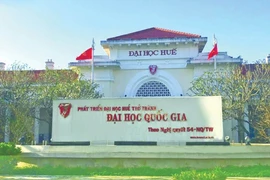
dai-hoc.jpg
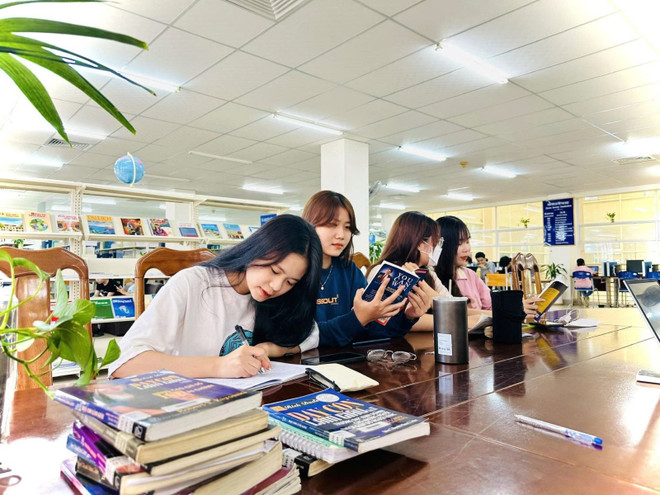
VNU-HCM is expected to serve as a centre for high-quality human resources training, scientific and technological development and application, innovation and start-up promotion, thereby contributing to fast and sustainable national development, particularly in the southeastern region (Photo: vnuhcm.edu.vn)

By 2030, VNU-HCM aims to rank among the top 100 universities in Asia, with at least one discipline placed in the world’s top 100 in reputable international rankings, including mathematics. Artificial intelligence and basic sciences are targeted to reach positions within the world’s top 150–250. While the proportion of lecturers holding doctoral degrees is expected to reach 75%, the university plans to train and attract at least 1,500 young and leading scientists, along with 100 visiting professors and 100 innovation experts.

At least 60% of science, engineering and technology programmes are set to be delivered in English, and priority will be given to degree programmes offered in coordination with universities ranked among the world’s top 200. Postgraduate students are projected to account for at least 30% of total enrolment, with doctoral candidates making up 40% of this group.

Looking ahead to 2045, VNU-HCM is envisioned as a leading Asian research university system, with at least four disciplines ranked among the world’s top 50.
To realise these goals, the programme outlines six groups of focal tasks and solutions. The first focuses on refining mechanisms and policies to attract and retain leading experts, international scientists and overseas Vietnamese intellectuals, while unifying standards for the appointment of professors and associate professors across the system from 2026.

The second prioritises the development of lecturers, researchers and managers through training in university governance, strategic thinking and international integration, alongside strengthened cooperation with enterprises. The third targets improvements in training quality to international standards, with priority given to mathematics, artificial intelligence and semiconductors, and enhancement of postgraduate education through tuition waivers and scholarship granting for doctoral candidates.

The fourth group aims to advance science, technology, innovation and digital transformation through stronger research groups, increased international publications and technology transfer, and the development of the VNU-HCM Innovation Centre as a core hub linking the State, academia and businesses. The fifth focuses on developing the VNU-HCM urban area into a high-tech, green, smart and modern university city. Meanwhile, the sixth promotes international cooperation, participation in global university rankings, and strategic partnerships with leading global institutions./.
VNA

See more

Participants at the handover ceremony of digital education equipment. (Photo: VNA)

Vietnam–Germany advance digital classrooms in vocational education

The “Digital Classroom” model follows five German-standard pillars covering digitalised school management, lecturer capacity building, interactive digital learning resources, modern teaching infrastructure, and stronger links between vocational schools and businesses. The model will be adapted to local vocational education conditions in Ho Chi Minh City.

The Embassy of Vietnam in Slovakia presents gifts to overseas Vietnamese at the event. (Photo: VNA)

“Homeland Spring 2026”connects Vietnamese in Slovakia with homeland

Beyond its cultural significance, the January 18 Homeland Spring 2026” programme in Slovakia served as an important political and community-based activity aimed at consolidating national unity, reinforcing cultural identity, and strengthening the close bonds between overseas Vietnamese and the homeland.

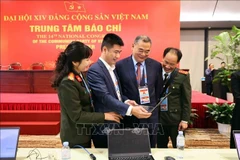
Member of the Party Central Committee and Minister of Justice Nguyen Hai Ninh (L) visits the working area of the Vietnam News Agency at the press centre of the 14th National Party Congress. (Photo: VNA)

Press provides timely, accurate coverage of 14th National Party Congress

After three days of the Congress, the Vietnam News Agency has produced and supplied more than 200 Vietnamese-language articles, over 1,500 photographs, nearly 400 reports in five foreign languages, 60 videos and dozens of infographics. These products have been widely disseminated across media outlets and digital platforms.

Border guards in Gia Lai inspect the installation of vessel monitoring system on a fishing vessel. (Photo: VNA)

Gia Lai steps up communication on new IUU fishing regulations

Identifying communications as a fundamental and long-term measure to raise fishermen’s awareness and ensure compliance with the law, the Gia Lai management board of fisheries ports has stepped up disseminating the new decree on administrative penalties in the fisheries sector.

Delegates watch the live broadcast opening session of the 14th National Congress of the Communist Party of Vietnam on January 20. (Photo: VNA)

14th National Party Congress: Renewed momentum for OVs to contribute to homeland

Participants attentively followed the proceedings of the opening session, expressing their excitement and pride in the image of a renewed and dynamic Vietnam and the country’s comprehensive and significant achievements during the past term. They also voiced strong expectations for breakthrough decisions from the 14th Congress aiming to guide Vietnam into the new era of national rise.

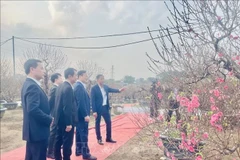
Delegates and visitors tour the artistic peach blossom exhibition, admiring outstanding works meticulously created by artisans and residents of the Nhat Tan peach blossom village. (Photo: VNA)

Nhat Tan peach blossom festival celebrates capital’s traditional craft

Nhat Tan is among the oldest craft villages of ancient Thang Long–Hanoi. Since the Le Dynasty, the village has been renowned for flower cultivation, with peach trees at its heart thanks to fertile alluvial soil along the Red River and the distinctive microclimate around West Lake.

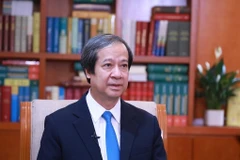
Minister of Education and Training Nguyen Kim Son (Photo: VNA)

Education-training sector preparing for strategic turning point: Minister

Reviewing the sector’s performance in the past five years, Minister of Education and Training Nguyen Kim Son said the scale of the national education system continued to expand across all levels, with more than 24.5 million learners nationwide. Major goals on universal education and literacy were basically achieved, while the proportion of trained workers holding diplomas or certificates reached nearly 30%.

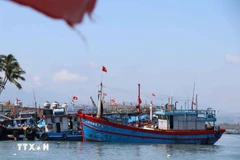
Illustrative photo (Photo: VNA)

Ho Chi Minh City steps up law enforcement on fishing vessel monitoring system

Ho Chi Minh City has 4,449 fishing vessels, of them 4,301 equipped with VMS devices, making up 96.67%. Between January 1, 2024, and December 31, 2025, authorities found 1,729 cases of vessels losing VMS connection for six hours or more, issuing fines in 196 cases totalling nearly 6.6 billion VND (about 252,000 USD)