Hanoi strengthens efforts to curb sex imbalance at birth

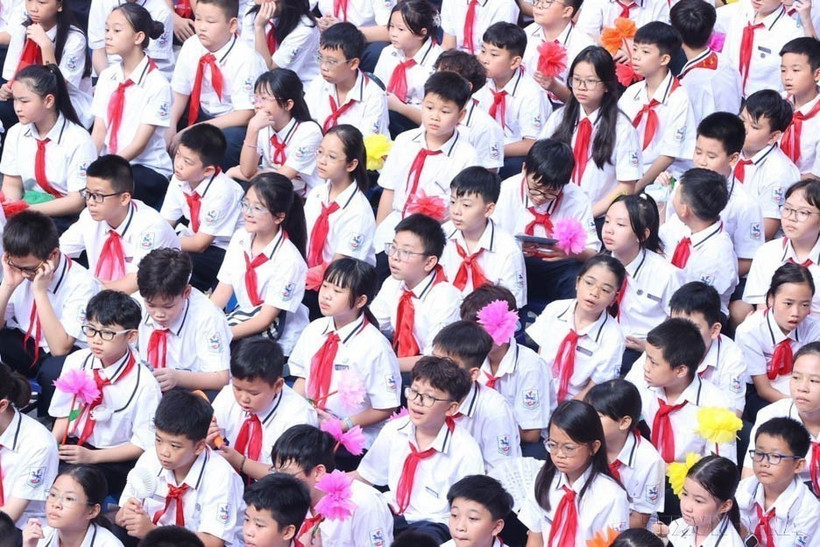
Alongside changing mindsets, the capital has implemented a wide range of coordinated solutions to address sex imbalance at birth. Communication campaigns have been intensified at the grassroots level, targeting residential communities, youth, couples preparing for marriage and women of reproductive age.

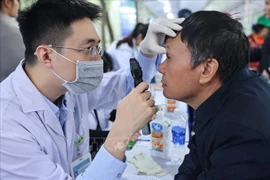
Hanoi's sex ratio at birth stands at around 110 boys per 100 girls in 2025. (Photo: VNA)

Hanoi (VNA) - Controlling the sex ratio at birth has been identified as a priority task in Hanoi’s population strategy, given that addressing sex imbalance remains a major demographic challenge for many localities across Vietnam, including the capital city.

Through a combination of consistent, long-term and innovative measures, the city has been gradually reducing the gap, aiming to restore a natural balance, ensure social stability and foster sustainable development in the years ahead.

Despite strong socio-economic development and improved public awareness, traditional gender bias still persists in some families, placing pressure particularly on women to bear sons. Surveys at several health facilities show that some couples still quietly attempt to influence the sex of their child through both folk beliefs and unregulated medical services, especially among households that already have two daughters. This has contributed to continued sex imbalance at birth, distorting population structure and potentially leading to long-term socio-economic risks.

Experts warn that without effective control, Vietnam could soon face a surplus of males of marriageable age, resulting in increased social problems such as trafficking, crime, instability in family life and long-term demographic challenges.

However, changing social perceptions has brought positive signs. Many families now recognise that whether a child is a boy or a girl, they are equally precious. For them, happiness lies not in perpetuating a family line, but in raising healthy, well-educated and compassionate children who contribute positively to society.
sex-imbalance-2.jpg
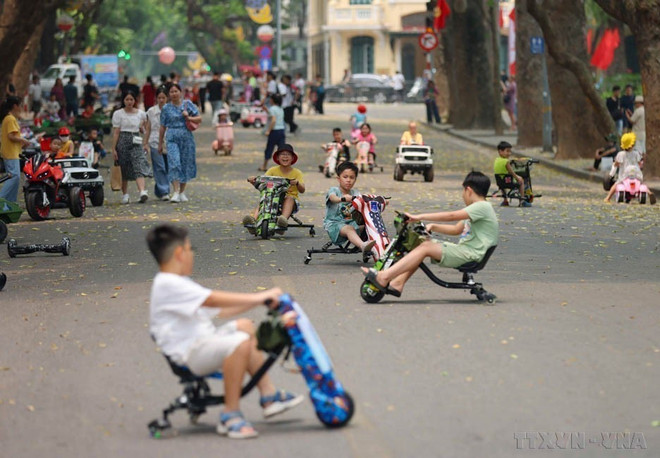
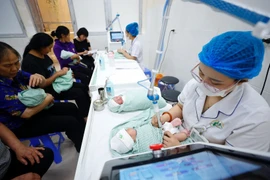
From 2026 to 2030, Hanoi has set a clear roadmap to gradually return the sex ratio at birth to a natural balance. (Photo: VNA)

Alongside changing mindsets, the capital has implemented a wide range of coordinated solutions to address sex imbalance at birth. Communication campaigns have been intensified at the grassroots level, targeting residential communities, youth, couples preparing for marriage and women of reproductive age. Messages on the consequences of sex imbalance are integrated into health campaigns and family planning programmes, while community-based outreach continues to raise awareness of gender equality and the value of daughters.

The city has also launched effective intervention models, including premarital health counselling, reproductive health care for adolescents and youth, and expanded screening programmes. As a result, its sex ratio at birth has fallen from 117.6 boys per 100 girls in 2008 to 113 in 2018 and around 110 boys per 100 girls in 2025. Although progress has been made, the figure remains higher than the natural level, requiring continued and determined efforts.

From 2026 to 2030, Hanoi has set a clear roadmap to gradually return the sex ratio at birth to a natural balance. It aims to curb increases, reduce the rate by an average of 0.2 percentage points annually and ensure that by 2030 the figure does not exceed 109 boys per 100 girls. Many localities in the city have already recorded encouraging progress thanks to proactive communication, health screening and strengthened monitoring of illegal sex selection practices.

Local communities such as Phuc Thinh commune and Cua Nam ward have intensified awareness-raising activities, strengthened reproductive health services and enhanced public engagement. Medical workers and population officials continue to promote steady, community-based advocacy, helping eliminate gender prejudice and discourage sex-selective behaviour. Efforts also focus on improving population quality through premarital counselling, prenatal and newborn screening, and ensuring gender-sensitive support for families.

Looking ahead, Hanoi will continue to prioritise policies that promote gender equality, protect legitimate reproductive rights, prevent sex-selective practices and improve demographic balance. Achieving a natural sex ratio requires persistence, political commitment and cooperation from the entire community. With comprehensive measures, stronger public awareness and the active participation of authorities at all levels, Hanoi is determined to restore population balance, enhance social equity and build a more inclusive, sustainable and humane capital city./.
VNA

See more

Nguyen Duy Anh, Honorary Chairman of the Vietnamese Association in Fukuoka. (Photo: VNA)

OVs enjoy diverse channels to contribute expertise to national development

He said OVs are ready to share professional expertise in education, science and technology, and business governance, and facilitate investment connections and trade promotion. They also help preserve Vietnamese culture and language, promote the country’s image abroad, and support social welfare activities at home.

Delegates pose for a commemorative photo at the Bo Y International Border Gate. (Photo: doanthanhnien.vn)

Youths from Vietnam, Cambodia and Laos gather for 2025 festival

Sam expressed his hope that the experiences gained at the festival, together with positive impressions of the heroic and beautiful land of Quang Ngai, will become valuable assets, enabling young people to act as strong bridges for the great friendship among the three countries.

Prime Minister Pham Minh Chinh (central) and students who win prizes at international competitions in 2025. (Photo: VNA)

Prime Minister commends Vietnamese students winning international prizes

According to the Ministry of Education and Training (MoET), over the past decade, Vietnamese student teams competing in international academic contests have won a total of 434 prizes, including 132 gold, 169 silver and 133 bronze medals, along with certificates of merit. Many students achieved consecutive gold medals over two years, while some secured gold medals when they were 10th graders.

Nguyen Hong Son, President of the Union of Vietnamese Associations in Japan, grants an interview to the Vietnam News Agency's reporter. (Photo: VNA)

OV community a vital bridge in Vietnam’s international integration, development

The UVAJ President also praised the Party and State’s consistent and comprehensive policies towards overseas Vietnamese, ranging from citizen protection and integration support to encouraging their contributions to national development. In particular, creating conditions for overseas Vietnamese to engage in political, economic and cultural activities at home reflects the spirit of great national unity.

Illustrative image (Photo: VNA)

Breakthrough mechanisms, policies for education, training approved

Regarding recruitment, employment and management of human resources in the education sector, the Resolution stipulates that the directors of provincial Departments of Education and Training are authorised to recruit and receive teachers, school managers and staff for public kindergartens, general education institutions, continuing education centres, specialised schools and public vocational high schools in their provinces.

Delegates at the opening of the exhibition (Photo: VNA)

Exhibition highlights vitality of Vietnamese cultural heritage

The exhibition features nearly 200 images showcasing Vietnam’s cultural heritage and efforts to preserve and promote its values in recent years. It is structured around four themes: the legal and policy framework for heritage protection; Vietnamese heritage recognised by UNESCO; the diversity and uniqueness of Vietnamese cultural heritage; and cultural heritage for sustainable development.

During the 2026 New Year holiday, civil servants and public employees will enjoy a continuous four-day break from Thursday, January 1, to Sunday, January 4, 2026. (Photo: VNA)

Civil servants, public employees to have four-day New Year break

Under Official Dispatch No. 12729/VPCP-KGVX dated December 25, civil servants and public employees will have a four-day break from Thursday (January 1) to Sunday (January 4, 2026). To offset this, the working day on Friday (January 2, 2026) will be shifted to Saturday of the following week (January 10, 2026).

The campaign aims to mobilise social resources to support 1.5 million people in need during the upcoming Tet (Lunar New Year) holiday. (Photo courtesy of the VNRC)

Vietnam Red Cross Society launches Tet gift campaign

The campaign aims to mobilise social resources to support 1.5 million disadvantaged individuals, including people with disabilities, the elderly, orphaned children and those affected by natural disasters, for the upcoming Tet (Lunar New Year) holiday.

Hanoi plans fireworks displays at five locations to welcome New Year 2026. (Photo: qdnd.vn)

VGCL supports proposal for four-day New Year break

Under the plan, civil servants and public employees will take the statutory holiday on January 1, be off work on January 2, and make up the working day on the next Saturday, which falls on January 10, 2026. This would create an uninterrupted four-day break from Thursday (January 1) to Sunday, (January 4, 2026).

Streets flowing toward the heart of HCM City teemed with festive crowds (Photo: chinhphu.vn)

Christmas 2025 in HCM City brings faith and community together

Solidarity and kindness define Christmas in HCM City, where love transcends religion and ethnicity. A striking example is Most Venerable Thich Le Trang, Head of the Vietnam Buddhist Sangha (VBS) Executive Board of HCM City, extended Christmas greetings to Archbishop Nguyen Nang of the Archdiocese of Ho Chi Minh City, and they pledged to guide believers and followers to live virtuous lives in love, compassion, and charity, serving as a vivid testament to religious unity.