Voters call for long-term, effective disaster response measures

Delivering the draft report, which will be submitted to the 15th NA’s upcoming 10th plenary session, the Presidium of the Vietnam Fatherland Front (VFF) Central Committee said that voters and the people have acknowledged and appreciated the political and socio-economic effectiveness of the revolution in restructuring the political system’s organisational apparatus at both central and local levels, as well as the implementation of the two-tier local administration model.

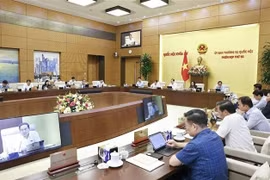
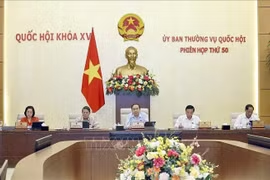
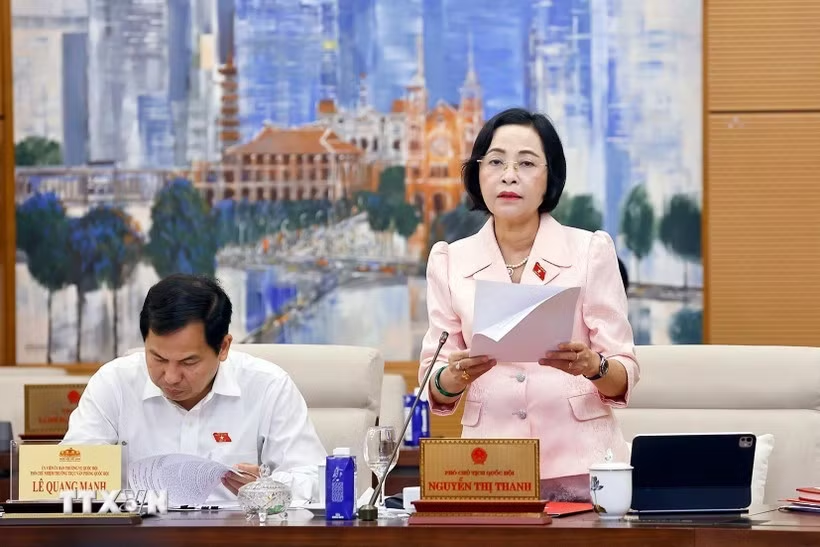
NA Vice Chairwoman Nguyen Thi Thanh speaks at the NA Standing Committee’s 50th session. (Photo: VNA)

Hanoi (VNA) - Many voters and people nationwide showed their hope for the Party and State’s continued implementation of fundamental and comprehensive measures to respond to storms and floods to ensure the safety of people’s lives and property, in a draft report presented at the National Assembly (NA) Standing Committee’s 50th session on October 13.

Delivering the draft report, which will be submitted to the 15th NA’s upcoming 10th plenary session, the Presidium of the Vietnam Fatherland Front (VFF) Central Committee said that voters and the people have acknowledged and appreciated the political and socio-economic effectiveness of the revolution in restructuring the political system’s organisational apparatus at both central and local levels, as well as the implementation of the two-tier local administration model.

The Presidium proposed the Party and State continue to provide strong leadership and issue guidelines and measures for organising and operating the two-tier local administration model after restructuring and mergers, ensuring the apparatus is truly streamlined, efficient, effective, and functional.

It called for investment in upgrading and replacing digital infrastructure, synchronising national databases on population and land to enable data connectivity and simplify administrative procedures across all areas of social life.

At the same time, continued leadership and direction are needed to successfully organise Party congresses at all levels, towards the 14th National Party Congress as well as the election of deputies to the 16th legislature and deputies to the People’s Councils at all levels for the 2026–2031 term, it stressed, noting that special attention should be paid to personnel selection to avoid the situation where individuals, who are elected to Party committees or serving as National Assembly or People’s Council deputies, are later found to have violated the law. As such cases harm the Party’s reputation and erode public trust, clear regulations should also be established regarding the responsibility of organisations and individuals that recommended these personnel.

The Party and State should continue to provide leadership and direction for the strict implementation of legal provisions concerning citizen reception, complaint and denunciation resolution, and the handling of petitions and feedback.

The Presidium also recommended that the Party and State take more drastic actions in combating the production, trading, and transportation of counterfeit and substandard goods. It called for stronger measures to address the widespread situation of individuals impersonating police, courts, procuracies, tax authorities, or engaging in online vacation sales scams to commit fraud and manipulate victims, including the elderly, and students.

In addition, it proposed further adjustments and improvements to the traffic signal system to ensure it is scientific, synchronised, and seamless, thereby guaranteeing accuracy in handling traffic violations./.
VNA

See more

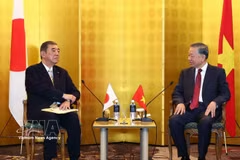
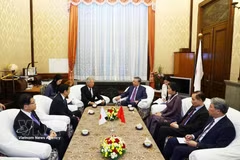
General Secretary of the Communist Party of Vietnam Central Committee and President To Lam (right) receives former Japanese Prime Minister Ishiba Shigeru in Tokyo on November 10, 2026. (Photo: VNA)

Top Vietnamese leader meets former Japanese PMs

Vietnam and Japan should focus on four cooperation priorities, including strengthening political trust through regular exchanges and meetings across Party, State and parliamentary channels; promoting economic cooperation and connectivity while ensuring economic security; expanding collaboration in innovation, space technology and high-tech agriculture; and enhancing the effectiveness of cooperation between localities of the two countries.

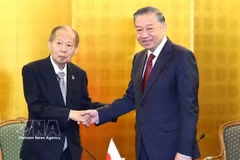
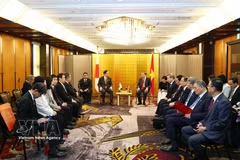
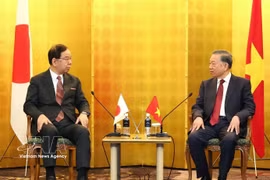
The meeting between General Secretary of the CPV Central Committee and President To Lam and Chairman of the JCP Central Committee Shii Kazuo in Tokyo on November 10 (Photo: VNA)

Top leader meets Chairman of JCP Central Committee

Vietnam wants deeper ties with Japan and continued cooperation between the two Parties and countries, General Secretary of the Communist Party of Vietnam (CPV) Central Committee and President To Lam said.

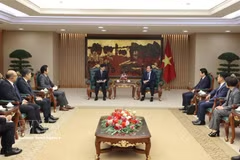
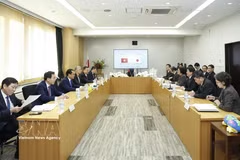
Deputy Prime Minister Le Tien Chau (R) receives Yamamoto Ichita, Governor of Japan's Gunma prefecture, in Hanoi on the morning of November 10. Photo: VNA

Governor of Japan's Gunma prefecture welcomed in Hanoi

Deputy Prime Minister Le Tien Chau called on Japan's Gunma prefecture to continue promoting cooperation with Vietnamese localities and swiftly translate agreements signed with Ninh Binh province and Hai Phong city into concrete cooperative projects, while exploring opportunities to expand ties with other Vietnamese localities.

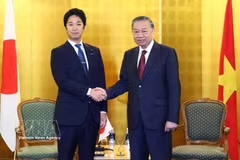
At the talks between Vietnamese Minister of Agriculture and Environment Trinh Viet Hung and Japanese Minister of the Environment Sasagawa Hiroyoshi (Photo: VNA)

Vietnam, Japan fortify cooperation in environment, agriculture, marine economy

The Vietnamese and Japanese environment ministries will run policy dialogues, expert exchanges, human resources training, feasibility studies and technology transfer, aiming to pull companies and research institutes from both countries into environmental projects, particularly in areas where Vietnam needs capital and technology.

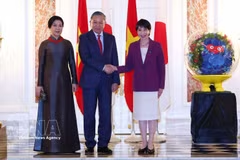
Japanese Prime Minister Takaichi Sanae hosts a welcome ceremony for General Secretary of the Communist Party of Vietnam Central Committee and President To Lam and his spouse in Tokyo on November 9. (Photo: VNA)

Vietnam, Japan issue Joint Vision Statement

The leaders of Vietnam and Japan affirmed that bilateral cooperation in areas including defence, security, the economy, economic security, energy resources, trade, investment, science, technology, agriculture, the environment, ocean management, education and training, labour, culture, sports, tourism, law and justice, locality cooperation and people-to-people exchanges has developed substantially and has continued to strengthen and broaden.

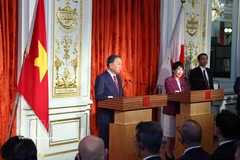
General Secretary of the Communist Party of Vietnam Central Committee and President To Lam and Japanese Prime Minister Takaichi Sanae meet the press in Tokyo on November 9 evening (local time) (Photo: VNA)

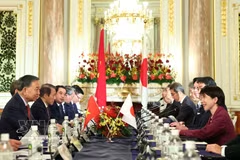
Top Vietnamese leader, Japanese PM meet the press after talks

The two sides agreed to issue the Vietnam–Japan Joint Vision Statement, lifting the Comprehensive Strategic Partnership to a new height as equal partners that accompany and co-create together on mutual benefit, for quality growth, strategic autonomy and self-reliance.

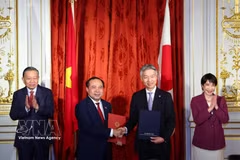
General Secretary of the Communist Party of Vietnam Central Committee and President To Lam and Japanese Prime Minister Takaichi Sanae witness the exchange of cooperation documents (Photo: VNA)

Vietnamese, Japanese leaders witness exchange of cooperation deals

General Secretary of the Communist Party of Vietnam Central Committee and President To Lam and Japanese Prime Minister Takaichi Sanae witnessed the exchange of nine cooperation documents out of 11 signed in total in Tokyo on November 9 evening (local time), as part of the top Vietnamese leader’s official Japan visit.

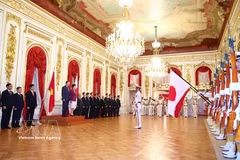
At the welcome ceremony for General Secretary of the Communist Party of Vietnam Central Committee and President To Lam (Photo: VNA)

Top Vietnamese leader welcomed in Japan on official visit

The visit is expected to turn agreements and commitments reached by high-ranking leaders into practical cooperation schemes and projects across various fields, and make positive contributions to each country’s development goals as well as global and regional peace, cooperation and development.