World Bank forecasts Vietnam's GDP growth at 5.8% in 2025

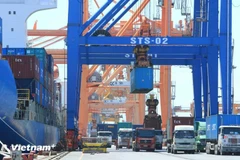
As a trade-oriented economy, with imports and exports representing almost 170% of the GDP, Vietnam is particularly exposed to ongoing shifts in global trade policies. The US remains the largest export destination of Vietnam, accounting for 30% of its total exports, while China makes up 38% of its imports.

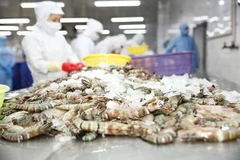
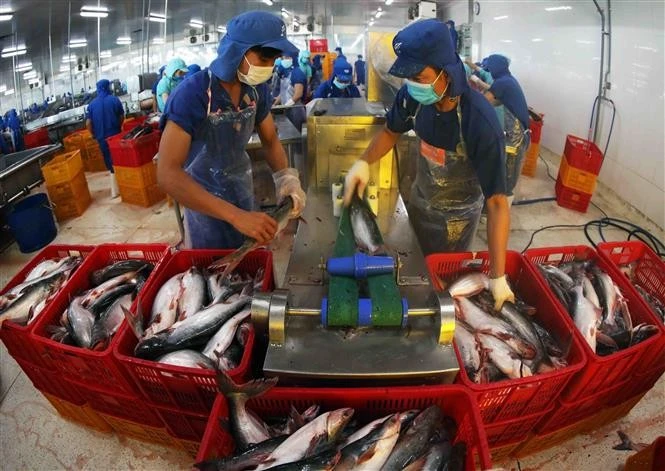
Tra fish processed for export in Dong Thap province (Photo: VNA)

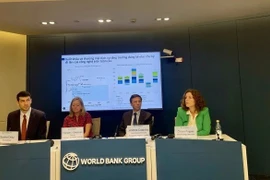
Hanoi (VNA) – Vietnam’s gross domestic product (GDP) growth is forecast to moderate to 5.8% in 2025 due to increased trade policy uncertainty, according to the World Bank (WB)'s latest East Asia and Pacific Economic Update.

As a trade-oriented economy, with imports and exports representing almost 170% of the GDP, Vietnam is particularly exposed to ongoing shifts in global trade policies. The US remains the largest export destination of Vietnam, accounting for 30% of its total exports, while China makes up 38% of its imports.

Uncertainty may also further weaken consumer confidence and spending which has lagged GDP growth in recent years, the WB said, highlighting financial sector vulnerabilities persist with the average loan-loss coverage ratio among 26 banks at 83% compared to 150% in 2022. While the Government has fiscal space to support demand, effective implementation may be hampered by chronic under-disbursement in public investment.

The bank stated that given the country’s exposure to the external environment, stronger-than-expected distortions in trade policy could adversely impact exports and growth. A slower-than-expected global growth could also reduce external demand and affect exports and private investments including FDI.

Despite these challenges, poverty rates in Vietnam continue their downward trend. The share of the population living on less than 3.65 USD per day (the lower-middle-income poverty line) is expected to decline from 3.8% in 2024 to 3.6% this year. However, lower growth in the agriculture sector suggests more limited gains among the poorest.

Experts said policy measures should focus on expanding public investment, mitigating fiscal sector risks, and structural reforms. While space for monetary policy intervention remains restrained, fiscal policy could still support growth especially through investment to close emerging infrastructure gaps. Building on recent reforms, such as the revision of Law on Credit institutions, further steps to mitigate financial sector risks and vulnerabilities remain crucial to promote financial sector resilience and stability.

Accelerating structural reforms to strengthen the regulatory environment in critical backbone services such as information and communication technology, electricity, and transport to green the economy, build human capital, and improve the business environment are crucial to sustain long-term growth.

The bank predicted that Vietnam's medium-term growth outlook remains positive, with GDP growth estimated to rebound to 6.1% in 2026 and 6.4% in 2027. To realise this potential, Vietnam needs a more stable international economic environment, coupled with domestic reform efforts aimed at increasing productivity, investing in human capital, and greening the economy./.

VNA
See more

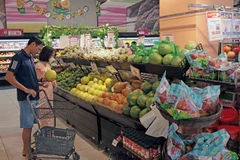
People shop for Tet at a supermarket. (Photo: VNA)

Vietnamese goods dominate Tet market in Mekong Delta

In key retail hubs such as Can Tho, Long Xuyen and My Tho, high-quality Vietnamese goods account for 85–90% of Tet market share. Surveys at major supermarket chains and traditional markets show that consumers this year are prioritising locally-processed foods, confectionery and beverages.

Prime Minister Pham Minh Chinh strikes the gong to inaugurate the Vietnam International Financial Centre in Ho Chi Minh City. (Photo: VNA)

Int’l Financial Centre – A catalyst for Vietnam’s economic breakthrough: Deputy PM

Standing Deputy Prime Minister Nguyen Hoa Binh, who chairs the IFC’s Governing Council, said that the establishment of the centre in Ho Chi Minh City and Da Nang represented the initial realisation of a major task set out in the Resolution of the 13th National Party Congress. While characterising the launch as an early milestone rather than a final achievement, he underscored that it reflected meticulous, methodical and determined preparations at multiple levels of government.

Kobayashi Yosuke, Chief Representative of JICA Vietnam. (Photo: JICA Vietnam)

JICA hails milestones in Vietnam partnership amid green, digital push

In line with Vietnam’s development priorities and its goal of becoming a high-income country by 2045, JICA will continue to work with a wide range of partners in both Vietnam and Japan to mobilise technical and financial resources for more sustainable and inclusive cooperation

Vietnam International Trade Fair for Apparel, Textiles and Textile Technologies (VIATT 2026) is expected to expand its scale by 20% compared to last year's edition. (Photo: bnews.vn)

Int’l trade fair for apparel, textiles, textile technologies to open in Ho Chi Minh City

According to Vietrade, VIATT 2026 aims to promote the development of Vietnam’s textile and garment industry by enhancing production technologies, strengthening sustainability, and expanding technical textile segments. The event is expected to create opportunities for international businesses to tap into the growth potential of Vietnam and ASEAN, while enabling domestic enterprises to connect more effectively with global buyers.

Participants at a conference on digital assets in Hanoi on December 10. (Photo: VNA)

Finance ministry seeks public feedback on minimal tax on digital assets

Under the draft, the transfer and trading of crypto assets would not be subject to value-added tax. Individual investors, regardless of residency status, would be required to pay personal income tax at a rate of 0.1% on the gross value of each transfer. This approach mirrors the current tax method applied to securities transactions.

Steel products of Hoa Phat Group. (Photo: VNA)

Vietnam aims to meet 80–85% of domestic steel demand by 2030

Vietnam aims to meet 80–85% of domestic steel demand by 2030. Crude steel production is targeted at 25–26 million tonnes per year, with annual growth of 7–8%, while finished steel output is expected to reach 32–33 million tonnes per year, growing by 5.5–6.5% annually. Per capita steel consumption is projected at 270–280 kg per year.

One of the products granted Halal certification in 2026. (Photo: moit.gov.vn)

Spring Fair 2026 boosts momentum for Vietnam’s Halal sector

The fair’s greatest value for Halal products lies less in immediate revenue than in building trust and standardising business practices. In a market where certification determines entry, it highlights that expansion must begin with fundamentals, standards, raw materials, production processes and readiness.

Prime Minister Pham Minh Chinh speaks at the fifth meeting of the Steering Committee for Nuclear Power Plant Construction. (Photo: VNA)

PM calls for more vigorous implementation of nuclear power projects

Describing nuclear power plants as nationally significant, strategic projects with a century-long vision, PM Chinh called for urgent and responsible implementation of tasks within assigned authority, with any outstanding issues promptly reported to higher authorities.