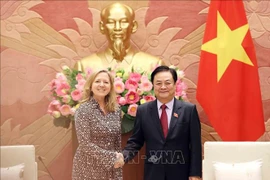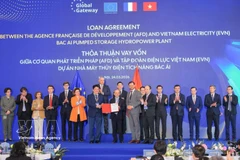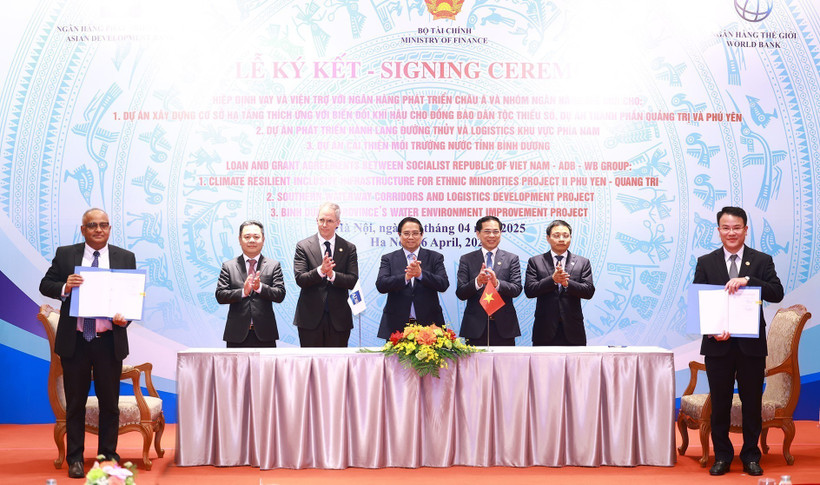
Hanoi (VNA) – A ceremony for signing loan and grant agreements worth nearly 400 million USD between Vietnam and the World Bank (WB) and the Asian Development Bank (ADB) for several socio-economic development projects in southern and central localities was held in Hanoi on April 16.
Accordingly, the WB will provide low-interest loans worth 5.35 trillion VND (230.76 million USD) and 2.49 trillion VND (107.67 million USD) for a project to improve water environment in the southern province of Binh Duong, and a waterway and logistics corridor development project in the southern region, respectively.
The project in Binh Duong, which has a total investment of 7.21 trillion VND, aims to improve the environmental pollution caused by urban wastewater in Thuan An, Di An, and Tan Uyen cities, improve the wastewater management capacity of Binh Duong, and strengthen water security for the downstream areas of the Saigon and Dong Nai rivers.
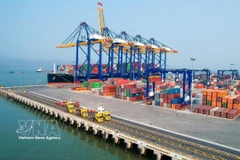
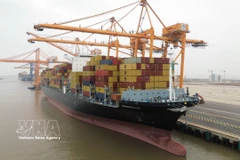
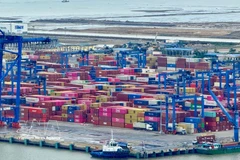
The second project, Southern Waterway Corridors and Logistics Development Project, has a total investment of 3.9 trillion VND, with nearly 2.5 trillion VND as loan from the WB's International Development Association.
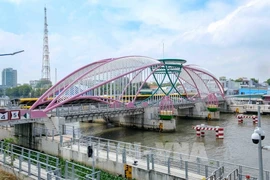
The project will improve infrastructure, reduce congestion and accidents, and lower waterway freight transport costs by upgrading the East–West and North–South transport corridors, linking the Mekong Delta with the Cai Mep - Thi Vai port cluster. It will also facilitate connection to the future Can Gio International Transshipment Port, boosting socio-economic development and ensuring national defence and security in the Mekong Delta and Southeast regions.
The third project, Climate Resilient Inclusive Infrastructure for Ethnic Minorities Project II in the central provinces of Phu Yen and Quang Tri, has total investment of 1.8 trillion.
ADB provides a loan of about 29 million plus an additional 1 million as grant for the Phu Yen sub-project (39.4 million), while the rest is counterpart funding from Phu Yen.
For Quang Tri sub-project (39.7 million in total), ADB brings a loan of 30 million USD and the rest is counterpart funding.
Mariam J. Sherman, World Bank Director for Vietnam, Cambodia and Laos, stated that these two projects represent strategic investments in Vietnam’s future.
"Upgrading southern waterways will ease port congestion, lower transport costs, and make trade more efficient by shifting freight from road to water, reducing emissions while boosting competitiveness. At the same time, expanding wastewater treatment in Binh Duong will protect vital resources and improve living conditions for hundreds of thousands."
The projects will "boost activity, strengthen regional connectivity, and lay the groundwork for more resilient and inclusive development," the WB official for the three Indochinese noted, adding that WB "stands ready to support their effective implementation and to partner with the Government on even more ambitious and transformative investments that deliver lasting impact."
WB and ADB are long-standing strategic development partners of Vietnam, having supported the country’s poverty reduction, infrastructure development, governance, and sustainable development goals for decades.
The WB is among the largest multilateral ODA and concessional loan providers to Vietnam, meeting about 35% of the Government’s external financing needs. As of April 2025, the WB has committed over 180 projects (loans, grants, and technical support) worth about 26 billion USD, with signed loan agreements totalling around 23 billion USD. Its financing has focused on key infrastructure, transport, energy, education, health, water, environment, and agriculture.
Since 1993, the ADB has committed over 18 billion USD in loans and grants to Vietnam, focusing on transport infrastructure, clean energy, vocational training, rural development, and climate change resilience—especially in disadvantaged and ethnic minority regions.
Beyond financial support, both the WB and ADB also served as advisory partners for the Vietnamese Government through technical assistance, project preparation, policy advice, and capacity-building.
This signing ceremony was part of the sidelines of the P4G Summit (Partnering for Green Growth and the Global Goals 2030) in Vietnam, further enhancing the country’s international reputation and reaffirming the Government’s strong commitment to sustainable development./.
VNA