Hanoi (VNA) – The Vietnam News Agency (VNA), a trusted strategic information agency of the Party, State, and people, and a respected press organisation regionally and globally, is moving forwards with specific and effective efforts to write the next chapter for the 80-year legacy of a heroic news agency.
The proud century-long journey of Vietnam’s revolutionary press began with the establishment of the “Thanh Nien” newspaper by Nguyen Ai Quoc, the then name of President Ho Chi Minh, on June 21, 1925. Over the past 100 years, Vietnam’s revolutionary press has accompanied the revolutionary cause of the Party and President Ho Chi Minh, and has stood alongside the nation’s glorious struggles for independence and development. It has served as a vanguard force and a sharp weapon on the ideological and cultural frontline of the Party.
In this 100-year path, the VNA has played an essential part. Throughout its 80-year history from the resistance wars against France and the US to the “Doi Moi” (Renewal) period, the international integration process, and now the Fourth Industrial Revolution, the VNA has remained at the forefront of information dissemination. It has consistently delivered timely, accurate, and objective reports on both domestic and international events, serving the Party’s leadership, the State’s management, and the public’s demand for official news.
For its outstanding contributions to and sacrifices during national defence and development periods, the VNA has been honoured three times with the title “Hero” – Hero of Labour in the Doi Moi period (2001) and Hero of the People’s Armed Forces (2005 and 2020). It has also been granted the Gold Star Order, the Ho Chi Minh Order twice, the first-class Independence Order twice, along with many other prestigious honours and medals.
Pioneer in information dissemination
On September 15, 1945, from the Bach Mai Radio Broadcast Station in Hanoi, the first bulletins of the “Viet Nam Thong tan xa”, which is now “Thong tan xa Viet Nam (Vietnam News Agency – VNA), were broadcast globally in Vietnamese, English, and French. Among them was the full text of the Declaration of Independence and the list of members of the Provisional Government of the Democratic Republic of Vietnam, now the Socialist Republic of Vietnam. This marked the establishment of the national news agency, an event of great national significance.
From that moment, the major milestones of Vietnam’s resistance and nation-building efforts were reported regularly and promptly by the agency, both via typed bulletins and radio signals, under the abbreviation VNTT (later VNTTX). The first French-language printed bulletin coded AVI was released during the general election for the 1st National Assembly on January 6, 1946. The first English-language printed bulletin coded VNA followed in August that year. The agency was also the first media outlet to send a photojournalist—who also reported for “Cuu quoc” newspaper—to the southern battlefield.
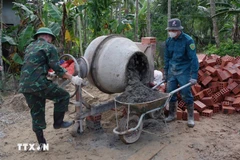
During decades of national resistance, with unwavering passion and dedication, the VNA staff, including journalists, telegraph operators, and drivers, were present on almost all frontlines, working side-by-side with the heroic People's Army of Vietnam. They reported with pens and cameras, and, when needed, took up arms against the enemy. Despite the country’s division for over 20 years, the agency’s information flow between the North and the South remained uninterrupted. Operating under the codename “Mission B”, nearly 450 VNA personnel were deployed to the southern battlefield, with hundreds more embedded alongside military units during major campaigns and operations.
On October 12, 1960, the Liberation Press Agency (LPA) officially came into being. Its first bulletin was transmitted from Duong Minh Chau Base in the southeastern region, using the code GPX. On December 20, 1960, the LPA published the news on the foundation of the National Front for the Liberation of South Vietnam – an event of historic significance that positioned the agency as the official voice of the Front and, later, the Provisional Revolutionary Government of the Republic of South Vietnam.
Throughout this period, the LPA had a presence in nearly every key strategic location and offensive. Reporters fought to defend bases and simultaneously gathered and transmitted crucial updates to the central leadership. In Hanoi, the VNA provided the LPA’s bulletins for national and local media outlets and also for the world.
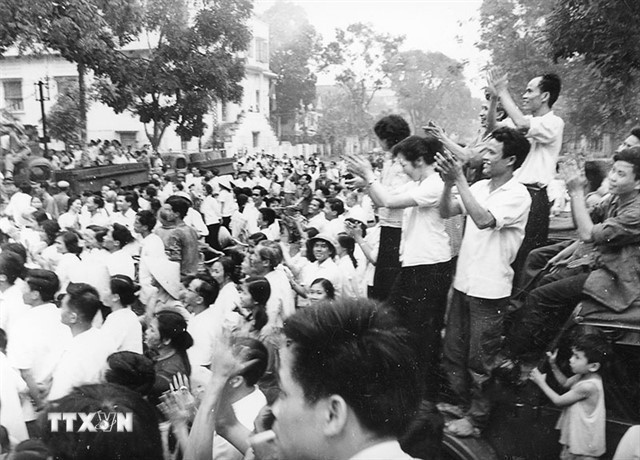
During the arduous years of war and the nation’s subsequent reconstruction, the VNA maintained a vital daily briefing known as special reference news. These briefings provided the Politburo, the Party Central Committee, and the Government with up-to-date and strategic insights crucial for making decisions on military operations, countering enemy sabotage in the North, managing foreign relations, and rallying global support. VNA and LPA reporters were among the first to reach the Independence Palace at noon on April 30, 1975 to record the historic moment of national reunification through powerful images and reports.
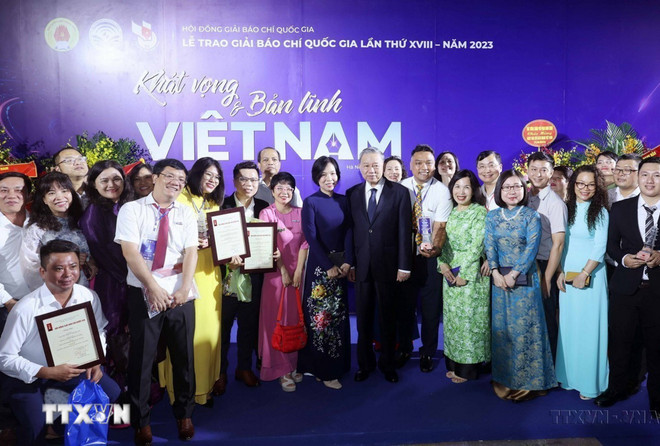
As the vanguard of revolutionary journalism, the VNA has always held a pioneering position, taking the lead in the revolutionary information sector. Throughout the historic turning points of the revolution and in many memorable moments, the VNA has consistently fulfilled its role as the main source of information, bearing the responsibility of guiding and correcting the information flow. It has helped to strengthen and reinforce the trust of the Party, the State, and the people while also fostering cooperation, solidarity, and support from colleagues and readers alike.
To keep the lifeline of information flowing, nearly 260 VNA journalists, editors, and technicians laid down their lives on battlefields from Viet Bac in the north to the southernmost Ca Mau, and in international missions, representing over 25% of the agency’s wartime personnel and two-thirds of Vietnam’s total journalist martyrs.
Upholding leading role in national media landscape
As Vietnam advances into a new era, aiming toward the centenary milestones of the Communist Party of Vietnam and the nation, opportunities and challenges abound. The Fourth Industrial Revolution, especially the rapid development of artificial intelligence (AI) and digital technology, requires media agencies, including the VNA, to innovate profoundly in content creation, journalistic methods, and multi-platform delivery to meet public expectations and support the Party and State’s strategic goals.
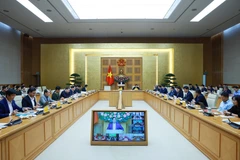
In this new context, the VNA is focusing on fulfilling its core function as the national news agency – publishing official information and documents of the Party and State, collecting and distributing information to aid the Party and State’s leadership and governance, and serving as a reliable source of information for mass media outlets and the public. The VNA’s information has helped decision-makers act swiftly and effectively. In many cases, rapid and accurate reporting has supported disaster response, crisis communication, and the safeguarding of the Party’s ideological foundation against hostile misinformation.
The agency is being developed into a modern and multimedia national communications powerhouse. Through innovation in leadership and operations, the VNA has made marked progress in fulfilling its political tasks. It is actively undergoing digital transformation in news production, launching a variety of multimedia content, and widely disseminating official information across multiple platforms. The VNA continues to strengthen its role as the Party and State’s strategic information supplier.
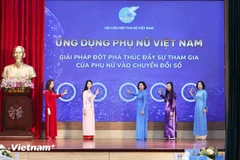
In response to the deepening digital transformation of journalism, the VNA, as a “bank of news”, has boosted its multimedia news packages by integrating text, photography and, since 2023, video content. It has also produced audio content (podcasts) for digital platforms. AI and smart technologies are increasingly employed in editorial workflows, including multilingual speech synthesis, voice and image recognition, text scanning, and automated spell checks. The agency is also designing specialised tools for broader application across its system.
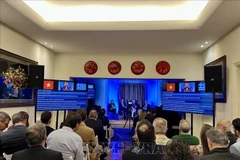
With five editorial departments, two source information centres, 63 domestic representative offices, and 30 international bureaux, along with its publishing and press units, the VNA has provided timely and accurate coverage across all areas of national interest. It reflects Vietnam’s stances on domestic, regional, and global issues while supporting requirements for communications about both domestic and external affairs.
The VNA’s source information is widely trusted for its accuracy and strategic value. Major news agencies routinely rely on its reports, which are regarded as authoritative and reliable expressions of the Party and State's viewpoints. At major events, VNA serves as the official supplier of images for both domestic and foreign media. Its archives and infographics are continuously updated to reflect current affairs and are broadly used. Reference bulletins are highly valued by Party and State leaders as well as scholars. The VNA’s newspapers, magazines, and publishing houses have been diversifying their content and expanding distribution channels, including on social media platforms like YouTube, TikTok, Facebook, Zalo, and Instagram, reaching millions of followers and interactions monthly.
In 2025, the VNA is streamlining its organisational structure by merging units, redefining roles and responsibilities, and updating internal regulations. As Vietnam’s national news agency, leading multimedia communications body, and main press outlet for external relations, the VNA will continue to showcase the nation’s achievements and aspirations after nearly four decades since the launch of “Doi Moi”. It will keep reaffirming the revolutionary press’s essential role in building and defending the country and ushering Vietnam into a new era of sustainable development.
VNA Party Secretary and General Director Vu Viet Trang affirmed that with an unwavering commitment to serve the revolutionary cause of the Party and the nation, today’s journalists at the VNA will continue to write the next chapter for the agency’s 80-year heroic legacy, contributing proudly to the 100-year journey of Vietnam’s revolutionary press in national development and progress./.