Young voices preserve Vi – Giam folk songs

Representing far more than simple melodies, Vi and Giam folk songs are the breath and soul of this land and its people. Today, these precious musical traditions stand at a crossroads, threatened by the rapid pace of modern life.

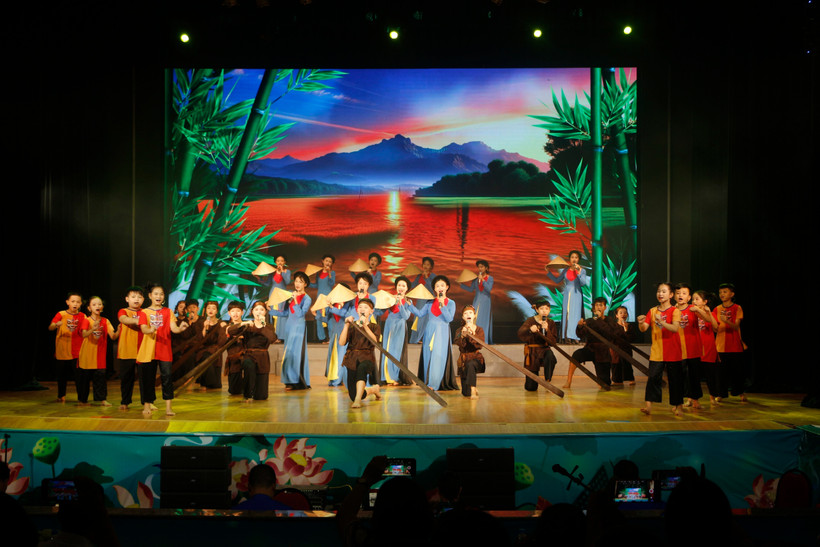
Nghe An students confidently perform Vi and Giam folk songs on stage. (Photo: VNA)

Nghe An (VNA) – The melodies of Vi and Giam folk songs continue to echo through classrooms and clubs across the central province of Nghe An, making the cultural current flow strong and clear into the future.

These ancient folk songs, inscribed in the Representative List of the Intangible Cultural Heritage of Humanity by UNESCO in 2014, represent far more than simple melodies. They are the breath and soul of this land and its people. Yet today, these precious musical traditions stand at a crossroads, threatened by the rapid pace of modern life.

Over the past four years, Nghe An has operated classes teaching Vi and Giam folk songs to talented students at primary and secondary schools. The current 36 students from 130 communes and wards across the province were chosen for their genuine passion and natural aptitude for folk music.
vna-potal-giu-mach-nguon-vi-giam-xu-nghe-8185004.jpg
After only a short period of training, the students confidently deliver performances requiring high levels of techniques. (Photo: VNA)

With dedicated guidance from artists and experienced educators, the kids have better insights into a rich repertoire of traditional and adapted folk styles, from Vi phuong vai Truong Luu, Vi do dua song Lam, and Giam ve to newly-composed melodies like Hat khuyen, Tu hoa, and Xam thap an.

Musician Tran Quoc Trung, Director of the province’s traditional art centre, said that it is incredible to see the children mastering such emotionally and technically complicated works in a short time, stating their stellar performances are not only a testament to their talent but also a sign of a bright future for traditional art.

The preservation of Vi and Giam extends beyond mere archival work to active promotion in contemporary life. Within communities, dedicated artisans have passed on the folk songs to younger generations.

People’s Artisan Vo Thi Hong Van, head of the Ngoc Son Vi – Giam folk singing club in Xuan Lam commune, has run classes for children of all ages, from ten-year-olds to teenagers, who can skilfully sing many melodies after 10–15 lessons thanks to their love for folk music and fondness for learning. Van has also collected original melodies, studied traditional instruments, and staged performances for the participants.
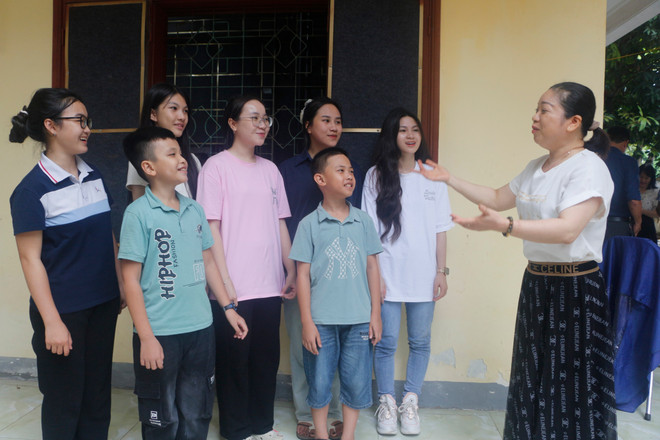
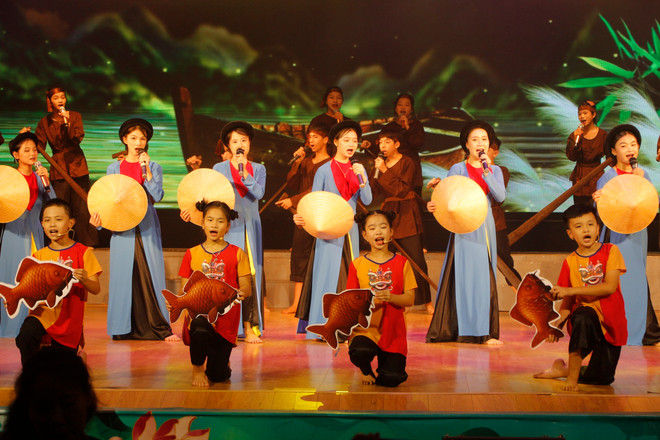
Nghe An province launches classes to teach Vi and Giam folk songs to talented students at local primary and secondary schools. (Photo: VNA)

Nghe An province launches classes to teach Vi and Giam folk songs to talented students at local primary and secondary schools. (Photo: VNA)

Schools across Nghe An have also incorporated folk singing into extracurricular activities, while local singing clubs hold regular rehearsals, performances, and exchange events to keep the art alive. Besides, the province has organised multiple festivals and competitions, creating a venue for clubs and art troupes to share experience.

Meanwhile, the province’s traditional art centre has adopted multiple solutions to preserve the traditional art, with researchers and collectors documenting melodies and lyrics in written form while digitalising the art through audio and video recordings. It is also capitalising on social networks to further popularise Vi and Giam among the public, especially the young, head of its research and collection division Ta Duong said.

Deputy Director of the provincial Department of Culture, Sports and Tourism Quach Thi Cuong noted that the sector is working out a specific roadmap to develop Vi and Giam folk songs into a tourism product to spread the value of this unique heritage./.
VNA

See more

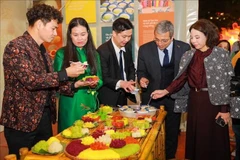
Visitors enjoy Hanoi food at a booth at the festival (Photo: VNA)

Hanoi culinary culture festival underway, honouring capital’s unique tastes

With the message of “listening to the stories of culinary heritage so that dining becomes a cultural experience,” the three-day annual festival seeks to link heritage with creative activities, develop cultural products from cuisine, and enhance the appeal of culinary heritage as a driver of the capital’s cultural industries.

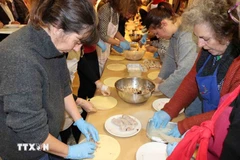
Attendees practice wrapping spring rolls (Photo: VNA)

Vietnamese spring roll class draws Europeans into culinary culture

Co-hosted by the Trade Office of the Vietnamese Embassy in Belgium and the school, the event sought to highlight the sophistication of Vietnamese food to students and faculty. Over 50 attendees of varying ages joined the special evening, turning a standard classroom into a lively hub for cultural exchange.

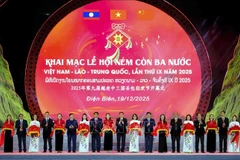
Delegates cut the ribbon to open the festival (Photo: VNA)

Con throwing festival highlights cross-border solidarity, culture

The ninth Vietnam–Laos–China “con” throwing festival is underway in the northern mountainous province of Dien Bien on December 19, aiming to preserve traditional culture while promoting cross-border solidarity and mutual understanding among the three countries.

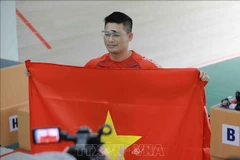
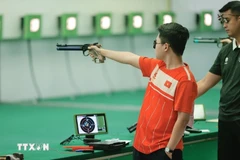
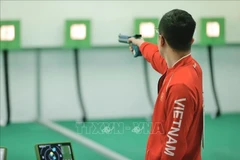
Shooter Ha Minh Thanh of Vietnam (Photo: VNA)

“Golden rain” day closes Vietnam’s resilient journey at SEA Games 33

As of 21:00 on December 19, Vietnam had won 86 gold, 79 silver and 110 bronze medals, with athletes remaining in only sepak takraw and open-water swimming events. Thailand led with 232 golds, 153 silvers and 106 bronzes, while Indonesia came second with 91golds, 111 silvers, and 128 bronzes.

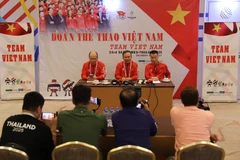
Head of the Vietnamese sports delegation Nguyen Hong Minh (centre) and two deputy heads of the delegation preside over the meeting with reporters covering the SEA Games in Bangkok. (Photo: VNA)

Vietnam fulfils key targets at 33rd SEA Games: delegation head

The three major goals are maintaining and enhancing Vietnam’s position among the region’s leading sporting nations; achieving breakthroughs in key sports, particularly Olympic disciplines; and projecting the image of a civilised, professional and disciplined delegation to the international community, Minh said.

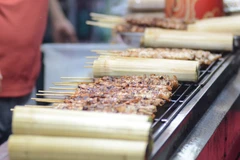
Culinary offerings on display at the International Culinary Festival “Hue – Capital of Cuisine”. (Photo: VNA)

Hue spotlights its culinary soul at international food festival

The festival brings together more than 50 food stalls from provinces and cities nationwide, alongside a strong international presence. Visitors are immersed in a lively culinary space featuring live cooking demonstrations, presentations of regional specialities and international dishes, high-quality OCOP products, and food models designed with export potential in mind.