14th National Congress: Culture must have proper position in national development strategy

The 14th National Party Congress will continue to elevate culture as the spiritual foundation of society, an intrinsic driver of sustainable development, and an important source of national soft power, contributing to a modern, deeply integrated yet culturally rich and humane Vietnam.

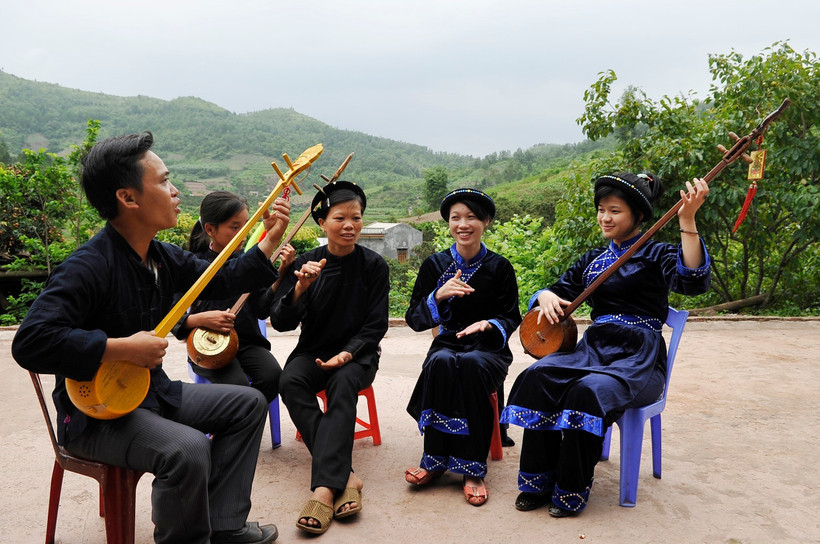
Artisan Luc Van Tich and members of the Then singing club in Son Hai commune, Bac Ninh province (Photo: VNA)

Hanoi (VNA) - The 14th National Congress of the Communist Party of Vietnam, scheduled for January 19-25, is expected to further reaffirm culture as the spiritual foundation of society, an intrinsic driver of sustainable development, and a key pillar of national soft power amid deeper international integration.

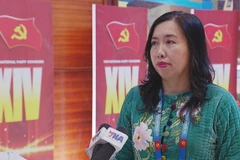
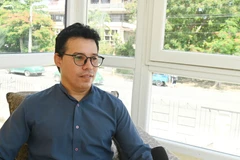
Talking to the Vietnam News Agency's correspondent in Paris, writer and cultural researcher Tran Thu Dung, a Vietnamese national long engaged in cultural and artistic life in France, said that culture has always held a particularly important place in national development, alongside science-technology.

While science-technology creates material strength, production capacity and competitiveness, culture provides spiritual depth and lasting social values. A civilisation built solely on skyscrapers, technology and commerce would become rigid and lifeless without art, green spaces and humanistic values, she said. From the perspective of a cultural researcher working abroad, she stressed that the 14th National Party Congress should continue to place culture in its proper position within the national development strategy, viewing it as a pillar alongside science-technology.

A country seeking to attract tourism, investment and talent cannot rely only on economic growth or technological progress, but must also possess a culture that is profound and inspiring, Dung stated.

On international integration, Dung emphasised the principle of “integration without dilution”. She said openness to external cultural influences is inevitable in a globalised world, but preserving and promoting national cultural identity must be selective and well considered, avoiding distortion or excessive commercialisation while retaining core values.

Sharing experience from France as President of the Aurore (Light) Association, she said effective cultural dissemination should begin with education. In France, many historic sites have been renovated into schools and universities, helping preserve heritage while serving communities. Schools, she noted, are cultural spaces that shape character, nurture pride and contribute to forming responsible citizens and future “cultural ambassadors”.

Drawing on her experience with local cultural institutions in France, Dung highlighted policies that bring heritage closer to the public, such as periodic free access to museums and cultural sites. These measures allow broader public engagement, foster national pride and strengthen awareness of heritage preservation. When culture becomes part of daily life, each citizen can help promote the country’s image abroad.

Regarding overseas Vietnamese communities, she said cultural and art practitioners abroad play an important role in preserving the Vietnamese language and spreading the Vietnamese culture, but face challenges related to livelihoods and operating conditions. She, therefore, called for more practical support mechanisms and policies.

According to her, building Vietnam’s image through culture requires selective investment. Culinary culture is an effective channel, but teaching the Vietnamese language and promoting culture demand professional educators and deep cultural understanding, as language education also conveys historical and identity-related values.

She proposed enhancing support for promoting Vietnamese culture overseas, viewing this as a means of national image promotion and sovereignty affirmation through education, culture and tourism, including information on Vietnam’s Hoang Sa (Paracel) and Truong Sa (Spratly). Vietnamese cultural centres abroad should be further invested to become shared community spaces for both overseas Vietnamese and international friends.

Dung expressed her hope that the 14th National Party Congress will continue to elevate culture as the spiritual foundation of society, an intrinsic driver of sustainable development, and an important source of national soft power, contributing to a modern, deeply integrated yet culturally rich and humane Vietnam./.

VNA
See more

Delegates join group discussions at the ongoing 14th National Party Congress (Photo: VNA)

14th National Party Congress: Delegates eye reforms in new era

During the discussions, Prime Minister Pham Minh Chinh summed up key lessons drawn from the Government’s management during the previous term, stressing the need to turn Party resolutions into laws and renewing growth drivers for the next development phase.

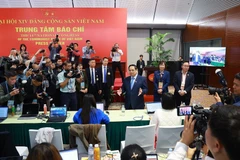
PM Pham Minh Chinh visits the press centre serving the 14th National Party Congress (Photo: VNA)

PM urges media to spotlight key outcomes of 14th Party Congress

During a visit to the press centre amid a break in proceedings, PM Pham Minh Chinh met with reporters and inquired about their working conditions. He described the press as a hardworking and vital force, so that all possible support should be offered to them, including adequate infrastructure, reliable internet connectivity, and a conducive work environment to enable timely, comprehensive, accurate, diverse, and engaging coverage.

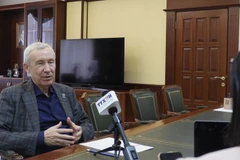
Andrey Klimov, member of the Presidium of the Supreme Council of the United Russia Party (UR), grants an interview to the Vietnam News Agency. (Photo: VNA)

14th National Party Congress: Russian political party expresses confidence in future of comprehensive cooperation

Andrey Klimov, member of the Presidium of the Supreme Council of the United Russia Party (UR), emphasised that the Communist Party of Vietnam (CPV) holds a vital role in every aspect of national life. Therefore, the 14th National Congress will not only set the main course for Vietnam’s development but also influence the country’s governance style and administrative approach.

☕ Afternoon briefing on January 20

☕ Afternoon briefing on January 20

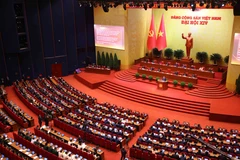
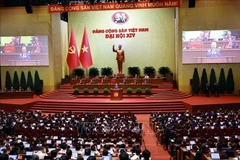
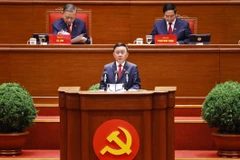
The 14th National Congress of the Communist Party of Vietnam (CPV) solemnly opened at the National Convention Centre in Hanoi on January 20 morning.

A panoramic view of the opening session of the 14th National Congress of the Communist Party of Vietnam. (Photo: VNA)

Political parties, int'l organisations, friends, OV send congratulatory messages to 14th National Party Congress

These messages constitute a significant source of encouragement and support for Vietnam’s renewal process initiated and led by the CPV. They also vividly reflect the increasingly deep and substantive relations of friendship and cooperation between the CPV and political parties, organisations and friends around the world, as well as the growing attachment of overseas Vietnamese communities to their homeland.

Vietnam - An exemplary model of development for Cuba: Cuban journalist

Vietnam - An exemplary model of development for Cuba: Cuban journalist

Wennys Díaz Ballaga, a special correspondent of Granma - the official newspaper of the Communist Party of Cuba - has highly praised the professional organisation of the 14th National Congress of the Communist Party of Vietnam, affirming that Vietnam’s socio-economic development model serves as an important reference for Cuba and other socialist countries.

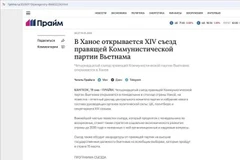
Russia’s financial and economic news portal at https://1prime.ru/news/ reported that the congress will focus on discussions and approve Vietnam's socio-economic development strategy through 2030. (Photo: screenshot)

14th Party National Congress draws international attention

The international media stressed that the 14th National Congress of the CPV is not only a major political event for the country but also marks the beginning of a new development period, shaping Vietnam’s vision and motivation for the decades ahead.

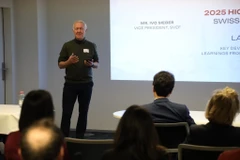
Ivo Sieber, former Swiss Ambassador to Vietnam, speaks at an event in Zurich. (Photo: VNA)

14th National Party Congress comes at pivotal moment for Vietnam: Swiss expert

On Vietnam–Switzerland relations, which were established in 1971 and upgraded to a comprehensive partnership in January 2025, Ivo Sieber, a member of the Swiss–Vietnamese Economic Forum (SVEF) and former Swiss Ambassador to the country, expressed confidence that, as the two countries mark the 55th anniversary of diplomatic ties this year, existing links and cooperation will be further strengthened.

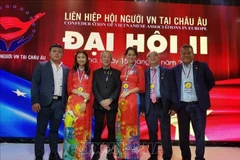
Nguyen Hai Nam (far right) attends the second Congress of the Union of Vietnamese Associations in Europe. (Photo: VNA)

14th National Party Congress: New momentum from reform, integration, OV resources

The 14th National Party Congress is expected to continue to expand and further specify policies aimed at attracting overseas Vietnamese, particularly the Vietnamese community in France—one of the largest and longest-established communities in Europe, numbering around 350,000 people and exceeding 600,000 when including French citizens of Vietnamese origin.

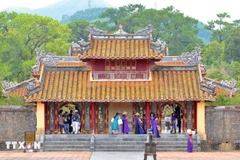
Tourists in Hue city. (Photo: VNA)

Hue advances heritage city vision, global cultural tourism profile

By 2030, Hue aims to become a distinctive heritage city of Vietnam, while emerging as one of Southeast Asia’s leading and unique centres for culture, tourism and specialised healthcare. It also aspires to be among the country’s major hubs for science and technology, as well as for high-quality, multi-disciplinary education and training.