14th National Party Congress: Vietnam enters new stage of development with solid growth foundation

The diplomatic and economic efforts by Vietnam have increased Vietnamese export competitiveness, helped improve infrastructure and logistics, proven Vietnam’s ability to attract global firms, and demonstrated agile diplomacy, said Piper Campbell, inaugural chair of the Department of Foreign Policy and Global Security at American University’s School of International Service.

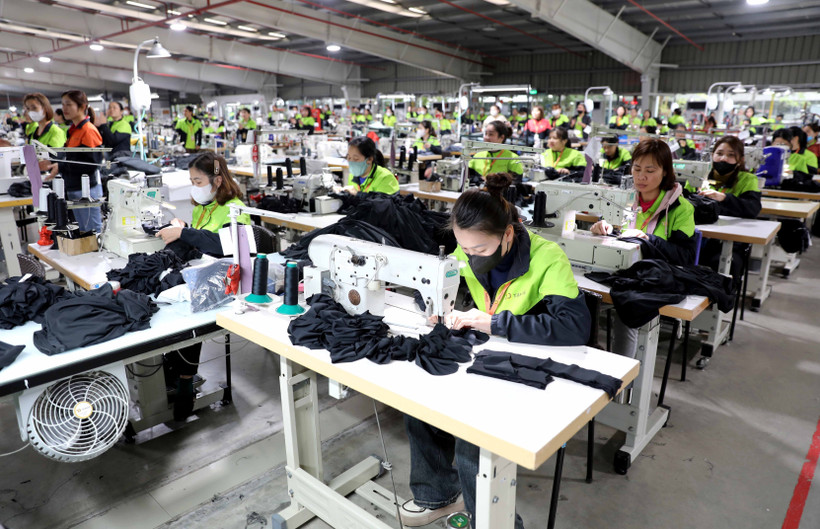
Workers at the Tan De 1 Factory in Nguyen Duc Canh Industrial Park, Hung Yen province make sportswear products (Photo: VNA)

Washington (VNA) – Piper Campbell, inaugural chair of the Department of Foreign Policy and Global Security at American University’s School of International Service, has expressed her strong impression of Vietnam’s economic growth and rising prestige, while offering a number of recommendations aimed at promoting sustainable growth in the coming period.

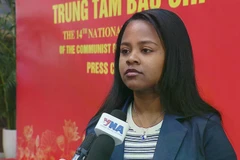
In an interview with Vietnam News Agency (VNA) correspondents in Washington ahead of the 14th National Congress of the Communist Party of Vietnam, Campbell said that as a former diplomat and a specialist in Southeast Asian geopolitics, she finds Vietnam’s economic growth and international standing in recent years to be highly impressive and interconnected.

With GDP growth in 2025 reported to be around 8% and solid industrial output, retail sales, trade and foreign investment, the measures of Vietnam’s strong economic growth are clear, including in comparison with its peers, she noted.

“This economic growth is particularly notable when one considers that 2025 globally has been a year marked by significant disruption and unpredictability, including because of actions of the current US administration,” she said.

On the diplomatic front, Campbell observed that Vietnam has continued to pursue its approach of “multilateralisation and diversification of foreign relations”, adding that developments in recent years have shown this to be a clever strategy.

“Looking back to 2020, when Vietnam served admirably as ASEAN Chair during an particularly challenging year, Vietnam has expanded and deepened its high-level engagemenent and partnerships. In doing so, it enhanced its role on the global stage,” she stressed.

campbell.jpg
Piper Campbell, inaugural chair of the Department of Foreign Policy and Global Security at American University’s School of International Service (Photo: Courtesy of Piper Campbell)

Referring to Vietnam–US relations, Campbell noted that the bilateral relationship was elevated to a Comprehensive Strategic Partnership in 2023, signalling expectations for a higher level of cooperation across many fields, including technology, supply chain diversification, climate and energy, and education.

The former ambassador, who has more than 30 years of experience working in the Asia–Pacific region, remarked that while the path since 2023 has not been without challenges, officials of the Trump administration continue to regard Vietnam as one of the US’ most important partners in the region. They have affirmed that a strong, independent and resilient Vietnam is in the US interest and have maintained their interest in advancing a framework for a reciprocal, fair and balanced trade agreement.

According to Campbell, the diplomatic and economic efforts by Vietnam have increased Vietnamese export competitiveness, helped improve infrastructure and logistics, proven Vietnam’s ability to attract global firms, and demonstrated agile diplomacy.

Commenting on priorities set out at the 14th National Party Congress, she said the congress is not only setting goals for the next five years but also developing a long-run roadmap beyond 2030. That is not easy in a volatile and rapidly changing world. Aiming for durable (not fragile or too fast) growth makes tremendous sense.

She added that Vietnam needs to continue focusing on moving up the value chain in terms of productivity and industrial upgrading. Today’s rapid pace of change presents both new opportunities and new pressures to enhance capacities and raise standards, particularly in sophisticated sectors such as electronics, precision manufacturing and digital services.

“I am very interested in the Government’s commitment to becoming a technology-driven economy and its decision to triple spending on science and technology by 2026. Advances in this area will also require improvements in infrastructure, including energy, as well as investment in human capital to train the necessary workforce,” said Campbell, who also leads the ASEAN and Indo-Pacific Studies Initiative at American University.

Emphasising the importance of the private sector, she noted that Vietnam continues to attract strong interest from the US private sector. However, she stressed that sustainable private investment depends on an enabling business environment, including clear and fair regulations and consistent anti-corruption efforts./.
See more

Minister of Foreign Affairs Le Hoai Trung meets with Canada's Minister of International Trade Maninder Sidhu on February 12, 2026. (Photo: Ministry of Foreign Affairs)

Vietnam–Canada ties gain fresh momentum after ministerial meeting

The two ministers agreed on measures to advance the Comprehensive Partnership, pledging to facilitate cooperation in trade and investment, defence and security, official development assistance, tourism and people-to-people exchanges, while expanding collaboration in emerging areas such as supply chains, AI, semiconductors, quantum technology, clean energy transition, renewable energy, green agriculture, environmental protection and climate change response.

From right: National Assembly Chairman Tran Thanh Man (2nd) visits and extends New Year greetings to former State President Nguyen Minh Triet (3rd) on February 12. (Photo: VNA)

NA Chairman pays pre-Tet visits to former Party, state leaders

On behalf of the NA Standing Committee, the top legislator expressed deep appreciation for the significant contributions made by the former leaders to the revolutionary cause of the Party and the State, as well as to the national construction and development during the Doi Moi (Renewal) period.

A delegation led by PM Pham Minh Chinh pays respect to former Deputy Chairman of the Council of Ministers Doan Duy Thanh (Photo: VNA)

Memorial service for former Government leader in Hanoi

The Central Committee of the Communist Party of Vietnam, the National Assembly, the State President, the Government, the Central Committee of the Vietnam Fatherland Front (VFF) held a state-protocol memorial service for former Deputy Chairman of the Council of Ministers (now the Government) Doan Duy Thanh in Hanoi on February 12.

Party General Secretary To Lam speaks at the working session (Photo: VNA)

Dak Lak must link Central Highlands with south central coast: Party chief

During a working session with the provincial Party Organisation, authorities and residents on February 11, which linked virtually with 102 local wards and communes, Party General Secretary To Lam hailed their achievements last year, urging immediate translation of the 14th National Party Congress's orientations and directives into concrete actions and measurable outcomes from the outset of the new term.

Party General Secretary To Lam, who is also Secretary of the Central Military Commission, visits officers and soldiers of the Ea H’Leo Border Guard Station on February 11 (Photo: VNA)

Party chief extends Tet greetings to border guards in Dak Lak province

The Party leader acknowledged and highly valued the strong sense of responsibility and perseverance of the station’s officers and soldiers. Despite being stationed in a border area with many difficulties, they have remained steadfast at their posts, focused on building a regular, green, clean and beautiful unit, promoted production activities, and gradually improved the material and spiritual lives of the troops.

Nguyen Manh Cuong, member of the Party Central Committee, Standing Deputy Secretary of the Party Committee and Deputy Minister of Foreign Affairs. (Photo: VNA)

Official stresses proactive implementation of 14th Party Congress Resolution in foreign affairs

The foreign policy of the 14th Congress represents both continuity and development. It inherits the fundamental objectives, principles and approaches affirmed over previous congresses, namely independence, self-reliance, peace, cooperation, development, multilateralisation and diversification, while introducing new dimensions to meet the country’s Fatherland construction and safeguarding requirements in the new era.