14th National Party Congress: Vietnam’s strategic shift in new era

Vietnam now stands at the threshold of a new development era, driven by strong aspirations and substantial potential. The 14th Party Congress is, therefore, of decisive importance for the country’s future transformations, particularly amid an international environment marked by uncertainty and volatility. While this phase may be among the most complex of the renewal process, it also presents a critical opportunity for Vietnam to break through and evolve from an “Asian tiger” into a regional “dragon.”

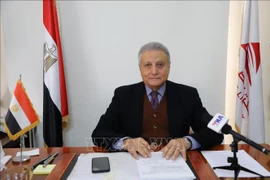
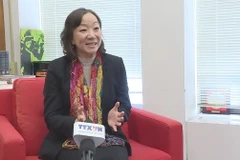
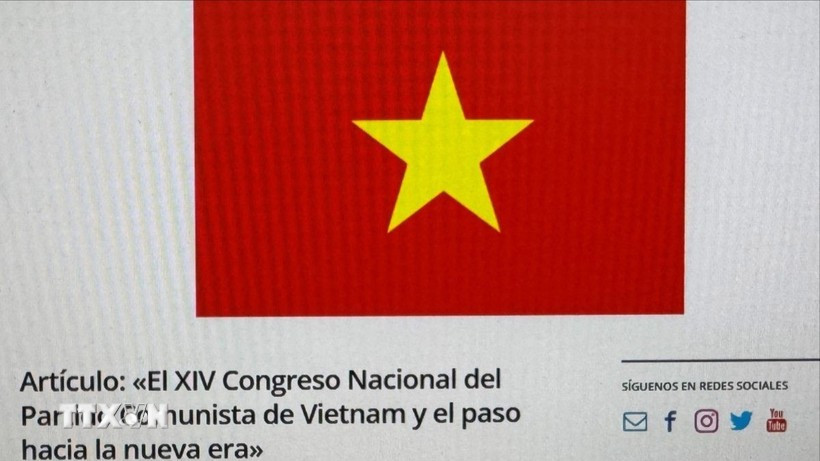
The article titled “The 14th National Congress of the Communist Party of Vietnam and the Advance toward a New Era,” published on aladaainternacional.com, the website of the Latin American Center for Studies on Asia and Africa. (Photo: VNA)

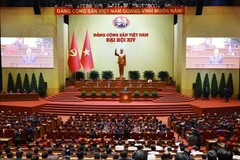
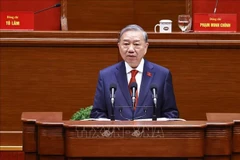
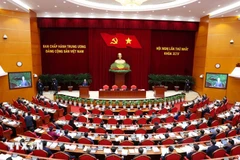
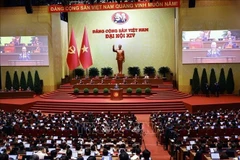
Havana (VNA) — The 14th National Party Congress marks a pivotal moment in shaping strategic directions and opening a pathway toward a new era of national development, according to Cuban scholar Dr Ruvislei González Saez.

In his article titled “The 14th National Congress of the Communist Party of Vietnam and the advance toward a new era”, published on aladaainternacional.com of the Latin American Centre for Studies on Asia and Africa, Dr González Saez said that Vietnam is no longer viewed solely as an “Asian tiger,” but is entering a transformative phase toward becoming a middle power. This transition, he noted, requires Vietnam to reshape not only its domestic development strategies but also its modes of engagement on the international stage, across both bilateral and multilateral levels.

The author underscored the historic significance of the 14th Congress, highlighting that for the first time, its documents go beyond articulating vision and objectives to include concrete action programmes with clearly defined projects, timelines, and responsibilities. This approach enables the immediate implementation of resolutions following the Congress, translating ambitious strategic goals into practical and measurable steps.

According to the article, after nearly a century of leading the nation through successive challenges, the Communist Party of Vietnam now faces a new historic mission: guiding the country into what has been termed “the era of national rise,” and realising the aspiration for a strong, prosperous, and happy Vietnam, to attain developed-country status by 2045. To achieve this, Vietnam must continue addressing key challenges, including strengthening anti-corruption efforts, improving the quality of human resources, refining institutional and business environments, managing debt risks, and accelerating innovation and development in line with the Fourth Industrial Revolution.

On the external front, the article emphasised the need for Vietnam to diversify markets, proactively adapt to an increasingly complex international environment, and avoid entanglement in regional and global conflicts.

Dr González Saez also recalled that the Communist Party of Vietnam initiated and led the Doi Moi (Renewal) process, launched in 1986 - a historic decision that generated profound and comprehensive transformations. After four decades of reform, Vietnam has emerged from poverty and underdevelopment to one of the world’s most dynamic economies. The poverty rate has dropped dramatically, from about 80% of the population in 1985 to roughly 1.3% by 2025.

In the author’s assessment, Vietnam now stands at the threshold of a new development era, driven by strong aspirations and substantial potential. The 14th Party Congress is, therefore, of decisive importance for the country’s future transformations, particularly amid an international environment marked by uncertainty and volatility. While this phase may be among the most complex of the renewal process, it also presents a critical opportunity for Vietnam to break through and evolve from an “Asian tiger” into a regional “dragon.”/.

VNA
See more

Minister of Foreign Affairs Le Hoai Trung meets with Canada's Minister of International Trade Maninder Sidhu on February 12, 2026. (Photo: Ministry of Foreign Affairs)

Vietnam–Canada ties gain fresh momentum after ministerial meeting

The two ministers agreed on measures to advance the Comprehensive Partnership, pledging to facilitate cooperation in trade and investment, defence and security, official development assistance, tourism and people-to-people exchanges, while expanding collaboration in emerging areas such as supply chains, AI, semiconductors, quantum technology, clean energy transition, renewable energy, green agriculture, environmental protection and climate change response.

From right: National Assembly Chairman Tran Thanh Man (2nd) visits and extends New Year greetings to former State President Nguyen Minh Triet (3rd) on February 12. (Photo: VNA)

NA Chairman pays pre-Tet visits to former Party, state leaders

On behalf of the NA Standing Committee, the top legislator expressed deep appreciation for the significant contributions made by the former leaders to the revolutionary cause of the Party and the State, as well as to the national construction and development during the Doi Moi (Renewal) period.

A delegation led by PM Pham Minh Chinh pays respect to former Deputy Chairman of the Council of Ministers Doan Duy Thanh (Photo: VNA)

Memorial service for former Government leader in Hanoi

The Central Committee of the Communist Party of Vietnam, the National Assembly, the State President, the Government, the Central Committee of the Vietnam Fatherland Front (VFF) held a state-protocol memorial service for former Deputy Chairman of the Council of Ministers (now the Government) Doan Duy Thanh in Hanoi on February 12.

Party General Secretary To Lam speaks at the working session (Photo: VNA)

Dak Lak must link Central Highlands with south central coast: Party chief

During a working session with the provincial Party Organisation, authorities and residents on February 11, which linked virtually with 102 local wards and communes, Party General Secretary To Lam hailed their achievements last year, urging immediate translation of the 14th National Party Congress's orientations and directives into concrete actions and measurable outcomes from the outset of the new term.

Party General Secretary To Lam, who is also Secretary of the Central Military Commission, visits officers and soldiers of the Ea H’Leo Border Guard Station on February 11 (Photo: VNA)

Party chief extends Tet greetings to border guards in Dak Lak province

The Party leader acknowledged and highly valued the strong sense of responsibility and perseverance of the station’s officers and soldiers. Despite being stationed in a border area with many difficulties, they have remained steadfast at their posts, focused on building a regular, green, clean and beautiful unit, promoted production activities, and gradually improved the material and spiritual lives of the troops.

Nguyen Manh Cuong, member of the Party Central Committee, Standing Deputy Secretary of the Party Committee and Deputy Minister of Foreign Affairs. (Photo: VNA)

Official stresses proactive implementation of 14th Party Congress Resolution in foreign affairs

The foreign policy of the 14th Congress represents both continuity and development. It inherits the fundamental objectives, principles and approaches affirmed over previous congresses, namely independence, self-reliance, peace, cooperation, development, multilateralisation and diversification, while introducing new dimensions to meet the country’s Fatherland construction and safeguarding requirements in the new era.