14th National Party Congress: Vietnam builds strength for strategic autonomy after 40 years of renewal

Reda El Taify, former Egyptian Ambassador to Vietnam and current Director of the Egyptian Public Library Fund, said Vietnam's accomplishments are reflected across three major pillars – socio-economic development, national defence and security, and foreign affairs.

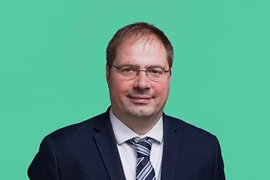
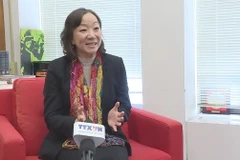
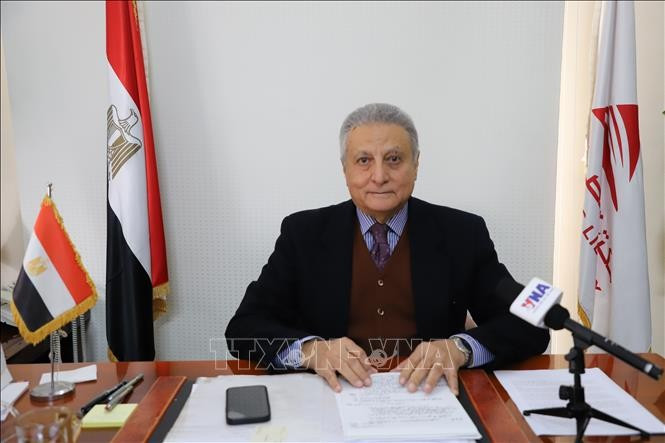
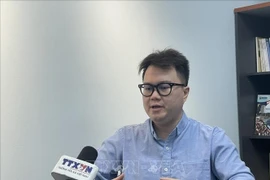
Reda El Taify, former Egyptian Ambassador to Vietnam (Photo: VNA)

Cairo (VNA) – Over the past 40 years, Vietnam has achieved tremendous, comprehensive, and historically significant progress, clearly proving the effectiveness of the Doi Moi (Renewal) policy, according to Reda El Taify, former Egyptian Ambassador to Vietnam and current Director of the Egyptian Public Library Fund.

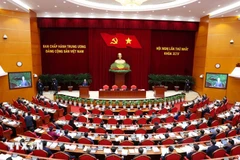
Speaking to a Vietnam News Agency correspondent in Cairo on the occasion of the 14th National Congress of the Communist Party of Vietnam, El Taify said that the accomplishments are reflected across three major pillars – socio-economic development, national defence and security, and foreign affairs.

On the socio-economic front, the Doi Moi process brought about breakthroughs. The country has successfully transitioned from an inefficient centrally-planned economy to a socialist-oriented market economy, with the State playing a regulatory role and people and businesses actively participating. Vietnam has risen from a poor, low-income nation to a middle-income country, while maintaining high GDP growth rates over many decades, among the leading performers in the region, significantly improving living standards.

He noted that Vietnam’s economic structure has shifted positively towards industrialisation and modernisation. From failing to meet domestic food needs, agriculture has become a pillar of the economy, firmly ensuring food security and positioning Vietnam among the world’s leading agricultural exporters. Industry and services have developed strongly, particularly in processing and manufacturing, information technology, logistics and tourism. Meanwhile, improvements in the investment and business environment have enabled Vietnam to attract substantial foreign direct investment and integrate more deeply into global value and supply chains.

Socially, El Taify praised Vietnam’s achievements in poverty reduction, education, healthcare, science and technology, and social security. Particularly, the country’s Human Development Index has steadily improved, while the Vietnamese people’s material and spiritual living standards have improved, strengthening social trust and consensus.

In national defence and security, he said, Vietnam has achieved strategic-level successes in maintaining a peaceful and stable environment for development. The country has remained steadfast in safeguarding independence, sovereignty, unity and territorial integrity, while building an all-people national defence posture combined with a people’s security posture. The armed forces have been developed in a revolutionary, regular, elite and gradually modern direction, capable of addressing both traditional and non-traditional security challenges. Vietnam has also contributed to United Nations peacekeeping operations, further enhancing its international standing.

On foreign affairs, El Taify highlighted Vietnam’s foreign policy of independence, self-reliance, multilateralisation and diversification of external ties. From a country once subjected to blockade and embargo, Vietnam has established diplomatic relations with most nations worldwide and built an extensive network of strategic and comprehensive partnerships. Participation in new-generation free trade agreements has expanded markets, attracted investment and strengthened national competitiveness, while Vietnam has demonstrated a proactive, responsible role in regional and international forums.

Looking ahead, he stressed that amid rapid, complex and unpredictable global changes, strengthening strategic autonomy is vital. Strategic autonomy, he said, does not mean isolation, but the capacity to independently determine development paths, safeguard core interests and flexibly adapt to external fluctuations.

To achieve this, Vietnam should consolidate strong internal economic capacity, shift growth towards productivity, science, technology and innovation, diversify markets and supply chains, and invest in high-quality human resources and institutional reform. Strategic autonomy, he concluded, must go hand in hand with a proactive, flexible and multilateral foreign policy, leveraging Vietnam’s political credibility and image as a responsible and reliable partner to build resilience and confidence in the new development stage./.
VNA

See more

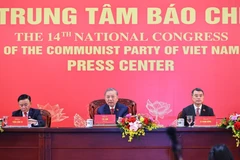
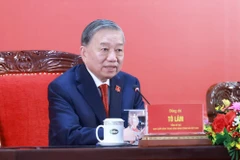
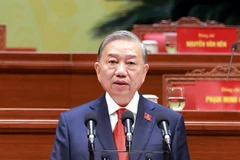
Party General Secretary To Lam speaks at an international press conference announcing the results of the 14th National Party Congress on the afternoon of January 23. (Photo: VNA)

Renewing mindset, setting development vision through 2045: Party General Secretary To Lam

The political report integrates three previously separate documents - the political report, the socio-economic report and the review of Party building - into a single, unified and comprehensive one, with clearer priorities. Designed to be concise, easy to understand, remember and implement, this integration stands out as a key hallmark of the Congress.

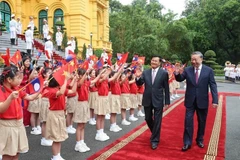
Communist Party of Vietnam General Secretary To Lam (right) and General Secretary of the Central Committee of the Lao People’s Revolutionary Party and President of Laos Thongloun Sisoulith during his visit to Vietnam on September 10, 2024 (Photo: VNA)

Top Lao leader to pay state visit to Vietnam

General Secretary of the Central Committee of the Lao People’s Revolutionary Party and President of Laos Thongloun Sisoulith and his spouse will pay a state visit to Vietnam from January 26 to 27.

The article titled “The 14th National Congress of the Communist Party of Vietnam and the Advance toward a New Era,” published on aladaainternacional.com, the website of the Latin American Center for Studies on Asia and Africa. (Photo: VNA)

14th National Party Congress: Vietnam’s strategic shift in new era

Vietnam now stands at the threshold of a new development era, driven by strong aspirations and substantial potential. The 14th Party Congress is, therefore, of decisive importance for the country’s future transformations, particularly amid an international environment marked by uncertainty and volatility. While this phase may be among the most complex of the renewal process, it also presents a critical opportunity for Vietnam to break through and evolve from an “Asian tiger” into a regional “dragon.”

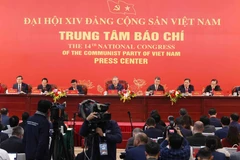
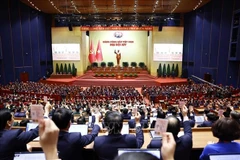
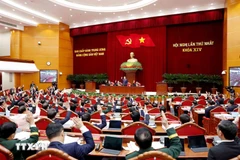
Delegates vote to approve the Resolution of the 14th National Party Congress (Photo: VNA)

14th National Party Congress adopts Resolution

For the 2026–2030 period, key targets for Vietnam include average annual GDP growth of at least 10%; per-capita GDP of about 8,500 USD by 2030; manufacturing and processing accounting for roughly 28% of GDP; the digital economy contributing around 30% of GDP.

☕ Afternoon briefing on January 23

☕ Afternoon briefing on January 23

General Secretary of the 13th Party Central Committee To Lam re-elected as the Party chief for the 2026 – 2031 term, Vietnam's attendance at a signing ceremony for the founding charter of the Board of Peace aimed at ending the conflict in the Gaza Strip, and Fitch Ratings' upgrade of Vietnam’s senior secured long-term debt instruments to BBB- are among news highlights on January 23.

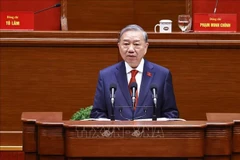
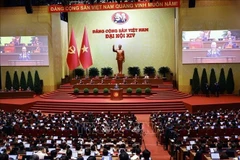
General Secretary of the 14th Party Central Committee To Lam addresses the closing session of the 14th National Party Congress on January 23 afternoon. (Photo: VNA)

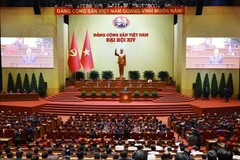
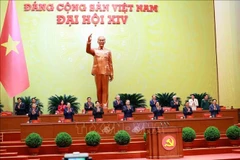
14th National Party Congress wraps up with success

Addressing the congress on behalf of the 14th Party Central Committee, General Secretary To Lam expressed profound gratitude for the trust and confidence placed in him, describing it as a great honour and a heavy responsibility before the Party, the people and the nation.

Members of the Party Central Committee vote to approve the list of candidates for election to the 14th Political Bureau. (Photo: VNA)

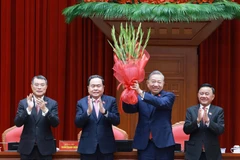
List of newly-elected members of 14th Political Bureau announced

At the closing session of the 14th National Party Congress on January 23 afternoon, Politburo member, Chairman of the National Assembly Tran Thanh Man, on behalf of the Congress’s Presidium, reported on the results of the election of the Political Bureau.

General Secretary of the All India Forward Bloc Prof. G. Devarajan (Photo: VNA)

14th Party Congress displays historic strategic vision: Indian leftist leader

General Secretary of the All India Forward Bloc (AIFB) Prof. G. Devarajan praised the 14th Party Congress for placing environmental protection on an equal footing with socio-economic development. Amid rapid industrialisation and urbanisation, he warned that growth without ecological safeguards would inflict long-term damage on both people and nature.