Hanoi (VNA) – Australian Ambassador to Vietnam Gillian Bird has affirmed that the Comprehensive Strategic Partnership between the two countries is gaining momentum, anchored in mutual trust and a shared commitment to regional stability and prosperity.
In a recent interview with the Vietnam News Agency (VNA), the diplomat emphasised strong government-to-government ties as well as growing bonds between the two peoples.
Following is the full text of the interview.
Reporter: How do you evaluate Vietnam–Australia cooperation over the past year?
Ambassador Gillian Bird: 2025 has truly been a year of deepening engagement and practical progress in the Vietnam–Australia relationship. Our Comprehensive Strategic Partnership continues to go from strength to strength, anchored in mutual trust and a shared commitment to regional stability and prosperity.
High-level political engagement has been central to this success. Australian Prime Minister Anthony Albanese met Vietnamese Prime Minister Pham Minh Chinh on the margins of the 47th ASEAN Summit and APEC Leaders’ Meeting, reinforcing our shared priorities.
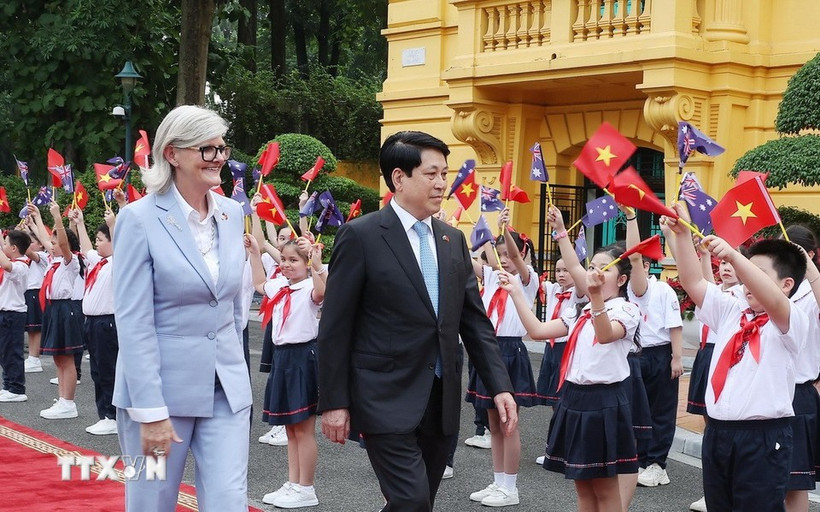
Vietnam welcomed a state visit by the Governor-General of Australia Sam Mostyn, alongside visits by Foreign Minister Penny Wong, Education Minister Jason Clare, and Assistant Minister for Immigration and Assistant Minister for Foreign Affairs and Trade Matt Thistlethwaite. On our side, we were honoured to host Politburo member and Secretary of the Party Central Committee Nguyen Trong Nghia and Deputy Prime Minister Tran Hong Ha in Australia. These exchanges reflect the depth and warmth of our ties.
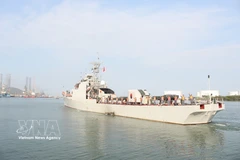
Importantly, we’ve made tangible progress across all six pillars of our Comprehensive Strategic Partnership. In security and defence, the Vietnam People’s Navy participated in Exercise KAKADU - the first time a Vietnamese naval vessel has visited Australia. This was just the latest step in our expanded maritime security cooperation. In education, we awarded 72 Australia Awards Scholarships and hosted three knowledge-exchange programmes through the Vietnam- Australia Centre, strengthening human connections. And in technology, we signed a landmark MoU on cyber and critical technology cooperation, building resilience in areas vital to our shared security and economic future.
Overall, the annual review confirmed that most commitments are completed or on track. This momentum reflects not only strong government-to-government ties but also the growing bonds between our peoples.
Reporter: Following the official upgrade of bilateral relations to a Comprehensive Strategic Partnership in March 2024, which areas do you believe hold the greatest potential for breakthroughs in the coming years?
Ambassador Gillian Bird: The elevation of Australia–Vietnam relations to a Comprehensive Strategic Partnership marks a decisive step forward defined by strategic trust. We have agreed to broaden our cooperation across six pillars: Political, Defence, Security and Justice; Economic Engagement; Knowledge and People-to-People Links; Climate, Environment and Energy; Science, Technology, Innovation and Digital Transformation; and Regional and International Cooperation.
We now have a comprehensive framework for high-level engagement, including regular leader-level dialogues and sustained interaction between senior officials. The foundations are strong; our shared task is to translate ambition into practical results that deliver for our people.
Looking ahead, Australia will continue to support Vietnam’s ambitions for economic, science and technology breakthroughs.
Through Australia’s Southeast Asia Economic Strategy to 2040, we are working to expand trade and investment, strengthen supply chains, and partner on emerging sectors critical to Vietnam’s future growth such as advanced manufacturing, clean energy, and digital services.
Education and human resource development remain cornerstones of our cooperation, fostering the next generation of skills and leadership that will drive Vietnam’s socio-economic development and innovation agenda. Our universities and research institutions are deepening collaboration with Vietnamese counterparts to accelerate knowledge exchange and build capacity in science and technology.
The third phase of our successful Aus4Skills programme will deliver scholarships for Vietnamese students, build Vietnam's vocational education sector and train Vietnam's leaders.
Key to Vietnam achieving its economic goals will be whether it can effectively and efficiently harness all its talent, regardless of gender or ethnicity. We are proud to be working alongside Vietnam to advance women's and ethnic minority leadership and entrepreneurship to ensure that Vietnam's economic growth is inclusive and sustainable.
Reporter: How does Australia view Vietnam’s role in ASEAN’s energy transition, and what are Australia’s priorities for supporting Vietnam in meeting its climate commitments?
Ambassador Gillian Bird: Australia sees Vietnam as a pivotal partner in powering the region’s clean energy future. Vietnam’s leading role on the ASEAN Power Grid Initiative and its agreements to export electricity to Malaysia, Singapore, and Cambodia - while importing renewable energy from Laos - position it as a hub for regional energy cooperation and transition. This integration strengthens energy security and accelerates the shift to renewables across Southeast Asia. Australia supports these efforts through the 6.9 million AUD ASEAN–Australia Energy Cooperation Package, which advances renewable energy policy and ASEAN’s vision to realise the Power Grid by 2045.
At the bilateral level, Australia is proud to back Vietnam’s power development targets including through our flagship Aus4Growth programme. Under its energy domain, we are investing in technical assistance and government-to-government dialogue to support Vietnam to develop a competitive electricity market, strengthen the power network, and integrate renewable energy. This includes research on clean and energy efficient technologies, digital smart technologies, and transparent electricity pricing frameworks.
In November, we partnered with Vietnam’s Ministry of Industry and Trade to release the State of Vietnam’s Electricity Sector Report and co-hosted a major conference to advance reforms that enable renewable integration and private investment.
Together, we are building the foundations for a cleaner, more secure energy future - one that strengthens Vietnam’s leadership, benefits our region, and delivers on our shared commitment to net zero.
Reporter: Australia recently committed 3.8 million AUD in humanitarian assistance to support communities in central Vietnam affected by severe flooding. Looking ahead, what are the key areas of cooperation between the two countries in climate resilience and disaster response?
Ambassador Gillian Bird: Our thoughts remain with the families and communities as they recover from these devastating disasters.
Australia’s climate and disaster assistance focuses on two key areas. The first is immediate disaster relief and recovery. Our $3.8 million contribution has delivered urgent, life-saving support, including cash transfers, hygiene kits, and materials for emergency shelters. This assistance has been targeted to the most vulnerable groups - poor households, families with children, pregnant women, and the elderly.
The second is long-term climate resilience. Australia is working closely with Vietnam to adapt to a changing climate and manage the increasing frequency of natural disasters. Through our new Aus4Adaptation programme, we will support the implementation of Vietnam’s National Adaptation Plan across multiple sectors and scale technologies that improve agricultural sustainability and resilience. The Australian Centre for International Agricultural Research (ACIAR) helps farmers respond to drought and saline intrusion, while Australia's Transforming Rice Value Chains for Climate Resilient Sustainable Development in the Mekong Delta (TRVC) project promotes high-quality, low-emission rice production.
Both Vietnam and Australia face significant climate challenges. Through these efforts, we are building a future-focused partnership that strengthens Vietnam's resilience and addresses the urgent climate crisis head-on.
Reporter: Thank you so much!