Turning words into action – key requirement for Vietnam's coming development phase

While praising the strong direction from the Party leadership, Professor Tran Thanh Van stressed that trust can only endure when translated into concrete action. Despite progress in legislation and policy-making, implementation remains uneven, with financial mechanisms and administrative barriers still constraining innovation.

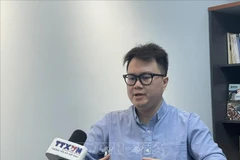
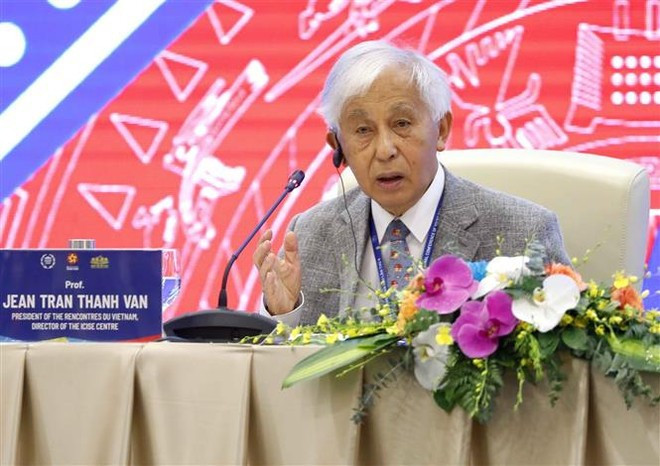
Professor Tran Thanh Van, a Vietnamese-French scientist, the founder and President of the Quy Nhon-based International Centre for Interdisciplinary Science and Education (ICISE) (Photo: VNA)

Paris (VNA) – A key requirement for Vietnam’s development in the coming period is to turn words and trust into concrete, sustained and effective action, said Professor Tran Thanh Van, a renowned Vietnamese-French scientist, the founder and President of the Quy Nhon-based International Centre for Interdisciplinary Science and Education (ICISE).

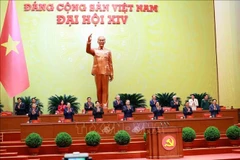
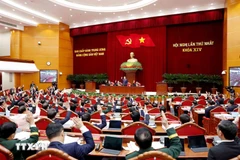
Speaking with Vietnam News Agency correspondent in Paris on the occasion of the 14th National Congress of the Communist Party of Vietnam (CPV), Van said the congress’s identification of science – technology and innovation as a key driver of national development is a precise decision holding long-term strategic significance.

A strong scientific foundation, he stressed, is indispensable to independent, self-reliant and sustainable development of the nation.

He highlighted the fundamental and decisive orientation of making long-term and methodical investment in basic science, closely linked with applied research and technological development.

Investing in basic science, he noted, is “investing in the foundations”, generating new knowledge, elevating education and training, nurturing core technologies, and building long-term scientific and technological autonomy, thereby gradually reducing dependence on external technologies. Given limited resources, Vietnam should focus on selected strategic research fields, strengthen international linkages, and develop excellent research groups and centres. These, in turn, can spill over into applications and enterprises, enabling Vietnam to master technologies where it has advantages and can master.

This approach is in line with Party General Secretary To Lam’s consistent instruction that technological self-reliance and independence is essential to national strength, the professor said.

Mentioning the role of overseas Vietnamese intellectuals and scientists, Van noted candidly that while Vietnam’s science sector has made encouraging progress, it still lags behind advanced countries and faces manpower shortages in many rapidly developing fields. He emphasised that most overseas Vietnamese scientists are eager to contribute to their homeland; the real challenge lies not in willingness, but in domestic reception mechanisms and working environments.

Those who choose to return to Vietnam, he said, often do so with strong commitment since they have already secured stable careers abroad. What they need most is trust, recognition, and an environment that enables them to pursue long-term scientific goals. For domestic scientists, particularly younger researchers, improving income and living conditions is equally crucial to preventing brain drain.

With appropriate mechanisms, overseas Vietnamese scientists can contribute in key areas, including connecting Vietnam to frontier knowledge, advising on science and technology policies, co-leading national programmes, developing high-quality human resources, and promoting science diplomacy through international cooperation.

Drawing on his participation in five conferences of overseas Vietnamese, Van was particularly impressed by the August 2024 conference, where policy recommendations from overseas scientists were swiftly reflected in the Politburo’s Resolution No. 57-NQ/TW dated December 22, 2024, on breakthroughs in science – technology development, innovation and national digital transformation. He described the resolution as a “breath of fresh air” that has renewed confidence within the domestic scientific community and overseas intellectuals.

While praising the strong direction from the Party leadership, he stressed that trust can only endure when translated into concrete action. Despite progress in legislation and policy-making, implementation remains uneven, with financial mechanisms and administrative barriers still constraining innovation.

From the ICISE’s practical experience, Van argued for a mindset shift toward effectiveness as the primary criterion. Whether public or private, any institution that delivers national priorities well deserves appropriate support. Strengthening supervision to ensure that breakthrough policies are fully realised, he concluded, is essential for science and innovation to truly become a key driver of Vietnam’s fast, sustainable and self-reliant development in the new era./.

VNA
See more

☕ Afternoon briefing on January 23

☕ Afternoon briefing on January 23

General Secretary of the 13th Party Central Committee To Lam re-elected as the Party chief for the 2026 – 2031 term, Vietnam's attendance at a signing ceremony for the founding charter of the Board of Peace aimed at ending the conflict in the Gaza Strip, and Fitch Ratings' upgrade of Vietnam’s senior secured long-term debt instruments to BBB- are among news highlights on January 23.

General Secretary of the 14th Party Central Committee To Lam addresses the closing session of the 14th National Party Congress on January 23 afternoon. (Photo: VNA)

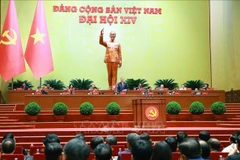
14th National Party Congress wraps up with success

Addressing the congress on behalf of the 14th Party Central Committee, General Secretary To Lam expressed profound gratitude for the trust and confidence placed in him, describing it as a great honour and a heavy responsibility before the Party, the people and the nation.

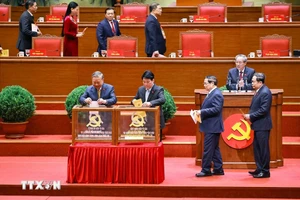
Members of the Party Central Committee vote to approve the list of candidates for election to the 14th Political Bureau. (Photo: VNA)

List of newly-elected members of 14th Political Bureau announced

At the closing session of the 14th National Party Congress on January 23 afternoon, Politburo member, Chairman of the National Assembly Tran Thanh Man, on behalf of the Congress’s Presidium, reported on the results of the election of the Political Bureau.

General Secretary of the All India Forward Bloc Prof. G. Devarajan (Photo: VNA)

14th Party Congress displays historic strategic vision: Indian leftist leader

General Secretary of the All India Forward Bloc (AIFB) Prof. G. Devarajan praised the 14th Party Congress for placing environmental protection on an equal footing with socio-economic development. Amid rapid industrialisation and urbanisation, he warned that growth without ecological safeguards would inflict long-term damage on both people and nature.

Enzo Sim Hong Jun, a Malaysian researcher specialising in Southeast Asian history and defence, grants an interview to the Vietnam News Agency. (Photo: VNA)

14th National Party Congress: A symbol of stability, growth aspirations

At a time when global investors place strong emphasis on stability and policy consistency, ensuring continuity in leadership and consensus following the Congress is seen as a key factor in safeguarding and advancing Vietnam’s long-term economic objectives over the next five years, said Enzo Sim Hong Jun, a Malaysian researcher specialising in Southeast Asian history and defence.

The headquarters of the Party Central Committee, where the first meeting of the 14th Party Central Committee takes place on January 23 morning. (Photo: VNA)

14th Party Central Committee convenes first meeting

The first meeting of the newly elected Party Central Committee will continue with the personnel work, including electing members of the Politburo and the Secretariat, the Party General Secretary, and members of the Party Central Committee's Inspection Commission.

☀️ Morning digest on January 23

☀️ Morning digest on January 23

The election of members of the 14th Party Central Committee, congratulations from political parties, partners, overseas Vietnamese communities, and international friends to the 14th National Party Congress, and Vietnam's participation in the first plenary meeting of the Intergovernmental Negotiations (IGN) process on UNSC reform are among news highlights on January 23 evening.

General Secretary of the 13th Central Committee of the Communist Party of Vietnam To Lam addresses the 14th National Party Congress. (Photo: VNA)

List of members of 14th Party Central Committee announced

The 14th National Congress of the Communist Party of Vietnam on January 22 afternoon announced the results and approved the list of 200 newly-elected members of the 14th Party Central Committee, including 180 official members and 20 alternate members.

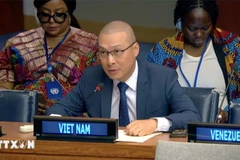
Minister-Counsellor Nguyen Hoang Nguyen, Chargé d’Affaires ad interim of the Permanent Mission of Vietnam to the UN, addresses the session. (Photo: VNA)

Vietnam supports UN Security Council’s substantive reform

Minister-Counsellor Nguyen Hoang Nguyen, Chargé d’Affaires ad interim of the Permanent Mission of Vietnam to the UN, reaffirmed Vietnam’s strong commitment to multilateralism and to the UN’s central role in maintaining international peace and security.