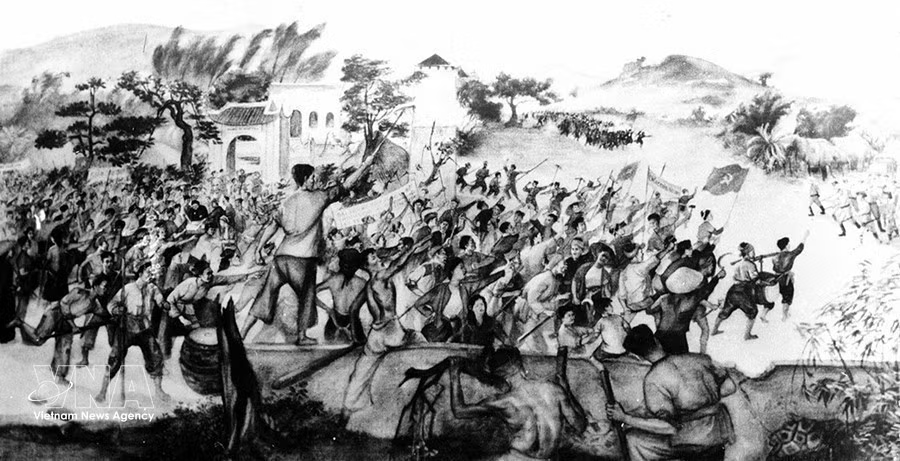
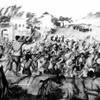
The revolutionary movement of 1930–1931, culminating in the Nghe-Tinh Soviet movement, was the first major rehearsal for the Vietnamese revolution under the leadership of the Communist Party, marking a glorious milestone in the country’s revolutionary history. (Photo: VNA)
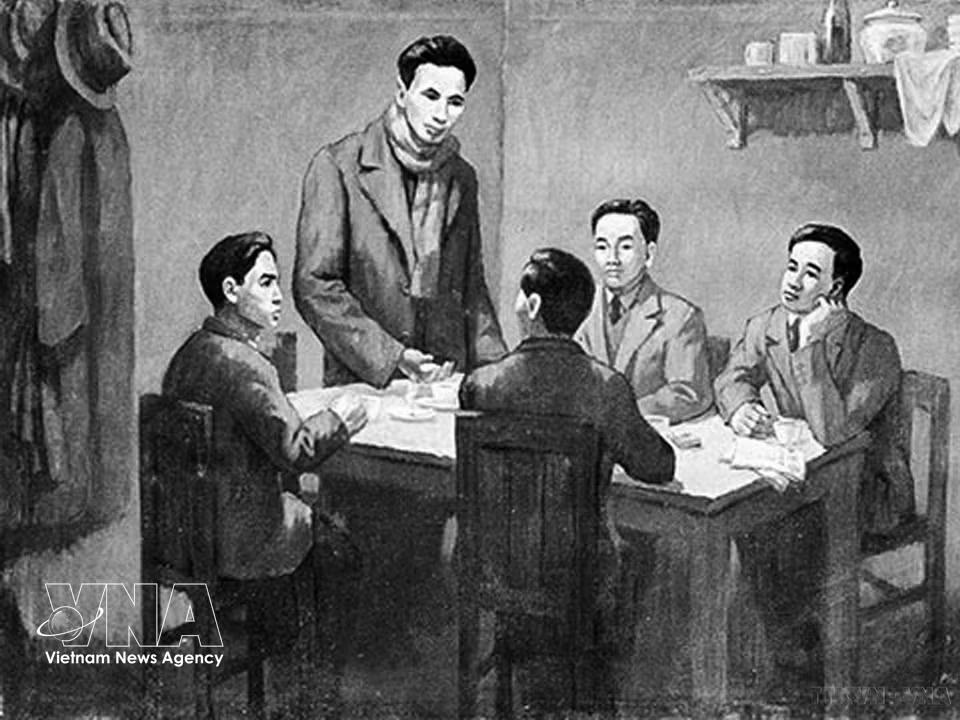
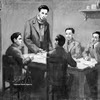
From January 6 to February 7, 1930, a conference to unite communist organisations and establish the Communist Party of Vietnam was held in Hong Kong, China, under the chairmanship of Nguyen Ai Quoc, representing the Communist International. (Photo published by VNA)
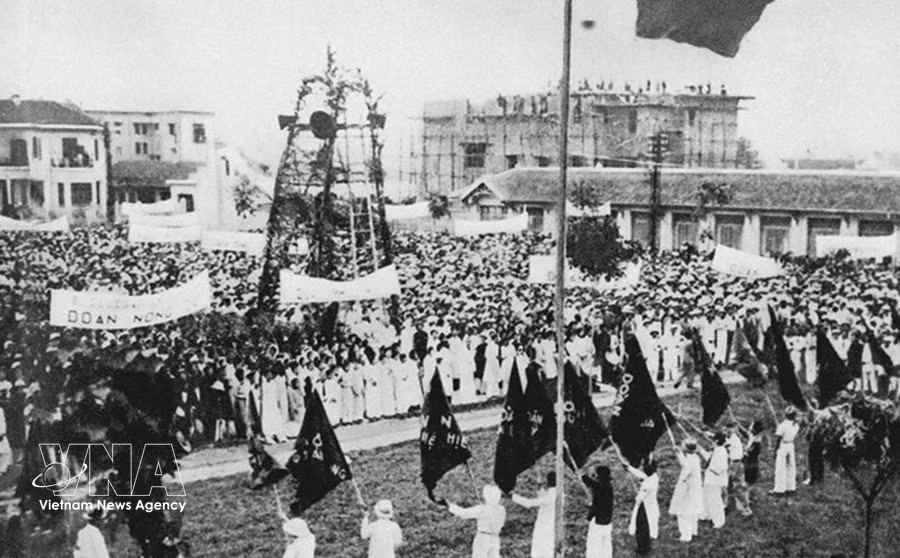
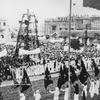
The 1936–1939 democratic movement against colonial reactionaries and their collaborators, fascism and war, and for freedom, food and peace helped create a major revolutionary upsurge. It was regarded as a rehearsal for the success of the 1945 August Revolution. In the photo: A rally marking International Workers’ Day at Hanoi’s Exhibition Ground, now the Friendship Cultural Palace, in May 1938. (Photo: VNA Archives)
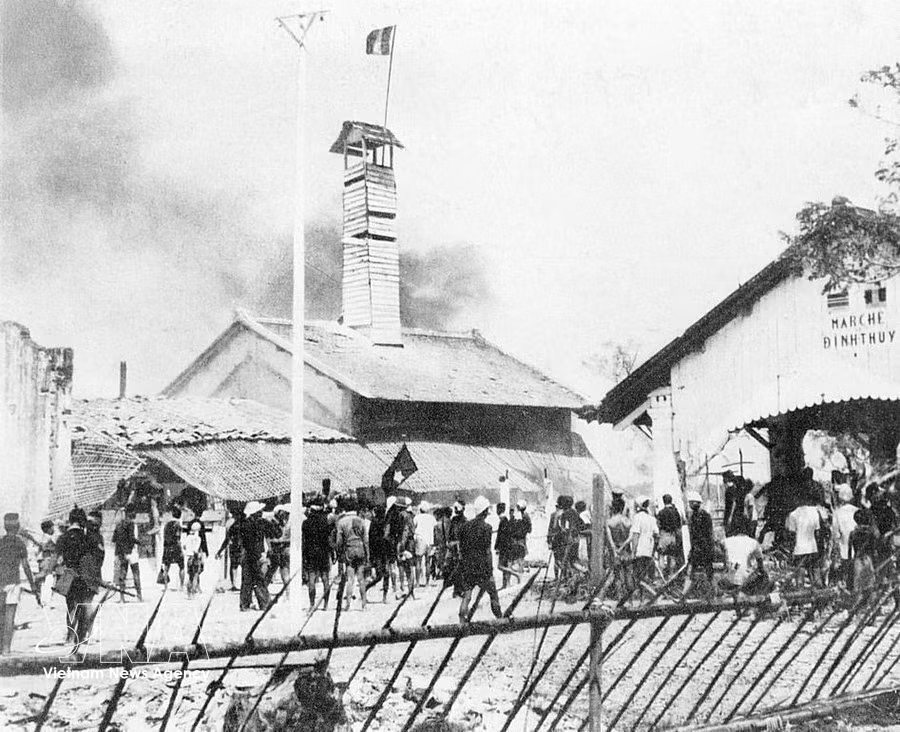
On November 23, 1940, the Southern Uprising broke out in several southern provinces. Together with the Bac Son Uprising, it was regarded as “the opening shots signalling a nationwide uprising” and the second major rehearsal for the victory of the 1945 August Revolution. (Photo: VNA Archives)
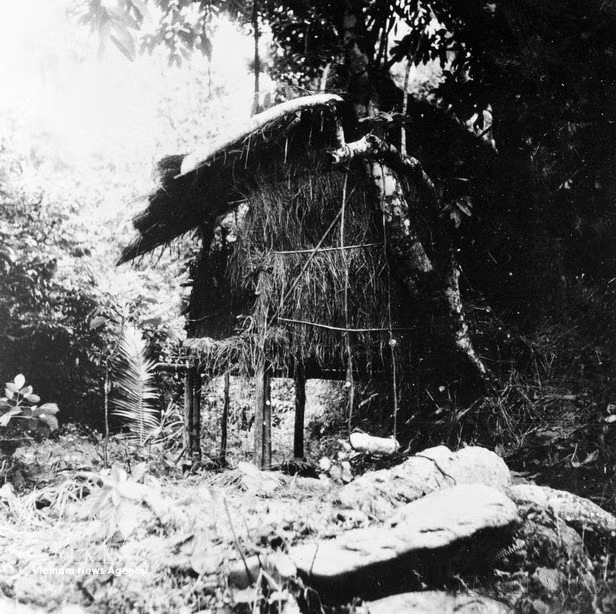
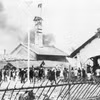
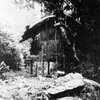
The Khuoi Nam shack in Pac Bo, Truong Ha commune, Ha Quang district, Cao Bang province, where the eighth Plenum of the Central Committee of the Indochinese Communist Party was held in May 1941. The meeting resolved to prioritise national liberation and established the Viet Minh Front. (Photo: VNA)
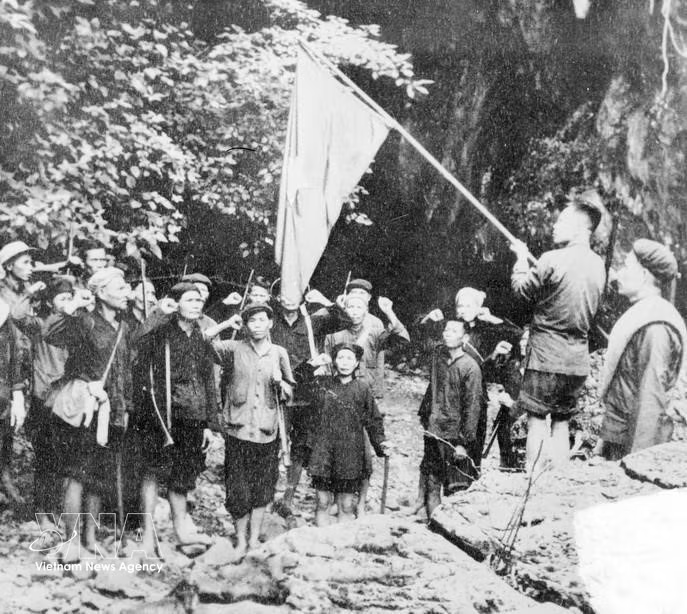
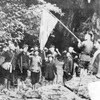
The first guerrilla unit in Vietnam, under the leadership of the Party, was established in Bac Son, Cao Lang province, in 1940. (Photo: VNA)
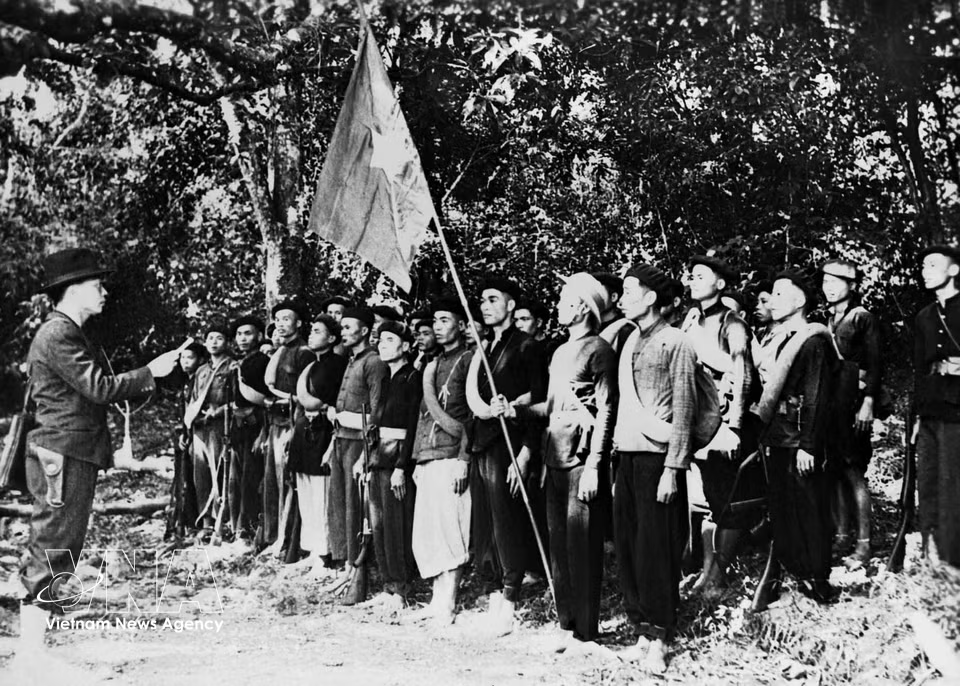
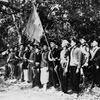
On December 22, 1944, the Vietnam Propaganda Unit of Liberation Army, the predecessor of the Vietnam People’s Army, was established in Cao Bang under the command of Vo Nguyen Giap, marking a new development in the armed revolutionary struggle. (Photo: VNA)
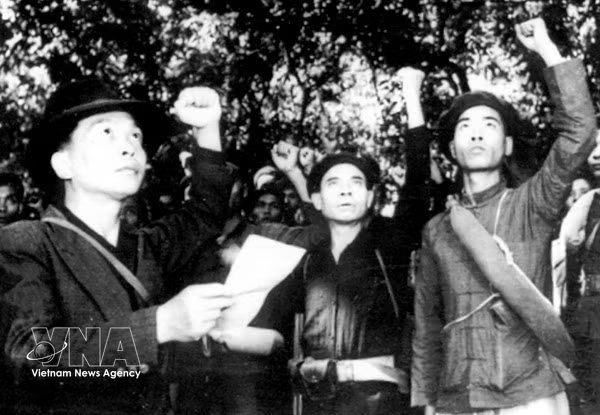
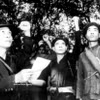
Vo Nguyen Giap reads the oath at the establishment ceremony of the Vietnam Propaganda Unit of Liberation Army on December 22, 1944. (Photo: VNA Archives)
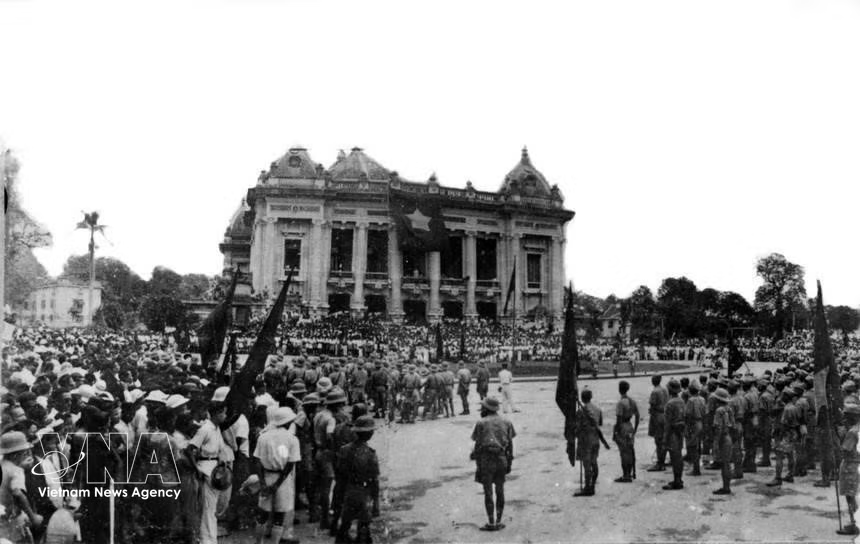
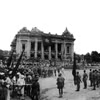
Hundreds of thousands of people from Hanoi and neighbouring provinces gather at the Hanoi Opera House Square for an unprecedented mass rally in support of the nationwide uprising to seize power, August 19, 1945. (Photo: VNA Archives)
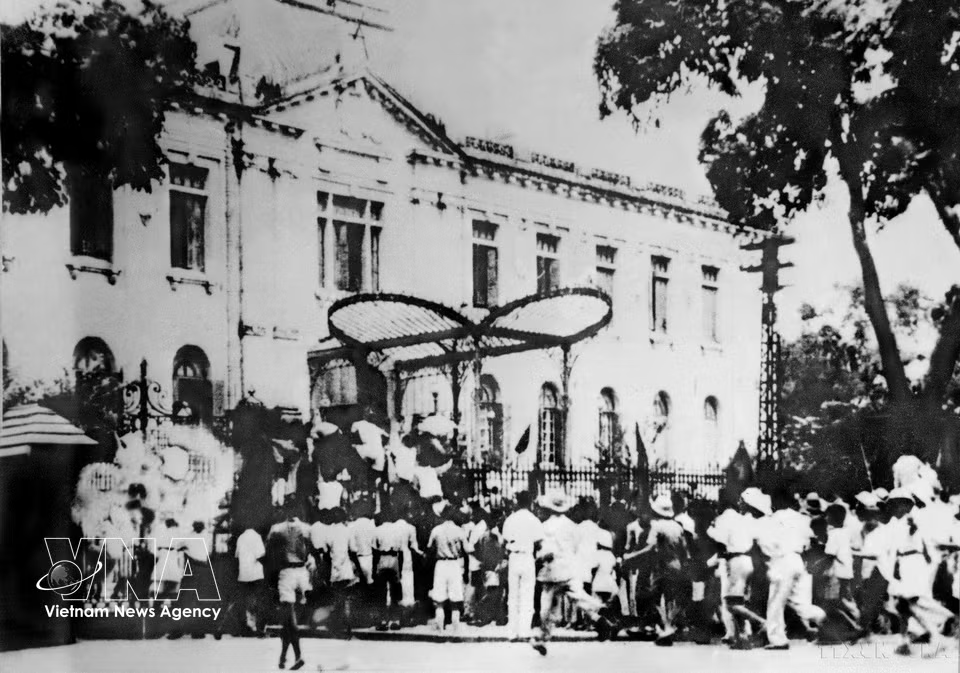
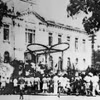
Revolutionary masses and self-defence forces seize the Northern Palace, formerly known as the Office of the Governor of Tonkin, on August 19, 1945, marking the success of the August Revolution in Hanoi. (Photo: VNA Archives)
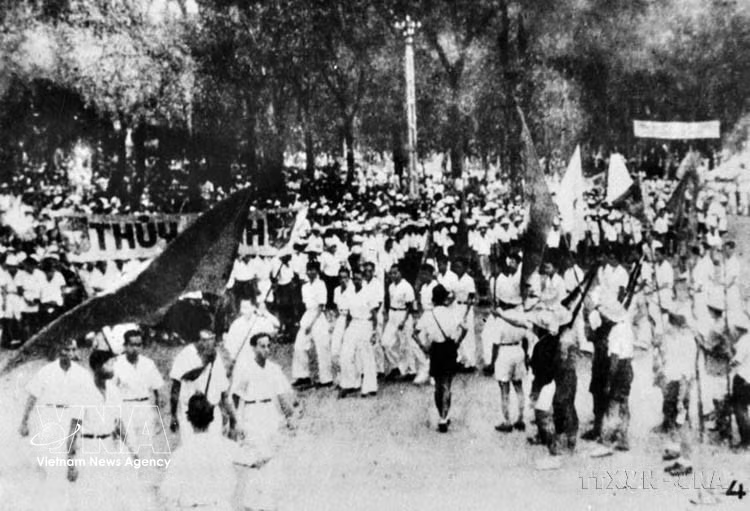
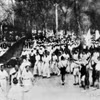
Saigon residents rise up to seize power on August 25, 1945, in response to the call for a general uprising issued by the Party Central Committee and President Ho Chi Minh. (Photo: VNA Archives)
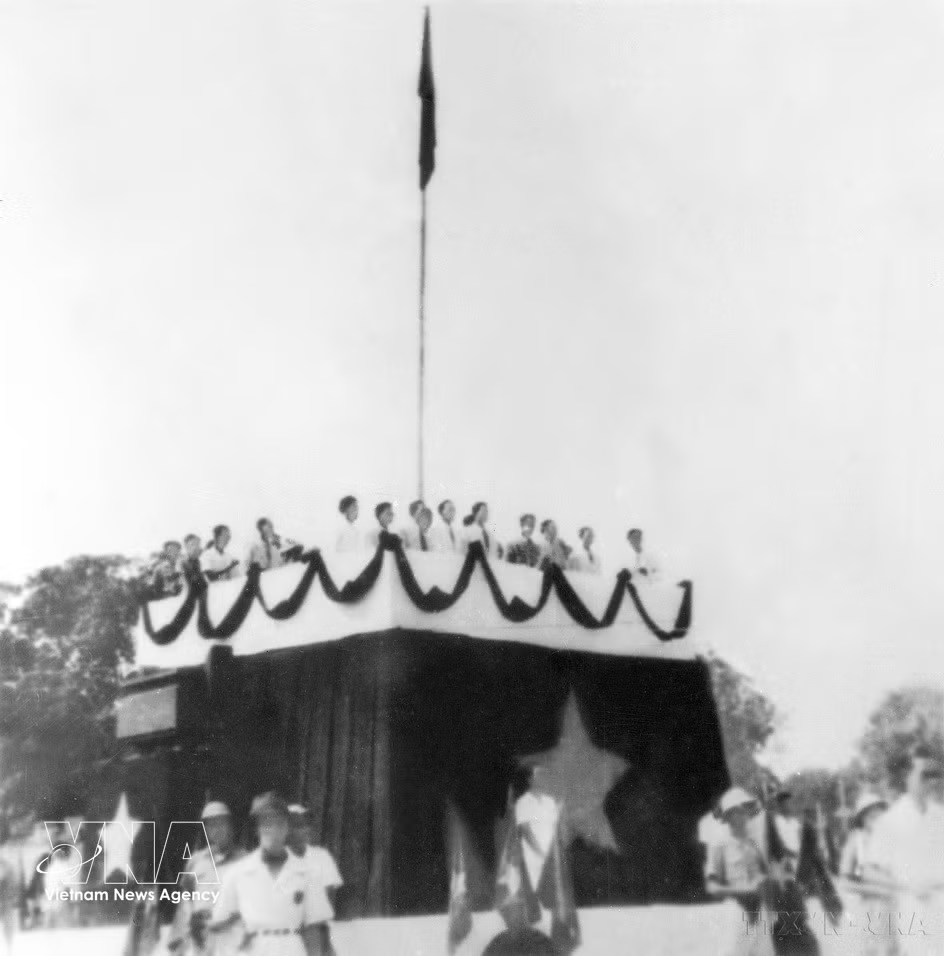
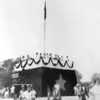
On September 2, 1945, at Ba Dinh Square in Hanoi, President Ho Chi Minh reads the Declaration of Independence, proclaiming the birth of the Democratic Republic of Vietnam, the first people’s democratic state in Southeast Asia. (Photo: VNA)
0
1
2
3
4
5
6
7
8
9
10
11

1945 August Revolution: A triumph of patriotism and the aspiration for national independence

The 1945 August Revolution was a landmark victory in Vietnam’s history, ending colonial and feudal rule and giving birth to the Democratic Republic of Vietnam. The victory ushered in a new era of independence and freedom and strongly inspired national liberation movements around the world.