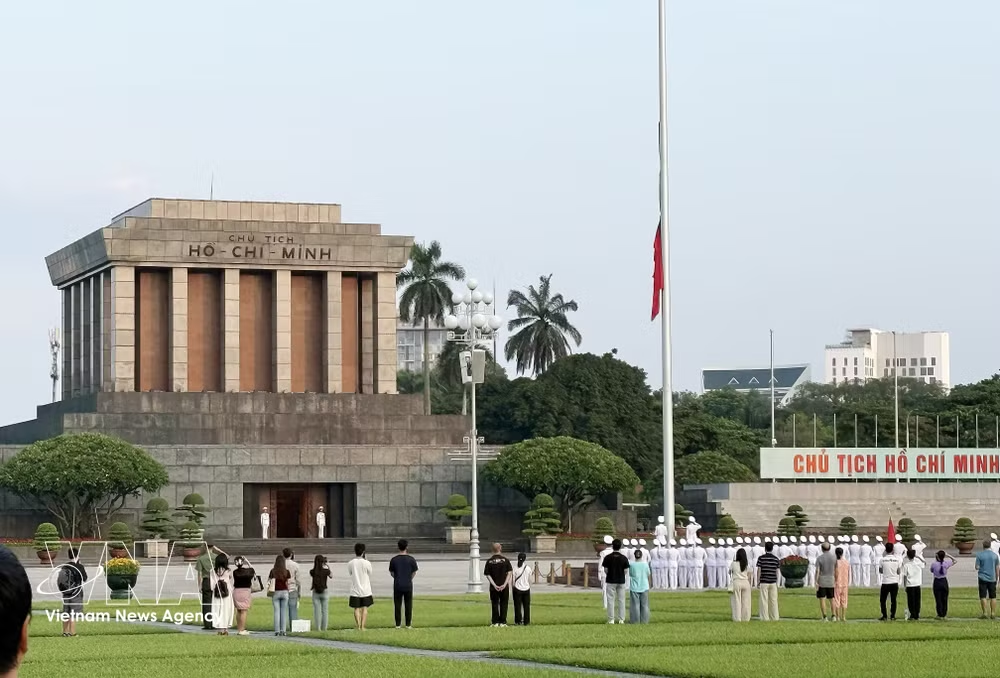
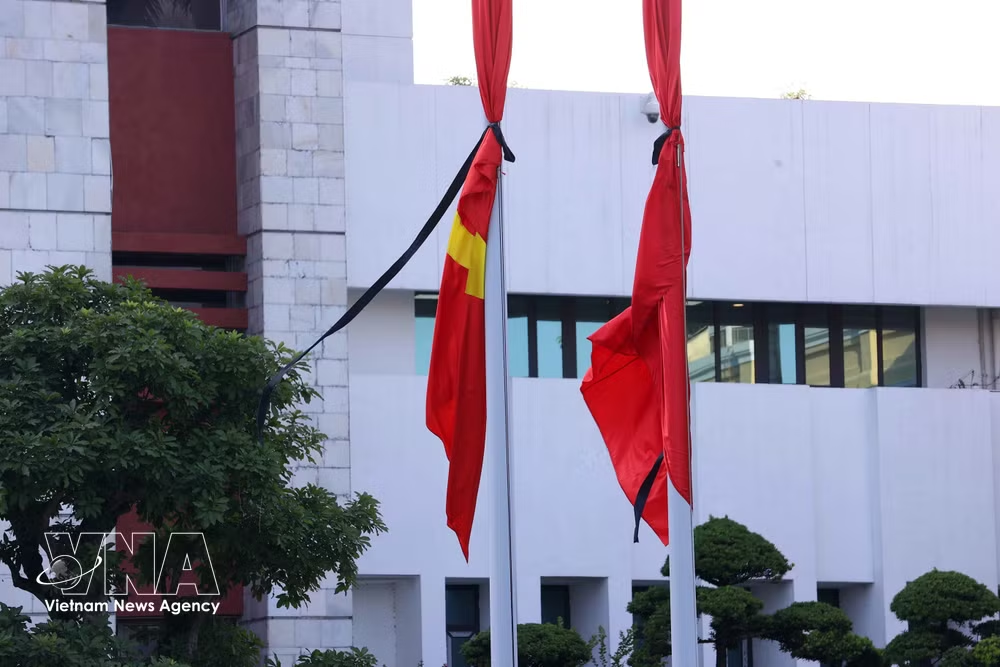
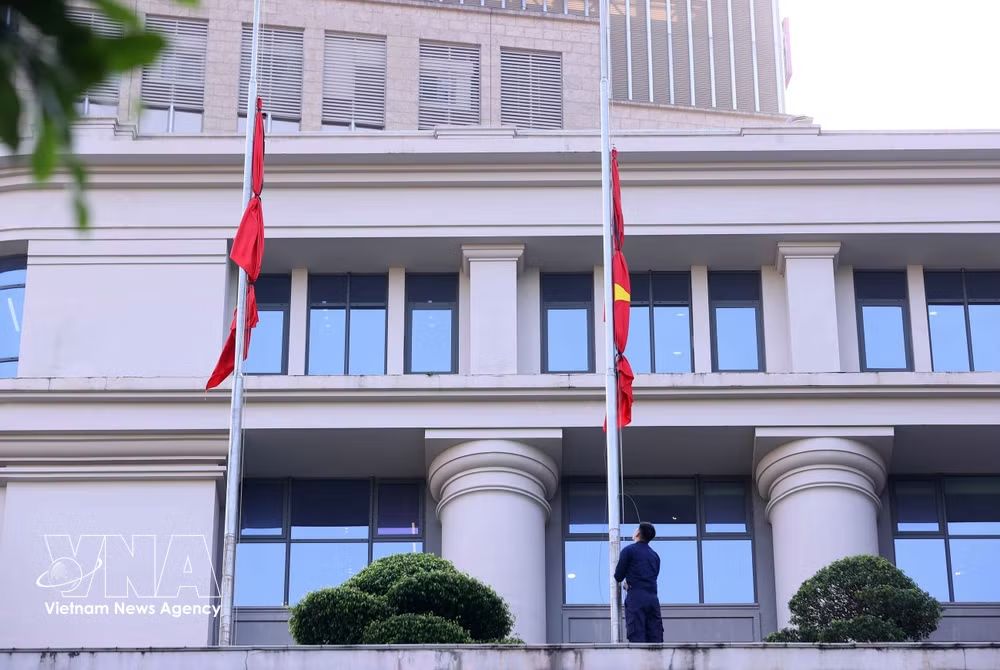
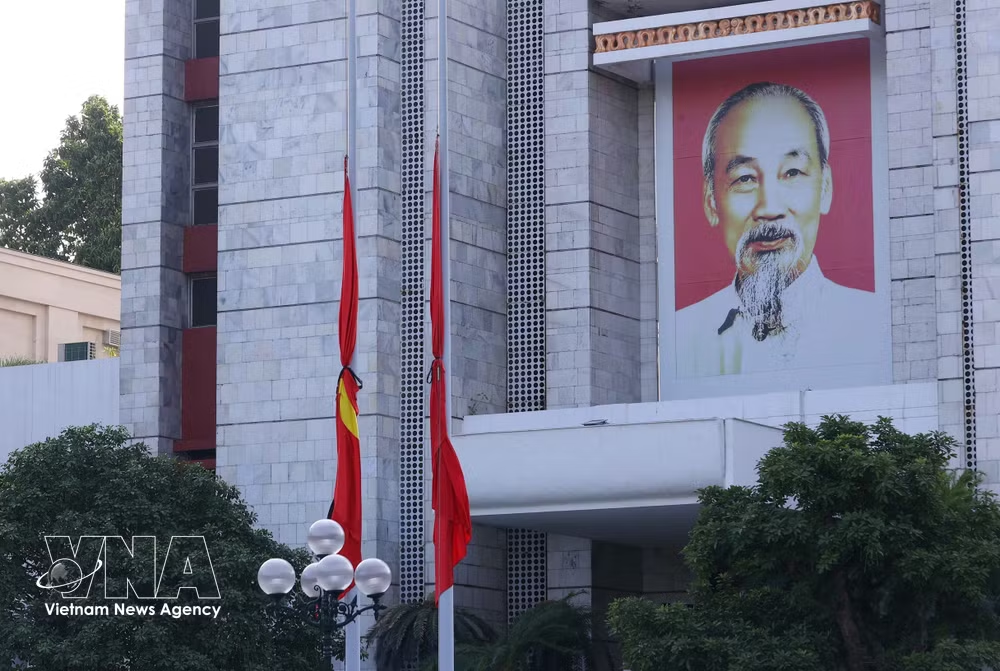
Vietnam is observing two days of national mourning for Politburo member and President of the National Assembly of Laos Xaysomphone Phomvihane from August 10 to 11. He was a key leader of the Lao People's Revolutionary Party who made important contributions to the Lao revolution, as well as to the cause of national defence, construction and development of Laos.
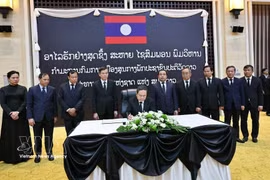
President of the National Assembly Tran Thanh Man on August 9 led a high-ranking Vietnamese Party and State delegation to Laos to pay respects to Lao National Assembly President Xaysomphone Phomvihane, who passed away on August 8.
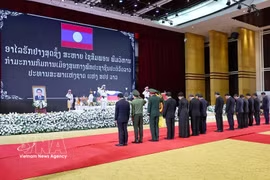
On the afternoon of August 9, in Vientiane, Laos, Politburo member and President of the National Assembly Tran Thanh Man, led a high-ranking delegation of the Vietnamese Party and State, paid tribute to Politburo member and President of the Lao National Assembly Xaysomphone Phomvihane.
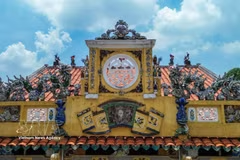
More than a century on, Hiep Ninh Communal House in Tan Ninh Ward, Tay Ninh Province, continues to stand quietly amid the modern urban landscape, bearing witness to the region's early settlement, village formation and the emergence of its local community.
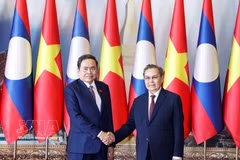
Lao National Assembly President Xaysomphone Phomvihane is a leader who has helped nurture the great friendship between Vietnam and Laos.
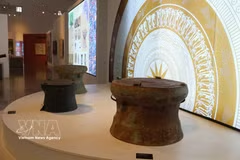
Inspired by the traditional longhouse architecture of the Ede ethnic people, Dak Lak Museum is one of the Central Highlands' most iconic cultural landmarks. Home to thousands of artefacts on history, culture and biodiversity, the museum showcases the rich heritage of more than 40 ethnic communities living in Dak Lak, reflecting the region's cultural diversity and the enduring spirit of solidarity among the Central Highlands' ethnic groups.
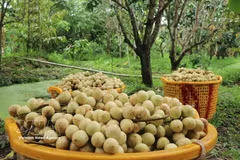
Ha Chau Burmese grape, one of the best-known local specialties in the Mekong Delta city of Can Tho, is gradually losing ground as many growers switch to more profitable fruit crops. Nevertheless, a number of farming households continue to cultivate the fruit, improving its quality and value to preserve and promote this distinctive regional specialty.
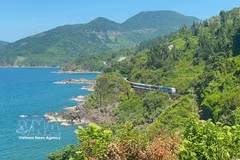
Recognised as one of the world's most beautiful bays, Lang Co Bay in the central city of Hue is a breathtaking seascape of powdery white sands, crystal-clear turquoise waters and majestic mountains stretching to the horizon.
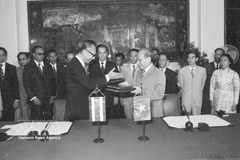
Over the five decades since Vietnam and Thailand established diplomatic relations on August 6, 1976, bilateral ties have steadily strengthened and expanded across a wide range of fields. Since the relationship was elevated to a Comprehensive Strategic Partnership in May 2025, cooperation has become increasingly substantive and effective, serving the shared interests of both peoples and contributing to peace, cooperation and development in the region and beyond.
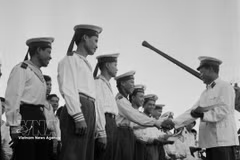
On August 2 and 5, 1964, the Vietnam People's Navy, in coordination with other forces, repelled US warships and modern aircraft, securing its first historic victory and marking a milestone in Vietnam's national defence.
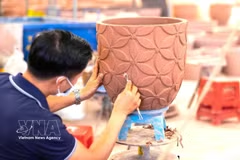
Following its administrative boundary expansion, Ho Chi Minh City has not only gained more room for industrial and service growth, but also inherited one of the country’s largest pottery hubs. However, preserving and developing the craft faces major hurdles, including a shortage of young workers, rising raw material costs, and falling market demand. A comprehensive strategy is therefore needed to help this traditional craft survive and generate economic value.
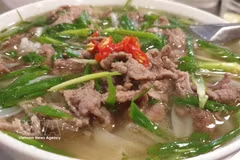
As the creative economy emerges as a growing trend, the “Creating Cultural Intellectual Property from the Intangible Cultural Heritage of Hanoi’s Pho” competition launched by Hanoi highlights a new approach to heritage promotion. It frames culture as an endogenous resource capable of generating new values for socio-economic development.
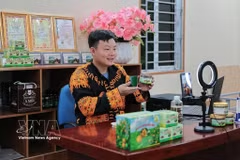
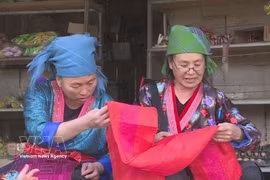
By mastering digital technology and online marketing, the green economic model of Dao ethnic youth in the Mau Son mountains in the northern province of Lang Son has expanded its market nationwide. It also serves as a strong inspiration for innovation and local wealth creation.
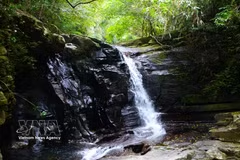
Bach Ma National Park, located in the central city of Hue, is one of the most biodiverse areas in Vietnam, renowned for its cool, crystal-clear, and enchanted stream system.
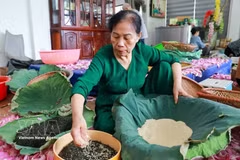
Hailed as the “supreme tea of all time”, Quang An lotus-scented tea in Tay Ho Ward, Hanoi, represents the pinnacle of the capital city’s culinary heritage. The harmonious combination of the sweet, subtle flavour of green tea and the pure fragrance of West Lake’s Bach Diep (hundred-petal) lotus creates a precious delicacy deeply rooted in Hanoi’s cultural identity.

Hanoi’s project “Development of the Night Economy in Hanoi for the 2026-2030 Period, With a Vision to 2045” aims to increase the night-time economy’s contribution to 7–8% of the city’s GRDP by 2035, while positioning Hanoi as the “City of night-time cultural experiences.”
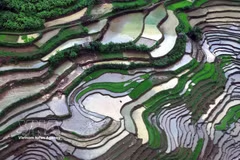
Muong La commune in the northern province of Son La is home to around 360 hectares of rice paddies. Terraced rice cultivation is a traditional farming practice of the area's ethnic communities.
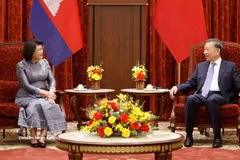
Party General Secretary and State President To Lam hosted a reception for President of the Cambodian National Assembly Samdech Khuon Sudary in Hanoi on July 28. Prime Minister Le Minh Hung also met and held talks with the Cambodian top legislatore the same day.
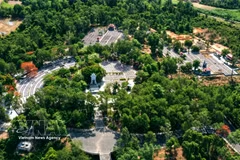
The Truong Son National Martyrs Cemetery is not only the final resting place of 10,263 fallen soldiers, but also a cultural and spiritual landmark where architecture, nature and the nation's enduring tradition of gratitude come together.
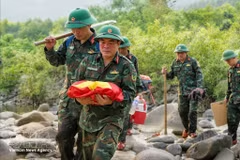
The commemoration of War Invalids and Martyrs’ Day (July 27, 1947–2026) honours those who fought and sacrificed for national peace and independence. This tradition of gratitude continues through the nationwide 500-Day-and-Night Campaign to search for, recover and identify martyrs’ remains.
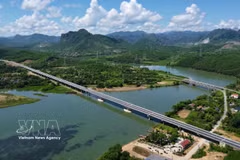
Half a century after 16 young volunteers from Company C130, all from the northern province of Hung Yen, heroically laid down their lives at the Long Dai II ferry crossing, the historic river continues to preserve memories of a wartime fire zone along the Truong Son route.

Thuan An estuary in the central city of Hue possesses a unique beauty that blends the pristine tranquility of the lagoon with the vastness of the ocean.
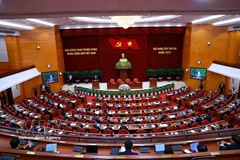
The third meeting of the 14th Party Central Committee concluded in Hanoi on the afternoon of July 24, 2026.