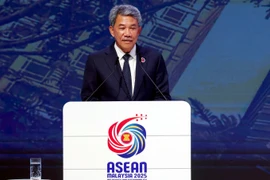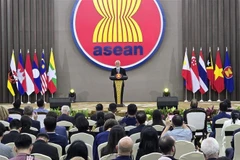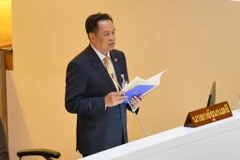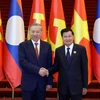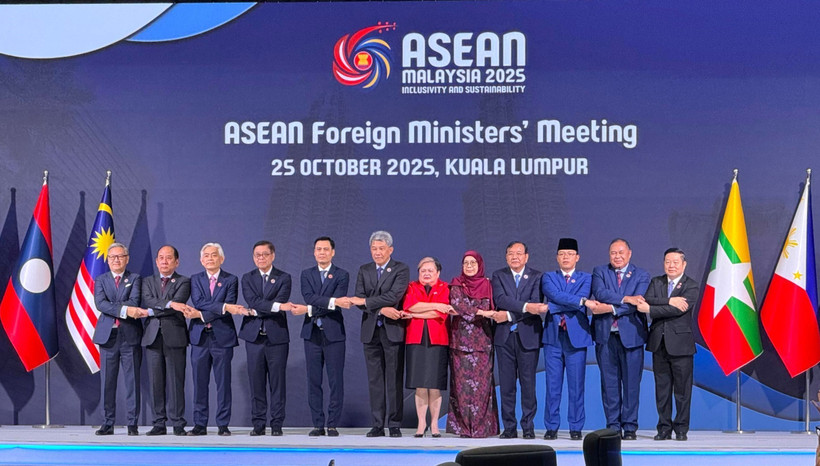
Kuala Lumpur (VNA) – A series of key ASEAN ministerial meetings took place on October 25 in Kuala Lumpur, Malaysia, gathering foreign ministers and heads of delegations from ASEAN member states, Timor-Leste, and the ASEAN Secretary-General.
The events included the ASEAN Foreign Ministers’ Meeting (AMM), the 30th ASEAN Political-Security Community (APSC) Council Meeting, the ASEAN Coordinating Council (ACC) Meeting, and the Joint Meeting of ASEAN Foreign and Economic Ministers (AMM-AEM).
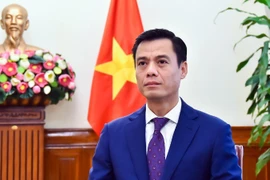
Deputy Minister of Foreign Affairs Dang Hoang Giang, Head of SOM ASEAN-Vietnam, led the Vietnamese delegation to the meetings.
ASEAN foreign ministers discussed and finalised preparations for the 47th ASEAN Summit and the related summits to be held from October 26–28. Amid a rapidly changing and complex global and regional landscape, they agreed that the upcoming summits represent a crucial opportunity for ASEAN to reaffirm its solidarity and centrality, advance efforts toward building an inclusive and sustainable ASEAN Community, and strengthen partnerships with external partners. These efforts, they noted, would help enhance the bloc’s resilience, strategic autonomy, and effective contribution to peace, security, and development in the region.
The ministers congratulated Timor-Leste on its preparation to become ASEAN’s 11th member state, affirming their continued support for the country in meeting the membership criteria and fully integrating into ASEAN cooperation mechanisms.
On this occasion, Timor-Leste’s Foreign Minister deposited the instruments of accession to the ASEAN Charter and the Treaty on the Southeast Asia Nuclear Weapon-Free Zone (SEANWFZ), reaffirming the country’s commitment to all principles, goals, and obligations under these documents. This marks an important step towards its formal admission to ASEAN on October 26.
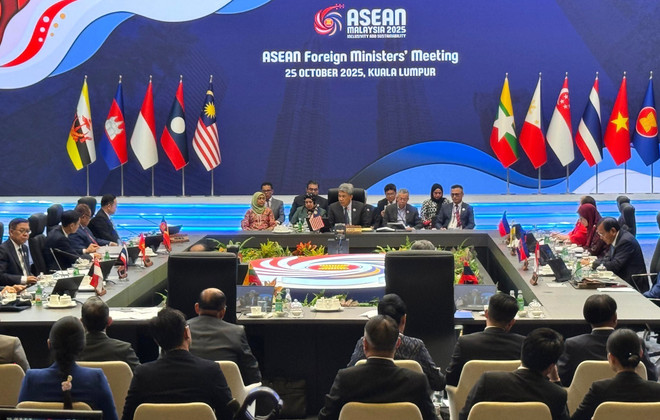
On community-building, ASEAN countries emphasised the importance of effective and synchronised implementation of the Strategic Plans to realise the objectives and priorities outlined in the ASEAN Community Vision 2045, focusing on inclusive and sustainable development, deeper economic integration, social welfare, and tangible benefits for the people.
Regarding political-security cooperation, based on the experience gained over a decade of implementing the ASEAN Political-Security Community (APSC) Blueprint 2025, the ministers agreed to step up efforts to carry out the Strategic Plan for the new phase of APSC development.
Expressing concern over the growing threat of transnational crimes, including cybercrime and online scams, they underscored the need for stronger regional and international collaboration. In this regard, they welcomed Vietnam’s hosting of the Signing Ceremony of the United Nations Convention on Cybercrime in Hanoi. The ministers also agreed that ASEAN should maintain solidarity and close coordination in addressing issues affecting regional peace and security, including the East Sea.
On the same day, ASEAN foreign ministers witnessed Finland’s signing of the Instrument of Accession to the Treaty of Amity and Cooperation in Southeast Asia (TAC), raising the number of participating countries and organisations to 58.
The ASEAN FMs welcomed the initiative to convene the Joint ASEAN Foreign and Economic Ministers’ Meeting, agreeing on the need to further strengthen coordination between the political-diplomatic and economic tracks to effectively address intertwined geo-economic and geopolitical challenges.
Speaking at the meetings, Deputy Foreign Minister Giang congratulated Malaysia on successfully leading ASEAN to achieve significant outcomes in a pivotal year. He affirmed that Vietnam will continue to work closely with Malaysia and other member states to realise the common goals and priorities set for the bloc.
In light of ongoing global and regional uncertainties, Giang stressed that ASEAN should continue prioritising cooperation to maintain regional peace and stability, promote the culture of dialogue and cooperation, and uphold the shared principles and norms to which all members have committed. He urged ASEAN to enhance internal linkages, harness new growth drivers, and at the same time, strengthen mutually beneficial external relations, especially in economic and trade domains.
On the East Sea issue, he reaffirmed that ASEAN must preserve unity and its principled stance, maintaining close coordination to safeguard peace, stability, security, and the freedom of navigation and overflight, while upholding international law in this important region.
Earlier, on October 24, the Informal ASEAN Foreign Ministers’ Meeting on the implementation of the Five-Point Consensus on Myanmar was held. The ministers appreciated Malaysia’s efforts and those of the Special Envoy in engaging relevant stakeholders and reaffirmed that the Five-Point Consensus remains the main reference framework guiding ASEAN’s efforts on the Myanmar issue in the time ahead./.