ADB bolsters cooperation, integration in Southeast Asia

Within the BIMP-EAGA framework, which includes Brunei, Indonesia, Malaysia, and the Philippines, ADB has invested 500 million USD in agricultural development, 93 million USD in sustainable aquaculture, and another 500 million USD in ocean plastic waste reduction.

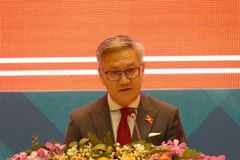
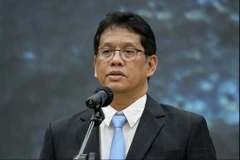
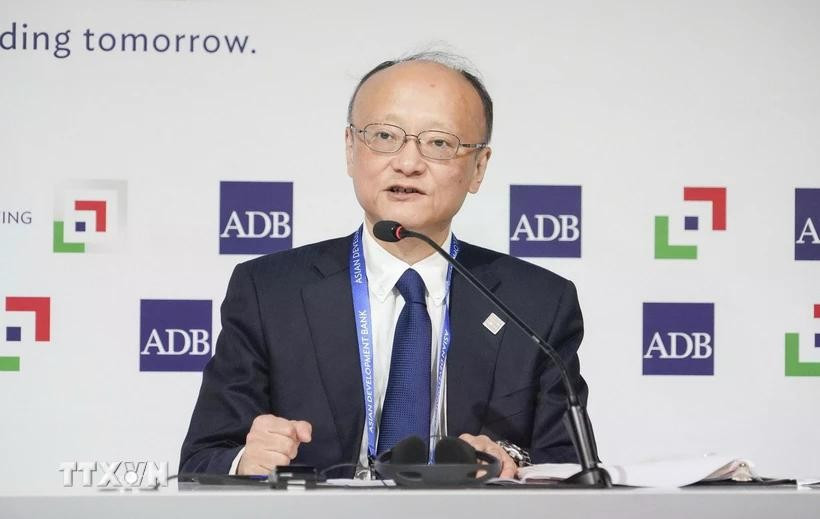
Asian Development Bank (ADB) President Masato Kanda (Photo: Kyodo/ VNA)

Hanoi (VNA) - Asian Development Bank (ADB) President Masato Kanda on May 28 reaffirmed the bank's commitment to enhancing regional cooperation and integration in Southeast Asia at the 16th Summit of the Brunei Darussalam–Indonesia–Malaysia–Philippines East ASEAN Growth Area (BIMP-EAGA) and the Indonesia–Malaysia–Thailand Growth Triangle (IMT-GT) held in Kuala Lumpur.

President Kanda announced that ADB plans to provide approximately 24 billion USD in support to Southeast Asia over the next three years. This funding aims to deepen regional cooperation and integration, focusing on expanding investments to improve connectivity, promoting private sector-led growth, integrating energy systems, and ensuring food security.

The bank is increasing its financial commitment to food and nutrition security in Asia and the Pacific to 40 billion USD by 2030. This expanded support will fund comprehensive programmes covering the entire food production process, from farming and processing to distribution and consumption.

Within the BIMP-EAGA framework, which includes Brunei, Indonesia, Malaysia, and the Philippines, ADB has invested 500 million USD in agricultural development, 93 million USD in sustainable aquaculture, and another 500 million USD in ocean plastic waste reduction. The bank has also committed $10 billion to support the ASEAN Power Grid Project, focusing on cross-border connections, upgrading power grids, and developing renewable energy.

To foster regional connectivity through the private sector, ADB is expanding its private sector financing, aiming to quadruple it to 13 billion USD annually by 2030. The bank also plans to double its trade and supply chain financing for Southeast Asia to 2.5 billion USD per year within the same timeframe./.

VNA

See more

Indonesia bets on AI to drive 600-billion-USD digital economy

Indonesia bets on AI to drive 600-billion-USD digital economy

AI has the potential to generate around 400 billion USD in value for Indonesia’s economy by 2030 under a business-as-usual scenario. If implemented alongside the regional digital economy framework, that figure could climb to 2 trillion USD, an official has said.

Malaysian Prime Minister Anwar Ibrahim (second from left) presents the highest award at the event (Photo: Malaysian Prime Minister's Office)

Malaysia highlights importance of ethical journalism in AI era

Malaysian Prime Minister Anwar Ibrahim highlighted the importance of ethnical journalism in artificial intelligence (AI) era while addressing the Malaysia Journalism Night 2026 and the MPI-PETRONAS Malaysian Journalism Awards 2025 held in Kuala Lumpur on July 17.

Heads of ASEAN diplomatic missions in Mexico pose for a group photo. (Photo: VNA published)

ASEAN at 59: Growing role and global standing

Thai Ambassador to Mexico Rooge Thammongkol, rotating Chair of the ASEAN Committee in Mexico City (ACMC) for July-December, said ASEAN has grown into one of the world’s most successful regional organisations and plays a central role in promoting peace, stability and cooperation in the Asia-Pacific region.

New Singapore-Malaysia rail link expected to boost cross-border spending

New Singapore-Malaysia rail link expected to boost cross-border spending

Singaporean consumers are expected to spend an additional 1.05 billion SGD (about 810 million USD) annually in Johor Bahru, Malaysia's southernmost city bordering Singapore, according to a study conducted jointly by the Singapore Business Federation (SBF), the Restaurant Association of Singapore, and the Singapore Retailers Association.

Indonesia restarts research reactor after nearly 14 years

Indonesia restarts research reactor after nearly 14 years

Under its national energy development plan, Indonesia aims to commission its first nuclear power plants with a combined capacity of about 500 MW in the early 2030s, before expanding nuclear generation to 7-8 GW in the 2040s and 35-37 GW by the 2060s to diversify energy supplies and meet growing electricity demand.

An article published on July 9, 2026 by Auto Plus, one of France's leading automotive magazines, gives a positive assessment of VinFast's VF 2 mini electric car. (Photo published by VNA)

French magazine highlights VinFast's rapid growth

According to L'Automobile, VinFast sold 115,916 vehicles in the first six months of 2026, its highest figure since the company began operations. The result also made VinFast the first Vietnamese automaker to surpass 100,000 vehicle sales in the first half of a year.

Thailand–EU FTA talks advance in Brussels

Thailand–EU FTA talks advance in Brussels

The two sides agreed to expedite FTA negotiations and work toward resolving outstanding issues in agricultural products, industrial goods, government procurement, energy and raw materials, digital trade, and regulatory matters, including intellectual property.

Indonesia attracts 5.8 billion USD in foreign inflows after rate hikes

Indonesia attracts 5.8 billion USD in foreign inflows after rate hikes

Data from the central bank showed that after recording net foreign outflows in the first quarter of 2026, Indonesia's government bond market rebounded with net inflows of 17.7 trillion IDR. Meanwhile, cumulative foreign investment in Bank Indonesia Rupiah Securities reached 174 trillion IDR.

Firefighters strive to extinguish a forest fire in Kampar of Indonesia's Riau province on July 20, 2025. (Photo: Xinhua/VNA)

Indonesia strengthens forest fire prevention mechanisms

Under the approach, competent agencies will review existing regulations, strengthen inspections of fire prevention and firefighting systems, and implement measures including weather modification through cloud seeding, monitoring water levels in peatland areas, and pre-positioning personnel and equipment in high-risk locations.