Bangkok (VNA) - Amidst mounting global economic uncertainties and geopolitical tensions, the Southeast Asian region is working to attract investment that maximises economic and social benefits while safeguarding national interests.
Southeast Asian nations are recalibrating their approach to foreign investment, shifting focus from sheer volume to quality and sustainable impact, according to discussions at the recent OECD Southeast Asia Regional Forum in Bangkok, Thailand.
The concept of a sound investment climate has evolved significantly, said Ana Novik, head of the investment division at the OECD, adding that the organisation is now focusing on strengthening the impact of investment rather than simply increasing capital flows.
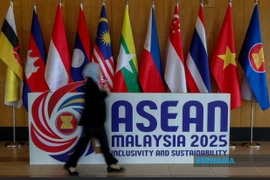
This strategic pivot comes as the ten-member Association of Southeast Asian Nations (ASEAN) deepens regional integration through the ASEAN Economic Community (AEC) initiative, which aims to address non-tariff barriers, improve connectivity, and enhance supply chain resilience.
Rifki Weno, Executive Director of the ASEAN Business Advisory Council, highlighted a proposal for an "ASEAN Business Entity" framework that would incentivise cross-border investment by facilitating movement of talent and capital throughout the region.
Greater economic integration is crucial for enhancing ASEAN's attractiveness in an increasingly complex global landscape, Weno opined.
Tetsuya Watanabe, President of the Economic Research Institute for ASEAN and East Asia, said the region faces intensified competition amid shifting geopolitical dynamics, and ASEAN must strengthen its resilience through diversification and cooperation.
He emphasised that the region has significant opportunities to attract investment in manufacturing, electronics and clean energy sectors, provided it creates a supportive environment by improving regulatory clarity.
Meanwhile, Werapong Prapha, Thailand Trade Representative, said Thailand exemplifies this new approach. The country is reviewing the Foreign Ownership Act to allow greater foreign participation in sectors like tech startups and biotechnology, Werapong said, underscoring Thailand's commitment to regulatory reforms.
Whitney Baird, President and CEO of the US Council for International Business, affirmed American companies' continued interest in the region but stressed the importance of regulatory coherence, particularly in emerging technologies.
Predictable, transparent processes for investment screening are essential, Baird noted, adding that such mechanisms should address legitimate national security concerns without hindering competition or valuable investment.
Jens Arnold, head of division at the OECD Economics Department, emphasised the critical importance of structural reforms in areas including productivity enhancement, regulatory streamlining, and services sector liberalisation.
The OECD's economic surveys for several Southeast Asian countries offer evidence-based policy recommendations by benchmarking against international peers, he noted.
"Improving access to finance for SMEs, ensuring a level playing field between state-owned and private enterprises, and maximising benefits from foreign direct investment through local linkages are all crucial priorities," Arnold said./.