Laos steps up drive to move beyond least developed country status

The Lao Government will also work to foster strong development momentum by mobilising public participation, encouraging self-reliance among citizens and businesses, and improving the quality of human resources, while building an independent and self-reliant economy capable of deeper regional and global integration.

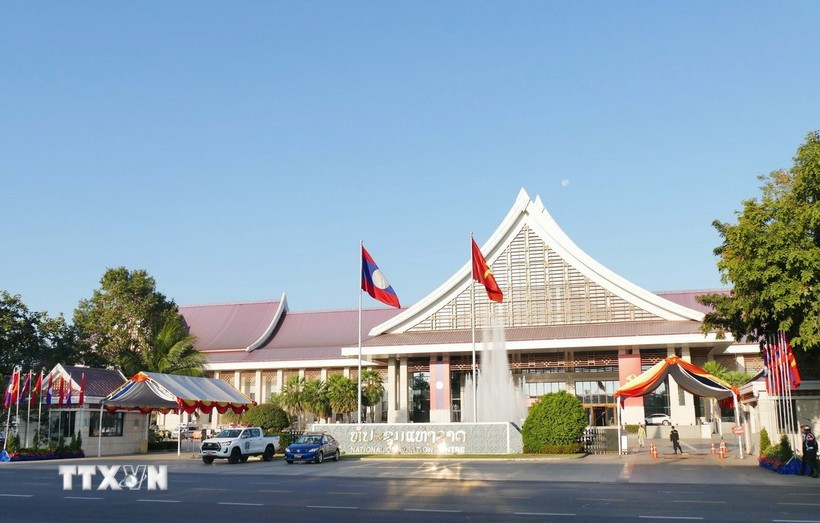
The Lao National Convention Centre in Vientiane, the venue of the 12th National Congress of the Lao People’s Revolutionary Party. (Photo: VNA)

Vientiane (VNA) – Over the next five years, Laos will roll out the 10th Five-Year National Socio-Economic Development Plan (2026–2030) as a central pillar in its efforts to graduate from least developed country (LDC) status, advance the Sustainable Development Goals, and implement the Resolution of the 12th National Congress of the Lao People’s Revolutionary Party (LPRP) in line with long-term development strategies.

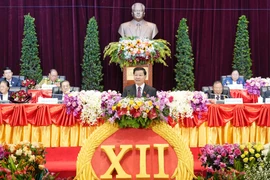
Addressing the 12th National Congress of the LPRP on January 6, Prime Minister Sonexay Siphandone said the Government will prioritise three urgent tasks to ensure the plan is implemented in a practical and effective manner, serving as a solid foundation for sustainable development beyond LDC status.

These include revising laws, mechanisms and regulations; strengthening governance and management capacity; accelerating digital transformation alongside decentralisation and delegation of authority; and creating a transparent, efficient and business-friendly investment environment.

The Government will also work to foster strong development momentum by mobilising public participation, encouraging self-reliance among citizens and businesses, and improving the quality of human resources, while building an independent and self-reliant economy capable of deeper regional and global integration.

In parallel, Laos will pursue comprehensive governance reforms to improve the efficiency of natural resource management, particularly in minerals, energy and land. Greater transparency and discipline in budget execution will be enforced to curb corruption and revenue losses, while tapping new revenue sources based on national strengths to support rapid, green and sustainable socio-economic development.

On the broader policy front, the Government will continue to tackle economic and financial challenges in a substantive manner, avoid unsustainable debt, and manage the economy in line with market principles under State regulation.

Looking ahead, Laos targets fast, stable and resilient growth with higher quality and self-reliance, with a strong focus on education and human resource development, especially nurturing students and intellectuals who can contribute to science, technology, innovation and national development. Improving living standards, ensuring a sustainable and high-quality exit from LDC status, and balancing socio-economic development with environmental protection remain key priorities.

At the same time, Laos will pursue proactive diplomacy to enhance its profile regionally and internationally, improve the effectiveness of State and socio-economic governance towards building a rule-of-law state, and safeguard political stability, security and social order. Efforts will also focus on strengthening national unity, developing rural areas, reducing poverty, and gradually narrowing development gaps between urban and rural areas, as well as between rich and poor./.

VNA

See more

A healthcare worker performs a swab test on a patient during influenza symptom screening at a community health centre in Banten, on January 7, 2026. (Photo: antaranews.com)

Indonesia reports first death related to so-called super flu

Yovita Hartantri, head of the New and Re-emerging Infectious Diseases Team at Hasan Sadikin Regional Hospital in Bandung, said the hospital treated 10 patients with influenza A subclade K between September and November last year. The patients exhibited a range of symptoms, with at least three developing severe complications.

Thailand enters technical deflation: Expert

Thailand enters technical deflation: Expert

Associate Professor Thanavath Phonvichai, President of the University of the Thai Chamber of Commerce and Chairman of the Centre for Economic and Business Forecasting, attributed the current bout mainly to lower production costs, particularly cheaper fuel and persistently low agricultural prices.

Indonesia spots four Sumatran tigers at national park

Indonesia spots four Sumatran tigers at national park

Camera traps installed in Bukit Tigapuluh National Park of Indonesia have recorded four individual Sumatran tigers (Panthera tigris sumatrae), providing strong evidence that the conservation area's ecosystem remains well preserved.

Deputy Prime Minister and Agriculture Minister of Thailand Thammanat Prompao (Photo: The Nation)

Agricultural envoys ordered to boost Thai crop exports

Deputy Prime Minister and Agriculture Minister of Thailand Thammanat Prompao said that the ministry is prioritising a “market-led, innovation-supported, higher income” strategy, built on three key pillars: strengthening confidence in core, established markets to protect Thailand’s market share; targeting high-potential products to open new opportunities, including dried seahorses, dried geckos, live crocodiles for consumption, and breeding crocodile parent stock for farming; and expanding networks by deepening cooperation with key trading partners, including China, and widening sales channels, such as digital platforms, so Thai products can reach consumers more directly.

Illustrative image (Photo: Internet)

Thailand maps out national semiconductor strategy

Under the strategy, Thailand will prioritise power, sensor, photonics, discrete and analog semiconductors, which are closely linked to the country’s established electronics manufacturing base and supply chains serving the automotive, energy, data centre and industrial sectors.

MDEC headquarters (Photo: nabalunews.com)

Malaysia’s digital exports surge

Malaysia's digital exports recorded 6.8 billion RM (1.67 billion USD) between 2024 and the first half of 2025, marking a milestone in the country’s development journey of digital economy.