Laos targets 6% annual growth in 2026-2030

Laos’ gross domestic product (GDP) is expected to grow by an average of at least 6% annually. GDP per capita is targeted to reach 3,104 USD by 2030, while gross national income (GNI) per capita is projected to rise to 2,914 USD.

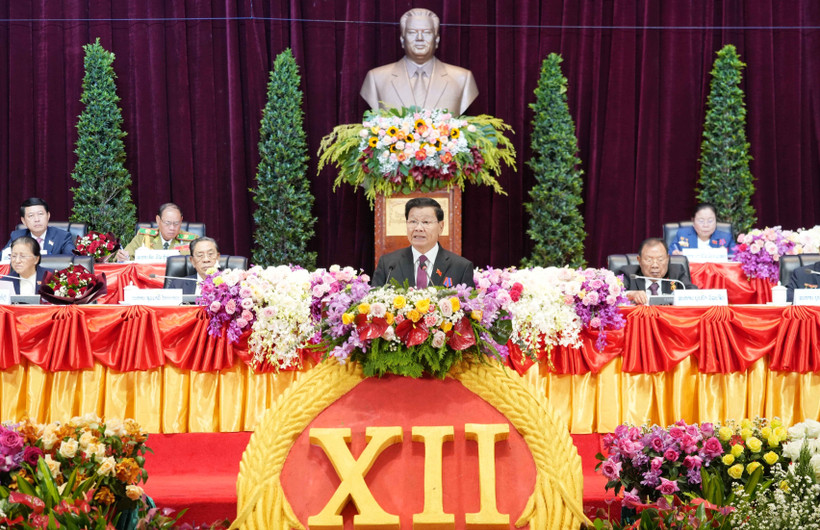
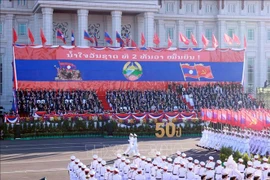
General Secretary of the Lao People's Revolutionary Party Thongloun Sisoulith delivers the opening speech at the opening session of the 12th National Congress of the Lao People’s Revolutionary Party (LPRP) on January 6. (Photo: VNA broadcasts)

Vientiane (VNA) – Laos aims to achieve average economic growth of 6% or higher per year over the next five years, while accelerating the building of an independent and self-reliant economy, Prime Minister Sonexay Siphandone has said.

Presenting the draft 10th five-year National Socio-Economic Development Plan for the 2026–2030 period at the opening session of the 12th National Congress of the Lao People’s Revolutionary Party (LPRP) on January 6, the PM said the plan is designed to help the country graduate from least developed country (LDC) status in a substantive and sustainable manner, while laying a solid foundation for long-term development.

According to the Lao PM, Laos recorded average economic growth of only 4.24% over the past five years, due largely to the impacts of the COVID-19 pandemic, inflationary pressures and global instability. Nevertheless, the country managed to avoid falling into the group of economically bankrupt nations, he noted.

The 10th five-year plan is built around the guiding slogan of “strengthening determination for robust development, resolutely building an independent and self-reliant economy, effectively harnessing all strengths, and promoting rapid, green and sustainable socio-economic development.” To advance reforms, the Lao Government has identified three urgent measures - accelerating the digitalisation of state management, fostering a sense of self-reliance among citizens, and enhancing transparency in the management of natural resources.

Under the plan, Laos’ gross domestic product (GDP) is expected to grow by an average of at least 6% annually. GDP per capita is targeted to reach 3,104 USD by 2030, while gross national income (GNI) per capita is projected to rise to 2,914 USD.

In terms of economic structure, the services sector is set to serve as the main growth engine, expanding at an estimated 7.1%, followed by industry at 5.7% and agriculture at 4.1%. To maintain macroeconomic stability, the government aims to keep inflation below 5% and ensure foreign exchange reserves sufficient to cover at least five months of imports.

Strengthening public finances has been identified as a top priority. The Lao Government targets reducing public debt to below 70% of GDP throughout the five-year period. Budget revenue is projected to reach 554.4 trillion LAK (over 26 billion USD), equivalent to about 20.95% of GDP, through expanded tax and fee collection, including land tax, construction tax and environmental taxes.

The development plan for the 2026-2303 period outlines six strategic objectives and 26 key programmes spanning economic development, human resource development, livelihoods, environmental protection, connectivity and public administration reform.

Key social targets include reducing the poverty rate to below 10%, improving living standards in rural areas, and enhancing the quality of education and healthcare services. Environmental goals focus on increasing national forest coverage to 70% and cutting greenhouse gas emissions by 60%, in line with green growth principles.

In addition, the plan prioritises infrastructure development to strengthen regional and international connectivity, with an emphasis on expanding public–private partnership (PPP) cooperation.

Reviewing the previous five-year period, Sonexay acknowledged that the quality of economic growth remained limited and that depreciation of the kip continues to pose challenges. He stressed the need for deeper and more comprehensive institutional reforms to ensure more resilient and sustainable growth in the years ahead./.
VNA

See more

Indonesia spots four Sumatran tigers at national park

Indonesia spots four Sumatran tigers at national park

Camera traps installed in Bukit Tigapuluh National Park of Indonesia have recorded four individual Sumatran tigers (Panthera tigris sumatrae), providing strong evidence that the conservation area's ecosystem remains well preserved.

Deputy Prime Minister and Agriculture Minister of Thailand Thammanat Prompao (Photo: The Nation)

Agricultural envoys ordered to boost Thai crop exports

Deputy Prime Minister and Agriculture Minister of Thailand Thammanat Prompao said that the ministry is prioritising a “market-led, innovation-supported, higher income” strategy, built on three key pillars: strengthening confidence in core, established markets to protect Thailand’s market share; targeting high-potential products to open new opportunities, including dried seahorses, dried geckos, live crocodiles for consumption, and breeding crocodile parent stock for farming; and expanding networks by deepening cooperation with key trading partners, including China, and widening sales channels, such as digital platforms, so Thai products can reach consumers more directly.

Illustrative image (Photo: Internet)

Thailand maps out national semiconductor strategy

Under the strategy, Thailand will prioritise power, sensor, photonics, discrete and analog semiconductors, which are closely linked to the country’s established electronics manufacturing base and supply chains serving the automotive, energy, data centre and industrial sectors.

MDEC headquarters (Photo: nabalunews.com)

Malaysia’s digital exports surge

Malaysia's digital exports recorded 6.8 billion RM (1.67 billion USD) between 2024 and the first half of 2025, marking a milestone in the country’s development journey of digital economy.

Malaysian Minister of Economy Akmal Nasrullah Nasir speaks at the Economy Minister Mandate 2026 on January 8. (Photo: Bernama)

Malaysia seeks to translate economic policies into practice

Malaysia enters the preparatory phase for the 13MP on the back of encouraging economic indicators in 2025. Gross domestic product (GDP) expanded by 5.2% in the third quarter of 2025, bringing average growth for the first nine months of the year to 4.7%.

The Lao National Convention Centre in Vientiane, the venue of the 12th National Congress of the Lao People’s Revolutionary Party. (Photo: VNA)

Laos steps up drive to move beyond least developed country status

The Lao Government will also work to foster strong development momentum by mobilising public participation, encouraging self-reliance among citizens and businesses, and improving the quality of human resources, while building an independent and self-reliant economy capable of deeper regional and global integration.

CEO of Bioeconomy Corporation Mohd Khairul Fidzal Abdul Razak (Photo: The Star)

Malaysia boosts bio-economy, targets high revenue in 2026

MOSTI Minister Chang Lih Kang said the Bioeconomy Corporation, the ministry’s lead development agency for Malaysia’s biotechnology industry, will drive this growth and steer the country’s bioeconomy toward greater global competitiveness.

Secretary of the Central Committee of the Lao People’s Revolutionary Youth Union (LPRYU) Thongly Sisoulith (Photo credit: Lao Youth Mass Media)

Lao youth ready to contribute to national socio-economic development goals

Secretary of the Central Committee of the Lao People’s Revolutionary Youth Union (LPRYU) Thongly Sisoulith said that the Youth and Adolescents Development Strategy, which is integrated into the 10th five-year socio-economic development plan, is a key component reflecting the Party and State’s clear orientation toward human resources development in service of the country’s sustainable development in the future.

Given continued volatility in the global rice market, the Thai cabinet approved extending interest compensation for stockpiling paddy rice for another six months. (Photo: Bangkok Post)

Thailand extends support measures for rice industry

Government spokesman Siripong Angkasakulkiat said after a Cabinet meeting on January 6 that the Ministry of Commerce had proposed three measures for consideration. The first was the extension of the interest compensation scheme for rice traders storing paddy from the 2023–24 production year.