AFD official: Development partners key to Vietnam’s progress, future goals

Present in Vietnam since 1994, AFD has accompanied the country for 31 years. As France’s bilateral development bank, together with its affiliates Proparco and Expertise France, AFD has committed a total of 3.2 billion EUR (around 3.73 billion USD) in support of Vietnam.

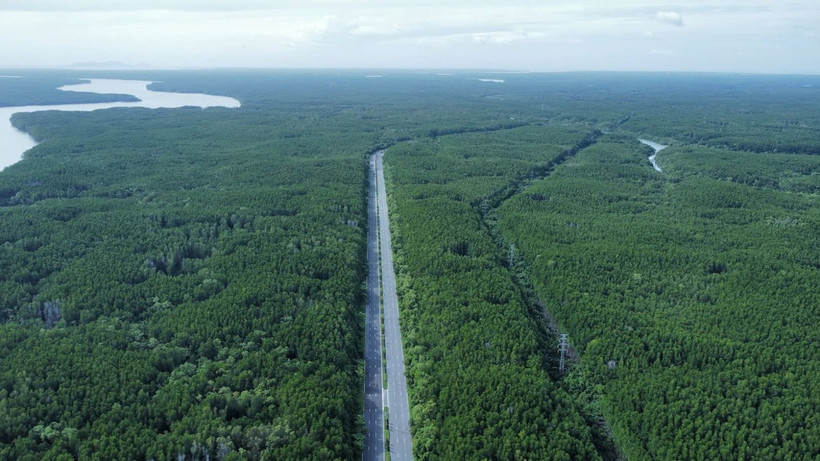
A view of mangrove forest in the southernmost province of Ca Mau. (Photo: VNA)

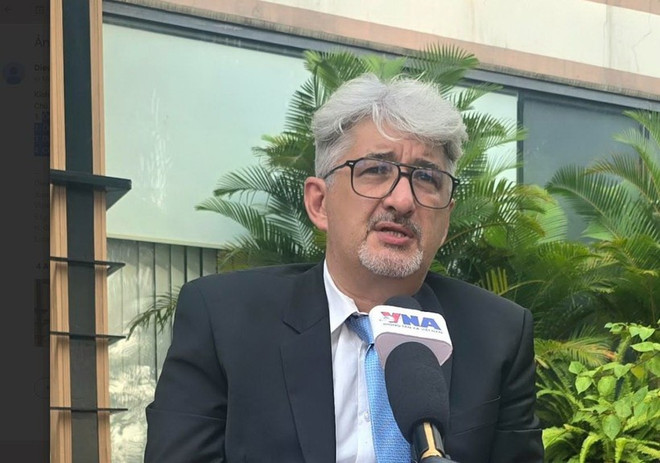
Hanoi (VNA) - Hugo Pierrel, Deputy Country Director of the French Development Agency (AFD) in Vietnam, shared his views on the country’s impressive development, major milestones in cooperation, future prospects, and policy recommendations, while highlighting the role of development partners in Vietnam’s 80-year journey of renewal and development.

Over the last eight decades, Vietnam has emerged as a regional model for economic transformation, drawing strong support from development partners, notably AFD as one of its most enduring.

Pierrel noted that Vietnam has undergone a “remarkably impressive” socio-economic development journey, marked by structural reforms and sustainable growth, moving from a underdeveloped country to middle-income status in 2017 and now on track to join the upper-middle-income group.
afd.jpg
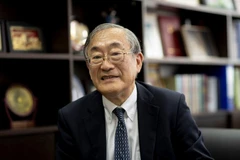
Hugo Pierrel, Deputy Country Director of the French Development Agency (AFD) in Vietnam. (Photo: VNA)

Poverty reduction is one of the country’s remarkable achievements, with the extreme poverty rate falling from 45% in 1990 to below 1% today, he said, noting that this reflects the Vietnamese Government’s persistent efforts through concrete actions, sound resource allocation, and effective handling of essential socio-economic issues.

Progress is also evident in broader access to energy, clean water, and education, with universal education being seen as evidence of effective macro-governance and consistent reforms steadfastly pursued by the Party, State, and Government, he added.

According to the AFD official, Vietnam’s economic management has been “exemplary,” building strong confidence among international partners. The country has skillfully leveraged trade integration, attracted FDI, and effectively used support from agencies like AFD to boost agricultural exports and expand production.

Key cooperation milestones of AFD in Vietnam

Present in Vietnam since 1994, AFD has accompanied the country for 31 years. As France’s bilateral development bank, together with its affiliates Proparco and Expertise France, AFD has committed a total of 3.2 billion EUR (around 3.73 billion USD) in support of Vietnam.

According to Pierrel, AFD’s cooperation in Vietnam can be divided into three key phases. The first, starting in 1994, focused mainly on agriculture and agro-processing, particularly strategic crops such as rice, coffee, tea, and rubber, with the aim of boosting agricultural development and processing capacity. Funding also supported irrigation, water management, and hydraulic infrastructure, laying the foundation for long-term growth.

The second phase, in the early 2000s, coincided with Vietnam’s push for economic infrastructure. AFD shifted its financing accordingly, backing major projects such as partnerships with Vietnam Electricity (EVN) and the National Power Transmission Corporation (EVNNPT), the upgrade of the Yen Vien–Lao Cai railway, and co-financing Hanoi’s Metro Line 3.

Since 2015, AFD’s work in Vietnam has entered a new phase. Following the Paris Agreement, the agency was tasked with scaling up support for emission reduction and climate adaptation programmes. In Vietnam, AFD has been a key player in the energy transition, backing projects in energy and transport aligned with the National Power Development Plan VIII and the Government’s net-zero commitment by 2050.

Beyond financing, AFD also engages in policy advice and capacity building through initiatives such as the economic research programme on climate change (Gemmes Vietnam). It has further promoted peer-to-peer partnerships, linking EVN with France’s EdF (Électricité de France), and Hanoi with the Île-de-France region in Paris.

Challenges and recommendations for future cooperation

While acknowledging Vietnam’s significant progress, the AFD official also highlighted key challenges in project implementation, including land management and site clearance, complex approval procedures, and biodiversity. He noted that large infrastructure projects can have lasting impacts on ecosystems, stressing the need for Vietnam to minimise negative effects and integrate conservation measures from the planning stage.

Commenting on Vietnam’s institutional reform programme launched in early 2025, Pierrel said it marks a positive step for Vietnam’s administrative system and all-level governance, creating opportunities to improve efficiency and support the country’s ambitious goal of high-income status by 2045.

To sustain sustainable growth, Pierrel recommended integrating four priorities into national development policy - building a low-carbon production and consumption system and reducing reliance on fossil fuels; mainstreaming climate action across all policies at both central and local levels, in both public and private sectors; strengthening solid infrastructure and institutional foundations to support economic growth; and developing high-quality human resources as a key driver to improve labour productivity, and boost added value.

He also stressed the need to clearly define the role of public and private investment in major projects, noting that in strategic sectors such as power transmission, the State should take the lead to ensure system stability, thereby encouraging private investment in energy production. On the financial market, Vietnam must ensure fair access to credit for all economic actors, using appropriate policy tools to realise the goal of green growth.

Development partners like AFD stand ready to work alongside the Vietnamese Government, sharing experience, expertise, and technology to achieve its ambitious development goals, Pierrel affirmed.

He stated that the partnership between AFD and Vietnam goes beyond financial support, serving as a bridge for knowledge, technology, and governance toward a prosperous and sustainable future for the southeast Asian nation./.

VNA

See more

The Vietnam National University, Ho Chi Minh City leads Vietnamese institutions in natural sciences, social sciences, and management, ranking in the 401–450 and 341 bands, respectively. (Photo: vnuhcm.edu.vn)

Vietnamese universities climb global rankings in multiple disciplines

In the broad subject rankings, seven Vietnamese universities were listed, three more than last year. Van Lang University ranked 260th globally in arts and humanities, the highest position for Vietnam in this category. Duy Tan University maintained a strong standing in engineering and technology, placing 346th worldwide.

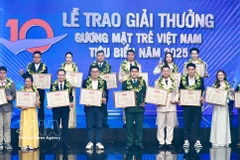
Outstanding young Vietnamese faces and promising young Vietnamese faces in 2025 (Photo: VNA)

Top 10 Vietnamese Outstanding Young Faces of 2025 honoured

Among the 10 outstanding young Vietnamese of 2025 are Dr. Pham Anh Tuan from KTH Royal Institute of Technology in Sweden, listed among the world’s top 2% most influential scientists, and Dr. Dang Thi Le Hang from the Vietnam Academy of Science and Technology, recognised for her work in biomedical materials.

Young trailblazers power Vietnam’s digital future

Young trailblazers power Vietnam’s digital future

Digital transformation is an unstoppable trend, driving the renewal of growth models, enhancing governance, and improving the quality of life. In this shift, young people – armed with knowledge, adaptability to new technologies, and creativity – are stepping up as a leading force.

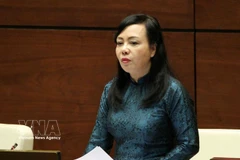
Former Minister of Health Nguyen Thi Kim Tien (Photo: VNA)

Former Health Minister Nguyen Thi Kim Tien prosecuted

The Supreme People's Procuracy has prosecuted former Minister of Health Nguyen Thi Kim Tien for “violating regulations on management and use of State property, causing losses and wastefulness” in a case related to the construction of the second campuses of Bach Mai Hospital and Viet Duc University Hospital. ​

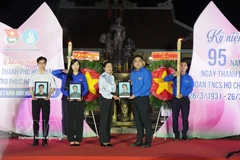
Ngo Minh Hai, Secretary of the Ho Chi Minh Communist Youth Union and President of the Vietnam Youth Federation of Ho Chi Minh City, presents portraits to the family of Heroic Vietnamese Mother Nguyen Thi Dau and her two children, martyrs Tran Thi Sau and Tran Van Chan. (Photo: VNA)

Youth Month: Restoring portraits to honour war heroes

The initiative on restoring and digitising portraits of Heroic Mothers and martyrs across Ho Chi Minh City not only helps safeguard valuable historical records but also highlights the creativity and volunteer spirit of young people in applying technology to meaningful community projects.

Team K91 under the Dong Thap provincial Military Command search for martyrs’ remains in Cambodia. (Photo: VNA)

Campaign launched to boost search, identification of fallen soldiers’ remains

The “500-day-and-night campaign” aims to mobilise the combined strength of the entire Party, political system, armed forces and society to accelerate progress in carrying out the task, regarded as both a special political mission and a meaningful activity of gratitude to those who laid down their lives for the Fatherland's independence and freedom and the people's happiness.

A publication printed in the romanised Vietnamese script in 1883.(Photo: VNA)

Event series honours romanised Vietnamese script pioneer, promotes Vietnam–Portugal exchange

APCV Chair Diane Nguyen Duc Thu Dung said that the initiative aims to pay tribute to missionary Francisco de Pina, one of the early contributors to the formation of the modern writing system of the Vietnamese language (quoc ngu). Beyond its historical significance, the project is expected to serve as a platform to promote cultural exchange and expand cooperation between Vietnam and Portugal across various fields.

The Filipino sailor suffering from a serious illness is brought ashore for treatment. (Photo: VNA)

Foreign sailor brought ashore for emergency treatment

A specialised search-and-rescue ship which was on standby off Ho Chi Minh City’s Phuoc Thang ward was immediately dispatched, accompanied by a medical team from the Vung Tau General Hospital, to give first aid and bring the patient ashore.

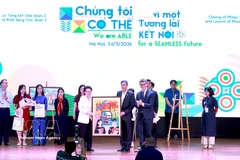
Delegates at the event to launch the third phase of the “We Are ABLE” project in Hanoi on March 24 (Photo: VNA)

UNESCO-backed STEAM initiative helps boost gender equality

Launched in 2019, the “We Are ABLE” initiative aims to promote gender equality, support girls’ education, and foster safe and inclusive learning environments. During its second phase from 2023 to 2025, the project reached more than 8,000 students and their families in the provinces of Cao Bang, Vinh Long, and Khanh Hoa.

Youth delegates take part in hands-on cultural experiences such as calligraphy writing, Dong Ho folk painting, mask painting, traditional games, and exchanges with young performers of “tuong”, “cheo” and “cai luong” theatre (Photo: VNA)

Youth - Key force in preserving, promoting national cultural values

The initiative “Bringing youth members to traditional theatres” has become a flagship model of the ministry’s Youth Union in recent years, helping popularise traditional arts among the public, particularly younger generations, and contributing to the implementation of the Politburo’s cultural development orientation under Resolution 80.

Nguyen Trong Nghia, Politburo member, Secretary of the Party Central Committee and Head of the Party Central Committee’s Commission for Information, Education and Mass Mobilisation (R) and Nguyen Dac Vinh, Chairman of the National Assembly’s Committee for Culture and Education, present the Ly Tu Trong Award. (Photo: The HCYU Central Committee)

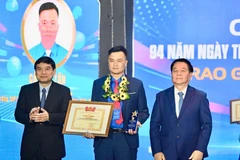
100 youth union officials honoured with Ly Tu Trong Award 2026

In 2026, all 40 provincial youth unions and affiliated units submitted their nominations to the HCYU Central Committee. Candidates were assessed based on criteria set out in the award’s regulations, including outstanding achievements in youth union work and youth movements; as well as initiatives and ideas recognised by competent authorities and effectively applied in practice, delivering value to individuals and organisations.