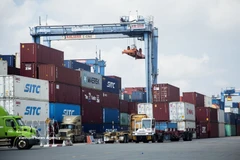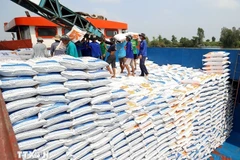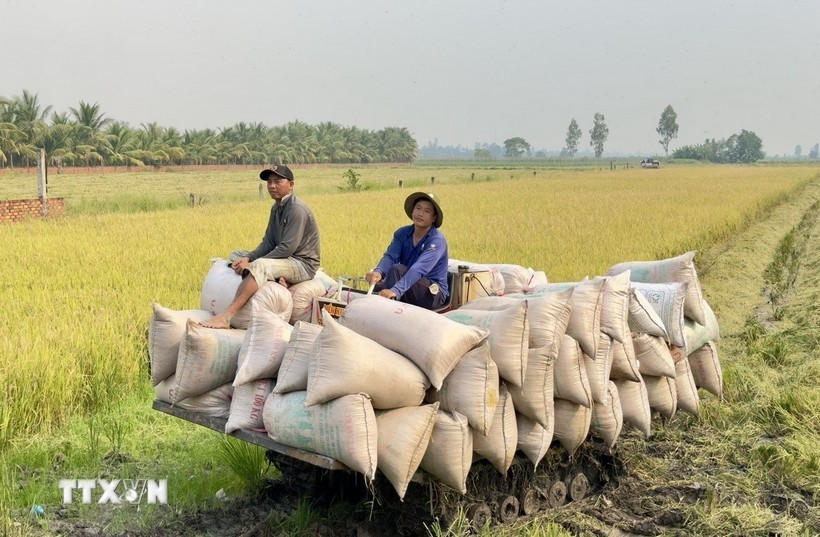
Hanoi (VNA) - Vietnam’s agriculture sector achieved a record performance in 2025 despite global market uncertainty, with total export turnover of agro-forestry-aquatic products reaching 70.09 billion USD, up 12% year on year, according to the Ministry of Agriculture and Environment.
The figure exceeded the annual target of 65 billion USD and marked the highest level ever recorded, reflecting solid growth across most product groups.
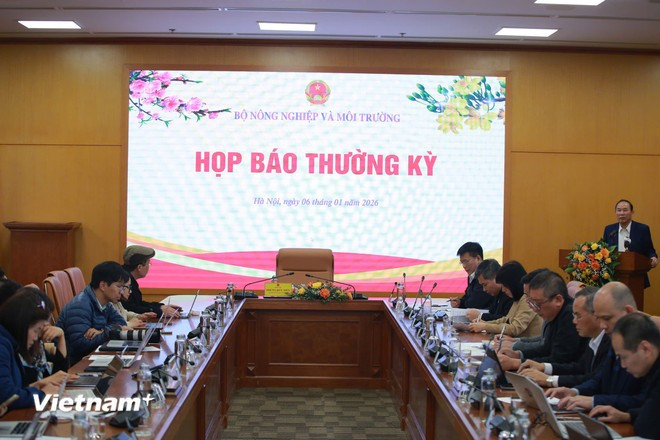
At the ministry’s regular press conference on January 6, Tran Gia Long, Deputy Director of the Department of Planning and Finance, said Vietnam continues to benefit from consistent policy support for agricultural and rural development. The sector has been restructured toward ecological and sustainable production, improving product quality and increasing added value while maintaining relatively stable growth.
Vietnamese agricultural products are now exported to more than 196 countries and territories, with export turnover rising steadily over the years. Compared with the pre-reform period, last year’s export value is nearly 70 times higher, with average annual growth maintained at around 10–12%.
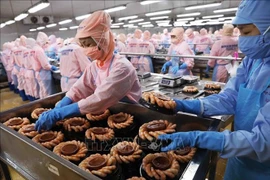
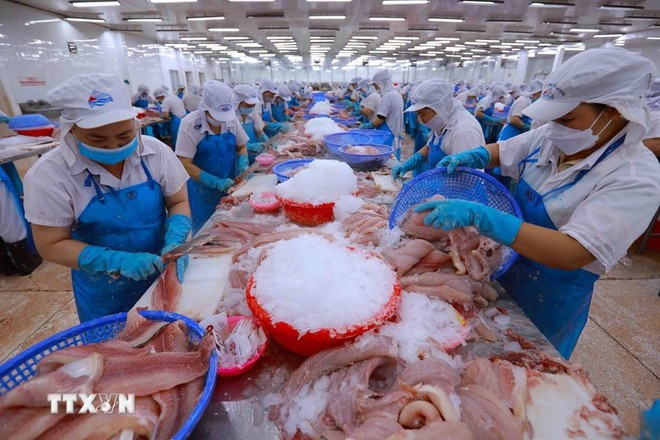
By category, crop exports totaled 37.25 billion USD, up 13.7%. Livestock exports reached 627.8 million USD, an increase of 17.4%. Seafood exports earned 11.32 billion USD, rising 12.7%, while forestry products brought in 18.5 billion USD, up 6.6%. Exports of agricultural production inputs were valued at 2.38 billion USD, up 27.1%, and salt exports rose sharply by 84.9% to 12.1 million USD.
Vietnam maintained 10 product groups with export turnover exceeding 1 billion USD. Among them, three groups surpassed 8 billion USD, including wood and wooden products at 17.3 billion USD, up 6.4%; fruits and vegetables at 8.6 billion USD, up 19.8%; and coffee at 8.5 billion USD, which recorded the strongest growth at 52.5% thanks to favourable prices and strong global demand.
In terms of market, China, the US and Japan remained the three largest importers of Vietnamese agricultural products. Exports also expanded and gained market share in Asia, Europe and Oceania. Notably, Africa recorded the highest growth rate at 67.4%, highlighting the effectiveness of market diversification efforts.
Despite the positive results, the sector continued to face challenges, including the impact of climate change, disease outbreaks, geopolitical tensions, supply chain disruptions and increasing trade competition. Internal constraints such as fragmented production, inconsistent quality and limited deep-processing capacity also affect competitiveness.
In the time ahead, 2026 is considered a key year laying the foundation for the 2026–2030 development period. The ministry has set an export target of 73–74 billion USD and plans to continue expanding markets while improving export efficiency and product value.
To achieve this goal, the Ministry of Agriculture and Environment has outlined several priority solution groups.
First, the ministry will review and improve policies, standards and technical regulations to ensure quality management of agro-forestry-aquatic products in line with international requirements. Efforts will also focus on creating a more favourable environment for farmers and businesses to invest and develop high-quality value chains that meet food safety standards.
Second, policies will be enhanced to encourage the private sector’s participation, promote innovation and entrepreneurship, and ensure equal access to land, credit and investment incentives for agricultural production and processing enterprises.
Third, the sector will prioritise the development of processing and preservation industries, promote mechanisation and apply advanced technologies to increase the share of deep-processed products, thereby reducing costs and enhancing added value. Stronger linkages between raw material areas, processing facilities and distribution systems will also be promoted.
Fourth, production activities will be restructured in line with digital transformation, while strengthening cooperative models and connections across production and consumption chains linked to global markets.
Fifth, greater emphasis will be placed on aligning production with market demand, negotiating market access for key and high-potential products, and building strong brands for high-quality, safe and environmentally friendly Vietnamese agricultural products. Efforts will also focus on addressing technical barriers and expanding both export and domestic markets.
Finally, the ministry will continue diversifying markets and distribution channels, including expanding formal exports to neighbouring countries, improving traceability systems, adopting green packaging, developing logistics infrastructure and promoting e-commerce and cross-border supply chains, while ensuring sustainable resource use and protecting local communities./.