An Giang aims for strong growth, moderate development status by 2030

Secretary of the An Giang provincial Party Committee Nguyen Tien Hai said the province is striving to achieve a gross regional domestic product (GRDP) of over 630.37 trillion VND (23.89 billion USD) by 2030, with an average annual growth rate of at least 11% during the five years.

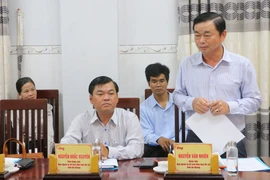
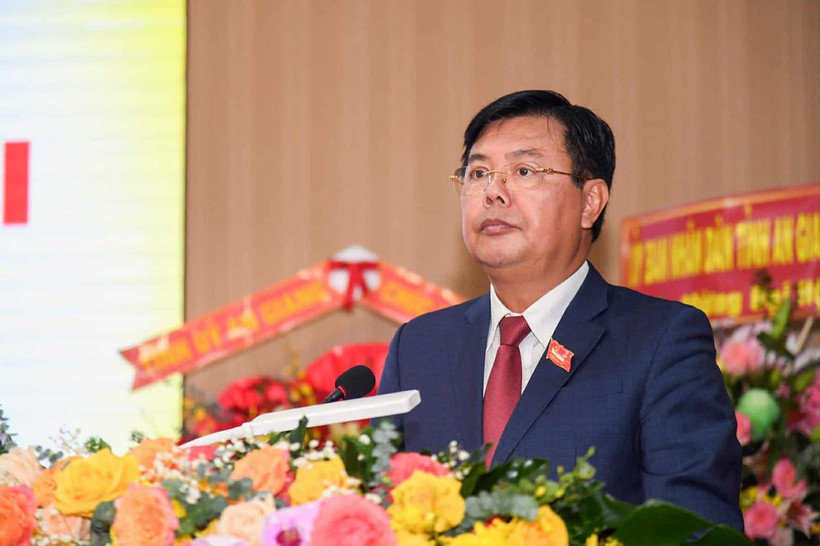
Secretary of the Party Committee of An Giang province Nguyen Tien Hai (Photo: VNA)

An Giang (VNA) - The Mekong delta province of An Giang has set an ambitious target of becoming a fairly developed province by 2030, aiming to position itself as a dynamic, deeply integrated maritime economic hub – a goal that reflects the strong aspirations of the provincial Party organisation, authorities, and people in the new development stage.

In an interview with the Vietnam News Agency ahead of An Giang’s first Party Congress for the 2025–2030 tenure, Secretary of the provincial Party Committee Nguyen Tien Hai said the province is striving to achieve a gross regional domestic product (GRDP) of over 630.37 trillion VND (23.89 billion USD) by 2030, with an average annual growth rate of at least 11% during the five years. GRDP per capita is projected to exceed 6,300 USD by 2030, while the multidimensional poverty rate is expected to fall by 0.3–0.5% annually and the urbanisation rate to surpass 50%.

Reviewing achievements during the 2020–2025 tenure, Hai stressed that despite numerous challenges, An Giang and Kien Giang (before their merger) attained significant results, meeting and even surpassing most major targets. The average GRDP growth reached 5.68% annually, the economy expanded in scale, and the structure shifted in the right direction. Local strengths were better tapped, particularly in high-tech agriculture, processing industries, marine economy, tourism, and border trade. Budget revenue increased considerably, ensuring resources for development investment and social welfare.

Agriculture, forestry, and fisheries continued to serve as economic pillars, focusing on productivity, quality, and competitiveness. Industry recorded notable growth, driven by processing and manufacturing with high added value. Trade, services, and tourism also expanded, with export turnover reaching 9.29 billion USD, growing by 9.39% per year on average. Key exports such as rice, aquatic products, garments, footwear, and processed farm produce retained traditional markets while accessing new ones. Tourism rebounded strongly, welcoming more than 80.8 million visitors over five years, including 3.48 million international tourists.

The marine economy accounted for 80% of provincial GRDP, with tourism, fisheries, transport, and coastal infrastructure significantly improving livelihoods. Border trade also grew through investment in border gates, logistics, and cross-border commerce, contributing to new growth drivers tied to defence and security.

The province has made strong investments in infrastructure and technology, while cultural and social affairs, education, healthcare, and social welfare have seen significant improvements. National defence and security remain firmly safeguarded, with external relations expanded, particularly with Cambodia.

Hai underlined that Party building remains a decisive factor for An Giang’s development. The province has streamlined local administration into a two-tier model with 102 commune-level units, and has attached importance to political, ideological, and ethical development, cadre quality, grassroots Party organisation, inspection, supervision, and anti-corruption. Administrative reform and digital transformation have been strongly advanced.

Looking ahead, An Giang will focus on renewing its growth model, driven by science-technology breakthroughs, digital transformation, and innovation. It will promote high-tech agriculture, processing, and logistics, and invest in education, training, and healthcare. The province has plans to build a high-quality workforce – a decisive factor for fast and sustainable growth.

The province will also create favourable conditions for private businesses to thrive, encourage the formation of major corporations in priority sectors, improve governance and administrative efficiency, and enhance the investment climate. Regional and international integration will be deepened, leveraging its gateway position in the Mekong Delta region.

Strategic development zones will be shaped, with Long Xuyen as an industrial, high-tech agricultural, logistics, and modern services hub. Rach Gia is a coastal administrative and economic centre, while Chau Doc is a spiritual and ecological tourism centre linked with border trade. Ha Tien is a strategic marine, tourism, and border trade hub in the southwest. The Long Xuyen–Chau Doc–Rach Gia–Ha Tien quadrangle will be developed into a growth engine.

Meanwhile, Phu Quoc is expected to become a national growth pole, oriented towards an international tourism and trade centre with free trade zones and high-quality services, further affirming An Giang’s aspiration to rise as a fairly developed province by 2030./.
VNA

See more

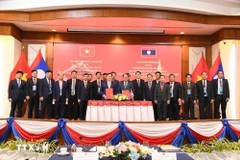
Delegates at the ministerial-level bilateral conference between the Ministries of Public Security of Vietnam and Laos on December 6, 2025 (Photo: VNA)

Vietnamese, Lao police forces foster security cooperation

The two ministries reviewed the crime situation, social order and safety issues, and drug-related cases concerning both countries; evaluated the implementation of the Memorandum of Understanding signed on August 9, 2021, and other bilateral agreements, treaties, and cooperation plans; and discussed coordination in combating human trafficking, social-order crimes and drug offences along the Vietnam–Laos border.

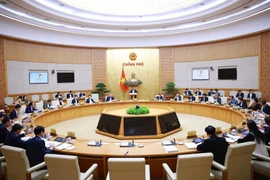
PM Pham Minh Chinh chairs the Government’s regular meeting on December 6. (Photo: VNA)

Government convenes meeting to review 11-month situation

Despite numerous difficulties, thanks to efforts by the entire political system and all people under the leadership of the Party, headed by General Secretary To Lam, the socio-economic situation remains positive with better results recorded in most fields month over month and over the same period last year.

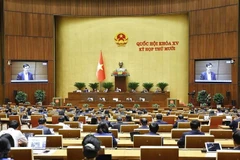
Deputy Le Thu Ha from Lao Cai province speaks at the 10th session of the National Assembly in Hanoi on December 5, 2025. Photo: VNA

Legislature scrutinises specialised court model at int’l financial centre

Establishing a specialised court at the International Financial Center is necessary to institutionalise the Party’s policies and conclusions of the competent authorities. The court aims to provide a fast and effective mechanism for resolving disputes arising from business and investment activities at the centre.

Prime Minister Pham Minh Chinh speaks at the meeting of the Government Party Committee’s Standing Board and permanent Cabinet members on December 5 (Photo: VNA)

PM pushes comprehensive financing for Mekong Delta climate response

Land subsidence, landslides, flooding, drought, and saltwater intrusion have directly affected the livelihoods and daily lives of people in the Mekong Delta that accounts for 12.8% of the country’s area and nearly 18% of its population, and contributes 95% of the nation’s rice exports, 60% of its aquatic exports, and 65% of its fruit exports.

The National Assembly votes to pass the revised Law on Judicial Expertise. (Photo: VNA)

National Assembly passes several draft laws on December 5

The National Assembly (NA) on December 5 afternoon voted to pass the Law amending and supplementing several articles of the Law on Judicial Records, the revised Law on Civil Judgment Enforcement, and the amended Law on Judicial Expertise.

☕ Afternoon briefing on December 5

☕ Afternoon briefing on December 5

The NA's discussion on the plan to merge three national target programmes into one, the Vietnam Economic and Financial Forum, and Hanoi named a member of UNESCO’s Global Network of Learning Cities are among news highlights on December 5.

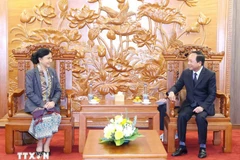
Chairman of the Communist Party of Vietnam (CPV) Central Committee's Commission for Information, Education, and Mass Mobilisation Trinh Van Quyet (right) meets with Standing Vice President of the Lao Front for National Construction Central Committee Inlavan Keobounphanh in Hanoi on December 5. (Photo: VNA)

Vietnam, Laos deepen cooperation in front work, mass mobilisation, religious affairs

The same day, the CPV Central Committee's Commission for Information, Education, and Mass Mobilisation held a working session with the Lao delegation, during which, the two sides exchanged experience in the front work, mass mobilisation, ethnic and religious affairs, reviewed recent cooperation and outlined priorities for the time ahead.

Minister of Agriculture and Environment Tran Duc Thang speaks at the session. (Photo: VNA)

Lawmakers demand flexible rules as Vietnam merges anti-poverty schemes

Addressing lawmakers’ concerns over merging the three programmes into a single framework, Minister of Agriculture and Environment Tran Duc Thang said the move demonstrates the Government’s resolve to meet the Party and State’s goals of improving living standards for all people, especially those in ethnic minority and mountainous areas.

☀️ Morning digest on December 5

☀️ Morning digest on December 5

A conference of the Central Public Security Party Committee, the first Foreign and Defence Vice-Ministerial Consultation between Vietnam and Japan, and the opening of the Vietnam Expo HCMC 2025 are among news highlights on December 4 evening.

Illustrative image (Photo: VNA)

Vietnam, Laos deepen Party-to-Party theory cooperation

Politburo member, President of the Ho Chi Minh National Academy of Politics, and Chairman of the Central Theory Council Prof. Nguyen Xuan Thang urged deeper joint research on the strategic relationship between the two Parties and States, not only in economic affairs but also in political theory and Party organisation.