APEC delegates debate export certificates, role in facilitating trade

Export certificates and their role in facilitating trade in safe food products in the APEC region was the main topic of a workshop which opened in Hanoi on May 9.
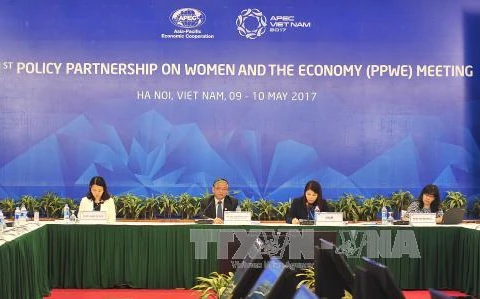
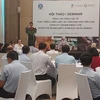
APEC delegates debate export certificates, role in facilitating trade ảnh 1Illustrative photo (Source: VNA)

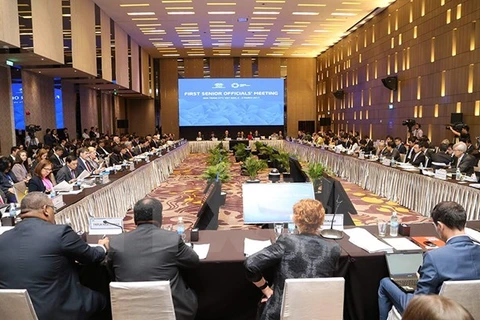
Hanoi (VNA) – Export certificatesand their role in facilitating trade in safe food products in the APEC regionwas the main topic of a workshop which opened in Hanoi on May 9 as part of thesecond APEC Senior Officials Meeting (SOM 2) and related meetings.

The two-day workshop was co-organised by the Sub-Committee on Standards and Conformance (SCSC), the Food Safety Cooperation Forum (FSCF) and the PartnershipTraining Institute Network (PTIN).

On the first day of the workshop, delegates from 21 APEC membereconomies focused discussion on a range of topics such as developing baseline assessmentsand self-reports of the APEC economies in the implementation of principles forcertification set forth by the Codex Committee on Food Import and ExportInspection and Certification Systems (CCFICS).

They identified gaps and challenges in implementing CCFICS principles:risk-based criteria for products that require certification, practicalimplementation of model certificates, least burdensome measures to achieve theappropriate level of protection and the use of Good Regulatory Practices(GRPs).

The panels continued dialogues on using innovative options to improvecommunication and information flow related to export certificates and discussedthe past deliverables that are included in the APEC Export Certificate Toolboxand suggested possible updates and additions.

They were provided with information on useful tools when consideringexport certificate regulations, including the use of good regulatory practices;using Codex guidance to determine if or not when an export certificate may benecessary, ways to streamline requirements, appropriate use of technology andelimination of unnecessary certificates such as in the case of low risk products.

On the second working day, the delegates are scheduled to discuss issuesrelated to the Codex guidance on generic official certificates, the benefits ofand challenges when using the model and essential information needed to providethe acceptable level of protection for the importing economy.

They will also share experience in implementing the Generic Model OfficialCertificate (GMOC) in the APEC region.

APEC groups 21 member economies, Australia, Brunei,Canada, Chile, China, Hong Kong (China), Indonesia, Japan, the Republic ofKorea, Malaysia, Mexico, New Zealand, Papua New Guinea, Peru, the Philippines,Russia, Singapore, Chinese Taipei, Thailand, the US and Vietnam, which togetheraccount for 39 percent of the world’s population and contribute 59 percent ofthe global GDP and 48 percent of the global trade by November 2016.-VNA
VNA

See more

Vice Chairman of the Hanoi People’s Committee hands over investment policy approval for Moscow House project in Hanoi to the Moscow authorities. (Photo published by VNA)

Hanoi, Russian localities step up cooperation in urban railways, technology

Secretary of the Hanoi Party Committee Tran Duc Thang and the delegation held talks with Moscow authorities to review implementation of the 2025-2027 cooperation programme and discuss key priorities for the new period, including urban transport, science and technology, digital transformation, trade and investment, and cultural exchanges.

Vietnamese Ambassador to Mexico Nguyen Van Hai (fourth from right) and others attend the seventh Veracruz International Energy Congress. (Photo: VNA)

Vietnam, Mexico strengthen energy, port cooperation

A number of Mexican state Veracruz businesses expressed their wish to organise a delegation to Vietnam to gain first-hand insights into the market, seek partners and explore investment and business opportunities, initially focusing on trade, energy, agriculture and tourism.

At the working session (Photo: VNA)

Can Tho, Guangxi seek collaboration in logistics, supply chains

Chinese investors now back 35 projects in Can Tho with registered capital of nearly 1.2 billion USD. In the first seven months of 2026, Can Tho’s exports to China hit 77.5 million USD, while imports stood at 64.7 million USD. Key exports included rice, seafood, farm produce, processed agricultural products and apparel while main imports comprised agricultural chemicals, veterinary medicines, fertilisers, chemicals, fabrics and other materials and inputs.

Vietnamese Minister of Finance Ngo Van Tuan grants an interview to the Vietnam News Agency (VNA). (Photo: VNA)

Vietnam, Russia move to boost financial cooperation

On bilateral economic, trade and investment ties, Tuan said two-way trade hit 3.24 billion USD in the first seven months of 2026, up 12% from a year earlier. Vietnam’s exports to Russia totaled 1.33 billion USD, while imports amounted to 1.91 billion USD.

Cai Mep - Thi Vai Port complex in Ho Chi Minh City (Photo: VNA)

Ho Chi Minh City seeks to make seaports new growth driver

To maximise its seaport advantages, Ho Chi Minh City is developing smart and green ports while promoting clean energy, lower emissions and sustainable supply chains. It aims to establish an integrated ecosystem linking seaports with industrial parks, logistics centres, free trade zones, multimodal transport networks and an international financial centre.

Farmers visit the off-season durian orchard of Cao Chi Dai in Vinh Hanh commune, An Giang province (Photo: VNA)

Vietnam promotes finance for green agriculture

Over the past five years, Vietnam has developed and gradually implemented a green finance system to support low-emission and environmentally friendly production, including agriculture. Based on the State Bank of Vietnam's Directive No. 03/CT-NHNN dated March 24, 2015, banks including BIDV, VCB, HDBank and Agribank have introduced green credit packages for waste treatment, high-tech agriculture, digital transformation, regional linkages and emission reduction across production chains.

An overview of the meeting between representatives from Polish businesses and the Agency for Domestic Market Surveillance and Development. (Photo: Agency for Domestic Market Surveillance and Development)

Polish businesses seek suppliers, partners in Vietnam

MAJAMI, a confectionery manufacturer and trader under Sweet House, is seeking distributors for Polish confectionery products in the Vietnamese market. Meanwhile, GABONA, a distributor and wholesaler of professional cosmetics, hair care and make-up products and beauty accessories, is looking for Vietnamese manufacturers of vegan and natural cosmetics.