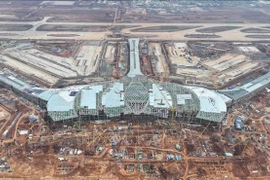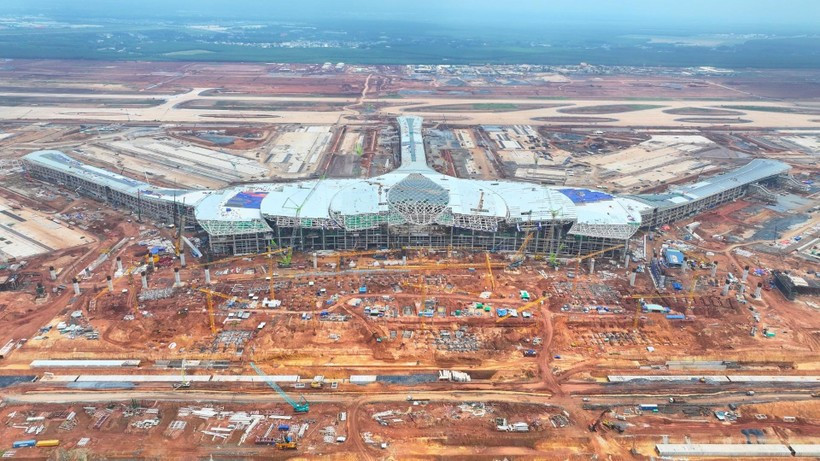
Hanoi (VNA) – The Civil Aviation Authority of Vietnam (CAAV) backed a sweeping plan to transfer all international flights from Tan Son Nhat International Airport in Ho Chi Minh City to Long Thanh International Airport in Dong Nai province, which will be put into operation in 2026, a bold step toward establishing the new facility as a major regional aviation hub capable of competing with the world's largest airports.
Earlier, the Airports Corporation of Vietnam (ACV) submitted a report and sought feedback from state management agencies as well as domestic and foreign airlines on how to divide flight operations between the two airports.
The ACV’s partner, the Incheon Airport Consortium (IAC), which is advising on the Long Thanh International Airport’s management and operation, proposed two primary scenarios for dividing flight operations between the two airports.
The first proposal calls for a complete separation of domestic and international operations. Under this scenario, Tan Son Nhat will focus on domestic flights, handling an estimated 29.5 million passengers annually, while Long Thanh will be in charge of all international flights, processing some 19.1 million international passengers a year along with 1.5 million domestic passengers to facilitate connections.
This approach means Tan Son Nhat will operate 95% of domestic flights and Long Thanh will get the complete operation of international flights, establishing the new facility as the key international transit hub in southern Vietnam.
Under this scenario, advantages include enhanced efficiency, reduced operating costs, and clear international hub identity for Long Thanh. Besides, passengers will no longer face transfers between two airports which currently require a minimum 4.5 hours and create significant flight connection risks. The IAC also said that this approach will reduce long-term congestion pressure on Tan Son Nhat while capitalising on Long Thanh’s round-the-clock operation due to its location away from residential areas, eliminating noise concerns.
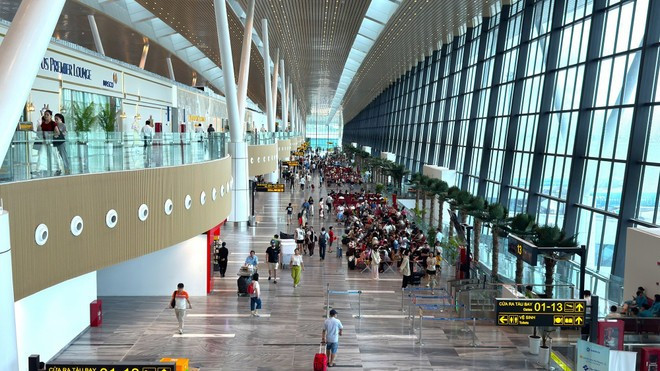
However, this will come with trade-offs as passengers from Ho Chi Minh City traveling on short-haul international routes will face longer ground transport time to reach the Long Thanh airport.
Another proposal suggests allocating international operations based on flight distance. Under this framework, Tan Son Nhat will continue handling domestic flights as well as maintaining short-haul international routes within a 1,000-kilometre radius, serving around 3.8 million international passengers annually. Long Thanh will manage all long-haul international flights and several domestic ones for transfer purposes, handling around 15.3 million international passengers a year.
The hybrid model offers practical benefits, particularly for travelers from central Ho Chi Minh City making short regional trips to destinations like Thailand, Laos, and Cambodia. Besides, it reduces initial investment and operating pressure on Long Thanh.
Yet this comes at a significant price. Maintaining international operations will substantially increase costs across multiple dimensions, from staffing and equipment to immigration, customs and quarantine services. The dual-airport system will also create confusion among passengers, extend connection time and costs for transfers between the two airports, complicate regulatory coordination, and weaken Long Thanh’s competitiveness as a regional transit hub, among others.
The ACV said that transferring all international cargo and passenger operations to Long Thanh is critical for establishing and sustaining efficient air transit capacity. It aligns with development trends while delivering significant economic, operational, and planning benefits for the national aviation system.
International airlines also back moving all of the scheduled international flights to Long Thanh, recognising the operational advantages of consolidated facilities.
Among domestic carriers, Vietnam Airlines proposed a hybrid approach, operating domestic and regional flights from Tan Son Nhat, and handling international flights beyond Southeast Asia at Long Thanh, plus other flights as chosen by airlines. Foreign airlines would operate exclusively from Long Thanh.
The Ministry of Construction ordered the CAAV and ACV to work closely with airlines to meticulously study and assess the impact of these operational scenarios and to finalise the timeline for transferring international routes from Tan Son Nhat to Long Thanh in September./.