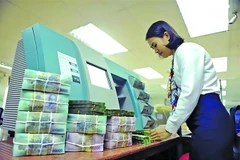
Hanoi (VNA) – The first quarter of 2025 saw an impressive rebound in the Vietnamese banking sector, with many banks reporting substantial profit growth compared to the same period last year.
Small banks deliver big surprises
Among the top 10 banks with the highest profit growth, several institutions with modest asset sizes made remarkable strides in business performance. The Vietnam Thuong Tin Commercial Joint Stock Bank (VietBank) saw a staggering 238% year-on-year profit growth, the Southeast Asia Commercial Joint Stock Bank (SeABank) rose by 189%, and the An Binh Commercial Joint Stock Bank (ABBank) recorded a 125% increase.
Specifically, VietBank achieved over 248 billion VND (9.5 million USD) in pre-tax profit, up 248% year-on-year, mainly driven by robust credit growth.
VietBank General Director Tran Tuan Anh said the 2025 profit growth target of 55% presents significant pressure on the executive team but they are determined to meet this goal.
According to the banker, key growth drivers include a 20% planned increase in outstanding loans and portfolio restructuring to maximise returns. VietBank is also strengthening its organisational structure, expanding its business network, boosting sales, and diversifying service offerings to raise non-interest income.

SeABank also made headlines with a sharp rise in pre-tax profit, soaring from over 1.5 trillion VND in Q1 2024 to 4.3 trillion VND in Q1 2025, a year-on-year surged of 189%. This leap was largely attributed to its completion of transferring the Post and Telecommunication Finance Company Limited (PTF) to AEON Financial Service, as well as more than 2.6 trillion VND in earnings from capital contribution and share purchases.
Other banks also recorded notable results: VietA Bank earned 353 billion VND in profit, up 43%; Saigon Bank posted 98 billion VND, up 44%; and BaoViet Bank gained 80 billion VND, a 16% increase. Notably, NCB reversed a 42 billion VND loss in Q1 2024 to a 151 billion VND profit in this year’s first three months.
However, not all banks sustained growth. Techcombank's profit declined by 7.2%, OCB dropped 26.5%, and PGBank fell 17.3%, reflecting a divergence in performance across the industry.
Large banks maintain strong momentum
In absolute terms, the Joint Stock Commercial Bank for Foreign Trade of Vietnam (Vietcombank) continued to lead the sector with a Q1 pre-tax profit of almost 10.86 trillion VND, up 1.3% year-on-year.
Vietcombank General Director Le Quang Vinh noted that multiple significant credit contracts were signed in Q1, supporting growth targets. Non-interest income played a critical role in Vietcombank’s profit structure, aligning with its revenue diversification strategy.
Other major banks also performed well. The Vietnam Joint Stock Commercial Bank for Industry and Trade (VietinBank) reported 6.82 trillion VND in profit (up 9.9%); the Ho Chi Minh City Development Joint Stock Commercial Bank (HDBank) earned 5.35 trillion VND (up 33%); and VPBank made over 5.01 trillion VND (up 20%), bringing it closer to its annual profit goal of 1 billion USD.
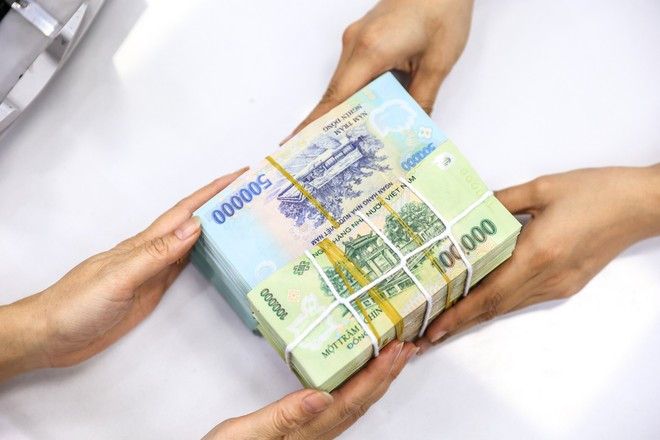
A major contributor to the banking sector’s profit surge was strong credit growth. According to the State Bank of Vietnam (SBV), as of March 31, total outstanding loans in the banking system reached 16.23 quadrillion VND, rising 3.93% from the end of 2024—nearly triple the 1.34% expansion recorded in the same period last year.
Digital transformation was another key driver, helping banks cut costs and reach customers outside major urban areas.
The shift in income structure was a also bright spot. While net interest income decreased in proportion, revenue from non-interest sources such as services, investments, and foreign exchange trading increased, signalling a reduced dependency on lending.
Banking and finance expert Dinh Trong Thinh believed the sector is off to a promising start in 2025. However, global economic volatility, rising international interest rates, and geopolitical tensions may still have indirect impacts on Vietnam.
To support growth, he suggested that banks should strengthen their internal capabilities, enhance risk management practices, improve their financial health, and diversify channels for mobilising medium- and long-term capital. At the same time, the SBV should maintain a flexible monetary policy to ensure macroeconomic stability while promoting sustainable credit growth.
With a strong Q1 performance, Vietnam’s banking sector is demonstrating high adaptability and laying a solid foundation for a promising year ahead./.