Hanoi (VNS/VNA) - There are still cases that State-owned enterprises (SOEs) hold a share higher than the permitted ratio in banks, and banks are facing difficulties in requiring the shareholders to divest the shares, Governor of the State Bank of Vietnam (SBV) Nguyen Thi Hong has said.
In a report recently sent to the National Assembly, the Governor said that in recent years, the SBV continued to improve the legal basis and resolutely implemented solutions to prevent and handle cases that hold bank shares higher than the permitted ratio. Specifically, the 2024 Law on Credit Institutions supplements many regulations on strengthening the prevention of cross-investment, cross-ownership and manipulative ownership in credit institutions.
According to the current regulations, the share ownership cap by an institutional shareholder in a credit institution is reduced from 15% to 10% and for an individual and his/her related parties from 20% to 15%.
The cross-ownership between credit institutions and related persons of credit institutions contributing capital and purchasing shares at other credit institutions has so far decreased significantly.
Shareholders and related persons owning shares exceeding the prescribed cap are mainly in State-owned enterprises and corporations, which need to be continually handled in order to force them to concentrate their capital on their core business activities and use capital more effectively.
According to the SBV, cases which currently own shares in banks fairly higher than regulated are State-owned enterprises. The banks have difficulty in requesting the shareholders to divest capital.
The SBV also admitted that the work of unveiling, preventing and handling cross-ownership and manipulation in credit institutions faced many difficulties though current legal regulations had been designed to prevent cross-ownership and manipulation in banks, as some cases could still circumvent the laws to hold bank shares higher than the permitted ratio.
Specifically, it is very difficult to unveil the cross-ownership violation in cases whereby an individual, who is the bank’s existing shareholder, can circumvent ownership regulations by asking someone else to hold more shares of the bank and to have 'name' on paper, but in fact the individual is the real owner, according to SBV.
To detect and prevent cross-ownership, the SBV said that moving forward, it would continue to monitor the safety of credit institutions' operations, and inspect capital, share ownership, lending, investment and capital contribution of credit institutions to timely detect risks and violations, and direct the institutions to handle them.
Lawyer Truong Thanh Duc, Director of the ANVI Law Firm, also believed no matter how strict the law is, the most important step is implementation and supervision.
According to Duc, whether the law is strict or loose, the most important thing is that banks, shareholders and customers must respect and follow the principles and standards. In addition, inspection and supervision of management authorities must be strengthened to ensure the effectiveness and validity of the law./.
Related News

Vietnamese banks promote development of global strong brands
Vietnamese banks have also proactively improved their image and position in the international arena. According to Brand Finance's 2025 rankings, 13 Vietnamese banks are now listed in the Top 500 banks with the highest brand value globally.
Banks to provide 19.5 billion USD preferential credit package for infrastructure, digital technology firms
At the State Bank of Vietnam (SBV)’s meeting with commercial banks on April 10 to discuss the direction of implementing the credit package, the banks said they will participate in the package to show the proactiveness and determination of the banking sector to support businesses and promote economic growth.
Banks ramps up share payouts to meet Basel III
This strategic move aims to reinforce financial capacity, while complying with international safety standards, said economists and industry experts.
See more
Reference exchange rate down 4 VND at week’s beginning
With the current trading band of +/- 5%, the ceiling rate applicable for commercial banks during the day is 26,401 VND/USD, and the floor rate 23,887 VND/USD.
Vietnam to host seminar on export growth strategies
Vietnam's exports rose 16.1% to 430.2 billion USD in the first 11 months of 2025, while total trade hit 839.8 billion USD during the same period. This strong performance shows that exports remain a key driver of economic growth, boosting Vietnam's standing on the world stage in recent years.
PM requests greater efforts to operate Long Thanh International Airport on schedule
Long Thanh International Airport in Dong Nai province has a total investment of over 16 billion USD, divided into three phases. Construction of the first phase, estimated to cost 5.4 billion USD, began in 2020. Once operational, it is expected to handle 25 million passengers and 1.2 million tonnes of cargo each year.
Hai Phong Port reaches 2-million-TEU milestone
Handling the 2 millionth TEU in 2025 not only demonstrates Hai Phong Port’s operational capacity and the collective efforts of its workforce, but also highlights its increasingly important role in regional and global supply chains, the confidence of shipping lines, logistics firms and the business community, and the effectiveness of policies to improve the investment climate and strengthen maritime infrastructure and services.

Tracing origins hindered by fragmented data systems
As the Government accelerates the digital economy, establishing a unified national traceability system has become a crucial move to end data fragmentation and disconnection among ministries, sectors and localities.
Tax cuts poised to ignite Vietnam’s hybrid vehicle boom from 2026
Experts forecast that 2026-2030 will mark a period of strong growth for hybrid vehicles in Vietnam, a trend that will invigorate the automotive sector while supporting national objectives on emissions reduction, sustainable development and the broader transition to green mobility.

Hanoi approves two strategic projects to fuel long-term growth
Hanoi has approved in principle two major projects, including an Olympic sports urban area and a Red River Landscape Boulevard, aimed at driving long-term growth and reshaping the capital.
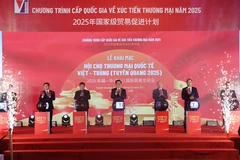
Vietnam - China International Trade Fair opens in Tuyen Quang province
The six-day fair hosts more than 240 booths operated by companies from both countries, showcasing farm produce, medicinal herbs, machinery and equipment, consumer goods, handicrafts, and opportunities in investment, trade and tourism as well.
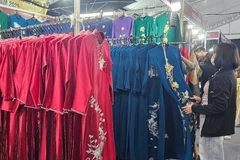
“Made in Vietnam 2025” Fair draws nearly 100 businesses
At the fair, consumers and visitors can explore and purchase a wide range of specialties and OCOP (One Commune, One Product) products, spanning food items, traditional handicrafts, as well as textiles, garments and leather goods.
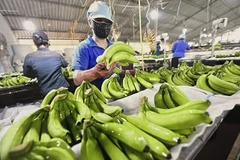
Vietnam targets 1 billion USD in banana exports
Bananas have been identified as a priority product under the Project for the Development of Key Fruit Crops to 2025, with a vision to 2030, approved in October 2022. Under the plan, banana acreage is projected to reach 165,000–175,000ha by 2030, with output of 2.6–3 million tonnes.

Vietnamese street vendors go cashless as QR payments surge 85%
What began in supermarkets has flooded into alleyways, noodle stalls, corner shops and late-night food carts. The disappearance of loose change and slow cash hand-offs is translating directly into higher turnover for micro-merchants.

Vietnam TECHFEST 2025: Advancing nationwide innovation ecosystem
An official has underlined the crucial role of social open innovation in national development, helping Vietnam address challenges such as the middle-income trap, population ageing, environmental pollution and urban pressures.

Vietnam aims for 181,000 ha of industrial parks by 2030
By 2030, the country plans to expand to 600 industrial parks, adding 35,000ha to reach 181,000ha, and expand industrial clusters from 1,100 to 2,000, with an additional 29,000ha of land.
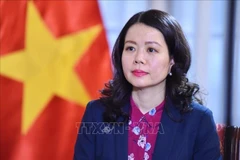
Event connects Vietnamese businesses with African countries
Deputy Foreign Minister Nguyen Minh Hang held that to develop Vietnam – Africa ties more strongly and substantively, it is necessary to promote the engagement of businesses, and that the Government will create favourable conditions for them to enhance fruitful cooperation.

AIA Group envisions long-term investment, cooperation in Vietnam
Over 25 years of operation in Vietnam, AIA has achieved positive results. Its premium revenue ranks among the top five life insurers, reaching nearly 14.83 trillion VND (563.71 million USD) in 2024 and an estimated 15.73 trillion VND in 2025, equivalent to around 10% of the market share.

Forum discusses expanding foreign investors’ access to Vietnam's stock market
The State Securities Commission (SSC) has been meeting frequently with foreign investors and international financial institutions to gather feedback and adjust policies accordingly.

Ho Chi Minh City courts Japanese investment with growth blueprint
Ha underscored the pivotal contributions of Japanese firms, which have long supported local socio-economic progress through major infrastructure projects, industrial zones and workforce training courses. To date, Japanese companies have invested more than 15 billion USD in over 2,200 projects, reflecting sustained confidence and commitment to the market.
FDI inflows: Manufacturing remains the dominant sector
Vietnam attracted 33.69 billion USD in foreign direct investment (FDI) in the first 11 months of 2025, with manufacturing and processing continuing to draw the strongest interest from foreign investors.
Timely removal of obstacles for businesses in logistics, import-export activities needed
Based on feedback from the business community, Board IV recommended that the Prime Minister direct relevant ministries to continue reviewing and reforming administrative procedures, especially in areas of high priority such as attracting investment, industrial park development, logistics, and enhancing export-import facilitation.
Lao group urged to deepen energy ties with Vietnam
Deputy Prime Minister Bui Thanh Son has commended Phongsupthavy Group as one of Laos’ leading investors supplying electricity to Vietnam, noting its pledge to ramp up power exports and actively contribute to the implementation of energy cooperation agreements endorsed by senior leaders of the two Parties and States.