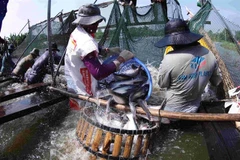
A pond for farming giant river prawns in Ben Tre province’s Thanh Phu district.(Photo: VNA)
 A plan it has drafted for the purpose envisages the maritimeeconomy accounting for 30% of its economy by 2030.
The goal from now until 2030 is to increase output by 17.4%annually.
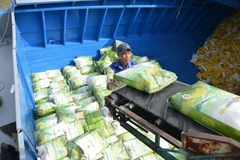
The proportion of export value of value-added processed seafoodproducts reached an average of over 40%, of which shrimp reached 50%, pangasiusreached 20%, clams reached 50%, and other aquatic products reached 40%.
The province's key fisheries products are black tiger shrimp,white-legged shrimp, clams, giant river prawns, and tra fish.
Nguyen Truc Son, Vice Chairman of the People’s Committee, said toachieve the targets, more investments would be made in infrastructure inaquaculture areas in three coastal districts that use advanced techniques.
Models that help adapt to climate change would be expanded, hesaid.
The focus would also be on the use of advanced techniques infishing, processing and preservation of seafood that have high value anddemand, he said.
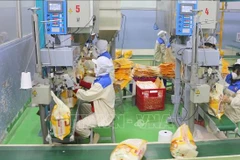
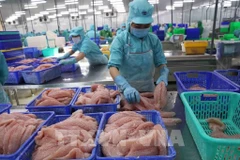
The province has 11 seafood processing plants with an annualoutput of 72,000 tonnes, mostly of frozen tra fish,clam and shrimp.
The aquaculture area has increased rapidly in recent years, withthe key items being marine shrimp, tra fishand clam.
The province will focus on aquaculture models that use advancedtechniques and are biologically safe and environment-friendly.
Its Department of Agriculture and Rural Development saidaquaculture would be developed in an effective and sustainable manner with adiverse range of creatures bred using methods that suit each locality.
Hi-tech farming
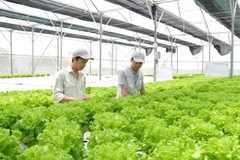
The agricultural department said the province wouldproactively switch from traditional to hi-tech breeding methods, adopt goodagricultural practices and origin traceability, and ensure bio-safety andenvironmental protection.
This year it aims to develop at least 500ha of hi-tech farms forbreeding brackish-water shrimp, taking the total to 2,500ha, he said.
The People’s Committee has unveiled a plan for having 4,000ha ofhi-tech shrimp farms by 2025, 2,500ha in Binh Dai, 1,500ha in Thanh Phu and500ha in Ba Tri.
Some companies have begun hi-tech shrimp farming in the threecoastal districts while the province is investing in infrastructure for hi-techfarming there.
Authorities are also reviewing aquaculture zoning, developinghi-tech aquaculture areas and expanding efficient breeding models liketwo-stage shrimp farming.
All intensive farming areas raising key aquatic species will meetVietnamese good agricultural practices (VietGAP) or other standards such asGlobalGAP and Aquaculture Stewardship Council (ASC).
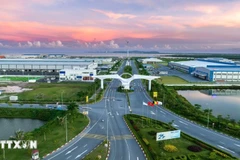
The province plans to set up five or six new seafood processingplants, including two to three for shrimp. It will develop a marine economicindustrial park in Thanh Phu district.
It will also develop linkages between small fisheries breedingestablishments to create large breeding areas and also link them with businessesto ensure supply of inputs and customers for their harvests.
Along with aquaculture, it will also expand offshore fishing andrevamp its fishing fleet to sustainably exploit marine resources
The number of near-shore fishing boats will be reduced from 4,680to 3,528 by 2030.
Nguyen Van Buoi, Deputy Director of the provincial Department ofAgriculture and Rural Development, said near-shore fishing and overexploitationof seafood stocks would be reduced.
After the number of fishing boats is regulated, fishermen who losetheir livelihoods would be assisted with switching to other occupations, heassured.
From now until 2030 the province will also implement advocacyprogrammes and projects to regulate exploitation and ensure protection offisheries resources.
It plans to establish community-based models to make fishingsustainable.
It will arrange its fishing boats into fleets for bettermanagement, categorising them into less than 12 metres long, between 12 and 15metres and more than 15 metres.
In March last year the province started the installation of blackboxes in offshore fishing boats with a length of at least 15 metres to locatethem at all times.
Almost all 1,962 offshore boats have installed the box already,including all of them with a length of more than 24 metres.
The province has set up 160 offshore fishing groups comprising2,043 boats, enabling them to stay longer at sea and increase their catch.
The province, which has a coastline of 65 kilometres, hasadvantages in terms of aquaculture, fishing and seafood processing, and hasexploited its marine economy well in recent years./.