Carbon credit trading floor – key to Vietnam’s net zero goal

The establishment of a domestic carbon credit trading floor is expected to help improve the transparency and effectiveness of transactions related to carbon credits, thereby helping Vietnam work towards its net zero goal by 2050.
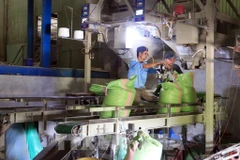
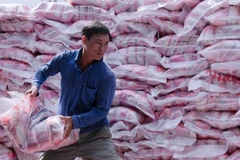
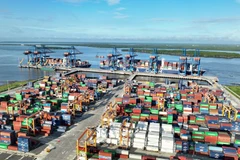
Carbon credit trading floor – key to Vietnam’s net zero goal ảnh 1Illustrative image (Photo: VietnamPlus)

Hanoi (VNA) –The establishment of a domestic carbon credit trading floor is expected to help improve the transparency and effectiveness of transactions related to carbon credits, thereby helping Vietnam work towards its net zero goal by 2050.

A representative from the Ministry of Natural Resources and Environment (MoNRE) said it is anticipated that in the future, Vietnam will have around 10.8 million voluntary carbon credits issued annually, along with corresponding demand for exchange and trading. Therefore, establishing a domestic carbon credit trade floor is a must. It is also a crucial strategy regarding the "green key" for Vietnam to achieve the net-zero emissions by 2050.

Over 1,910 firms required to undergo greenhouse gas inventory

To this end, the MoNRE is developing a domestic carbon market development project, which focuses on mandatory trading of greenhouse gas emission quotas from businesses and domestic carbon trading, aiming to connect with the international market.

The project aims to begin the pilot stage by 2025 and officially operate a carbon credit trading floor by 2028.

Tang The Cuong, Director General of the MoNRE’s Climate Change Department, said in order to realise the aforementioned roadmap, Vietnam needs meticulous preparations in terms of infrastructure, technology, inventory, and reporting capacity of businesses.

According to statistics, there are 1,912 businesses nationwide that are required to conduct greenhouse gas inventories and meet emission limits. Therefore, in the near future, the MoNRE will suggest the Prime Minister approve Vietnam's total emission limit, as well as allocation for establishments during the 2026-2030 period and on an annual basis.

Carbon credit trading floor – key to Vietnam’s net zero goal ảnh 2

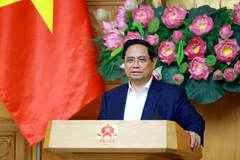
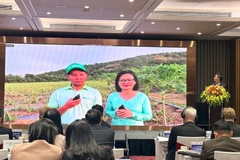
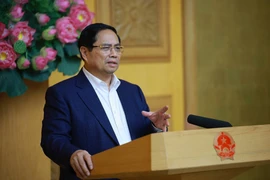
Director General of the Climate Change Department Tang The Cuong (Photo: VietnamPlus)

Head of the advisory board for the development and operation of voluntary carbon credit trading floor Nguyen Hong Loan said there are four carbon credit mechanisms, including the clean development mechanism (CDM), joint crediting mechanism (JCM), gold standard (GS), and verified carbon standard (VCS).

The total volume of carbon-related credits issued in Vietnam as of December 2022 amounted to over 40 million. Additionally, around 50 carbon credit projects under the mechanism of the Global Carbon Council (GCC) have been submitted. Among these, the CDM and the JCM are managed by Government agencies.

Clear short-term goals needed

Deputy General Director of Standard Chartered Nguyen Thuy Hanh said the lender will offer sustainable development products and services while providing free consultancy to all businesses when they make new investments or have business plans aimed at emissions reduction.

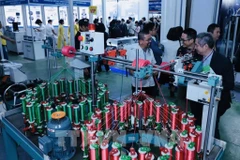
Carbon credit trading floor – key to Vietnam’s net zero goal ảnh 3Demand for voluntary carbon credits is growing in recent years (Photo: VietnamPlus)

Following the trend of achieving the net zero goal, the demand for voluntary carbon credits worldwide has been increasing recently, and Vietnam is also not exempt from this trend. Most of the carbon credit projects in Vietnam are carried out through pre-purchase contracts, meaning that the party in need will place orders.

With experience in building and operating a carbon credit trading floor in Singapore, CEO of Climate Impact X Mark Glossoti said Vietnam needs to set clear short-, medium-, and long-term objectives which might change with the market, but initial steps still need to be taken.

During the fourth meeting of the National Steering Committee for the delivery of Vietnam's commitments at the 26th United Nations Climate Change Conference (COP26) held on July 14, Prime Minister Pham Minh Chinh asked the MoNRE to draft and submit a decree on carbon credit management of the Government in the second quarter of 2024 for consideration.

The MoNRE was also tasked with partnering the Ministry of Agriculture and Rural Development and relevant agencies to consult the experience of other countries. They could then advise the PM to issue directives on forest carbon credit management in Vietnam, ensuring the implementation of the nationally determined contributions and the commitment to achieving net zero emissions by 2050./.

VNA

See more

Vice Chairman of the People’s Committee of Quang Ninh province Nguyen Van Cong chairs the meeting regarding sustainable marine aquaculture development for 2026 (Photo: baoquangninh.vn)

Quang Ninh eyes sustainable marine aquaculture development

Speaking at a December 17 meeting regarding sustainable marine aquaculture development for 2026, Vice Chairman of the People’s Committee of Quang Ninh province Nguyen Van Cong urged the provincial Department of Agriculture and Environment to urgently finalise the draft plan, which will serve as a basis for focusing on the development of marine aquaculture in the coming period; and take the lead in coordinating with localities to review and adjust the planning of marine aquaculture areas, with an emphasis on encouraging the efficient use of marine areas suitable for aquaculture, in line with environmental impact assessments.

Mirela Janice Eidt, head of the Office of Brazilian Ministry of Agriculture and Livestock (MAPA), speaks at the event (Photo: Vietnamese Embassy in Brazil)

Vietnam, Brazil enhance smart agriculture ties

Amid escalating global pressures, including climate change, resource scarcity and tougher standards on food safety, traceability and low-carbon production, smart agriculture and sustainable value chains are no longer optional but inevitable. With both Vietnam and Brazil prioritising this development path, they see strong potential for deeper long-term strategic collaboration.

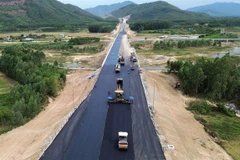
Contractors paving asphalt along the 61.7km Quy Nhơn–Chí Thạnh Expressway, crossing Gia Lai and Đắk Lắk provinces.(Photo: VNA)

Vietnam targets 5,000km of expressway by 2030

According to the Ministry of Construction, Vietnam brought just 89km of expressways into operation between 2001 and 2010, followed by 1,163km in the 2011–20 period. By contrast, the length of expressways invested in since 2021 alone is equivalent to the combined total of the previous decade.

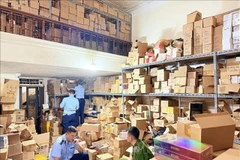
Thousands of perfumes and cosmetic products of unknown origin are seized by Hanoi's authorities (Photo: VNA)

Vietnam cracks down on 23,000 market violations in 2025

The Ministry of Industry and Trade's Domestic Markets Department reported that market management forces conducted 27,540 inspections throughout 2025, detecting violations worth nearly 290 billion VND – a 31.8% decrease from 2024.

The upcoming Made-in-Vietnam fair in Hanoi from December 18-22 will feature product display areas, business networking spaces, and food courts. Illustrative photo: VNA)

Vietnam Brand Week to promote e-commerce, Made-in-Vietnam products

Co-organised by the Vietnam E-Commerce and Digital Economy Agency and the Hanoi Department of Industry and Trade, the event series includes a supply-demand connectivity conference to promote the consumption of Vietnamese and local products on e-commerce and digital platforms, alongside a Made-in-Vietnam fair.

Cat Lo Fishing Port in Phuoc Thang ward, Ho Chi Minh City. (Photo: VNA)

HCM City earmarks over 2.54 million USD for fisheries transition

The project targets the conversion of around 6% of the city’s fishing fleet, focusing on nearshore and inshore vessels and part of the offshore trawler fleet, towards fishing methods with lower environmental impact, including hook-and-line, gillnets, purse seines, traps and cages, as well as fisheries logistics services.

LS Eco Energy factory (Photo: Iscns.co.kr)

RoK company expands rare earth metal production in Vietnam

LS Eco Energy, a company specialising in renewable energy and rare earth elements under the Republic of Korea (RoK)'s LS Cable & System, has approved a plan to expand its rare earth metal business in Vietnam, in a bid to seek long-term growth in the strategic materials sector.

Prime Minister Pham Minh Chinh speaks at the fourth meeting of the Central Steering Committee for Housing Policy and Real Estate Market on December 17. (Photo: VNA)

PM calls for stronger efforts to meet housing demand, ensure people's right to housing

PM Chinh noted that the real estate and housing market showed positive changes in 2025. With the engagement of the entire political system and society, Vietnam completed the elimination of temporary and dilapidated housing nationwide with more than 334,000 units, five years ahead of schedule. Nonetheless, continued efforts are needed to ensure no one is left without shelter.

Officers of the Hon Gai port border gate guard station coordinate inspections and handle vessels engaged in illegal fishing activities in Ha Long Bay. (Photo: Quang Ninh Newspaper)

Quang Ninh province strengthens fishing vessel controls

In the coming period, Quang Ninh will continue to implement government and ministerial directives on combating IUU fishing, contributing to efforts to meet the EC’s recommendations and move toward the lifting of the yellow card warning against Vietnam’s seafood exports.

The draft is designed to implement a plan to simplify business regulations for banks, in line with the Government's Resolution No. 66/NQ-CP. (Photo: VNA)

SBV plans to simplify business regulations for banks

Under a draft circular to replace Circular 32/2024/TT-NHNN, now open for public comment, many administrative procedures for establishing and relocating commercial bank branches and transaction offices will be significantly shortened.

Illustrative image (Photo: VNA)

Vietnam consolidates position as one of Asia’s economic bright spots

Next year, Vietnam is expected not only to maintain a high growth rate relative to the region but also to further reinforce its status as one of Asia’s economic bright spots thanks to macroeconomic stability, a dynamic domestic market, and a clear orientation towards attracting strategic investments.