Consumers favour greener e-commerce in Vietnam

The rapid growth of e-commerce in Vietnam has brought undeniable convenience, yet it also generates mounting environmental challenges, from excessive plastic packaging to increased transport emissions.

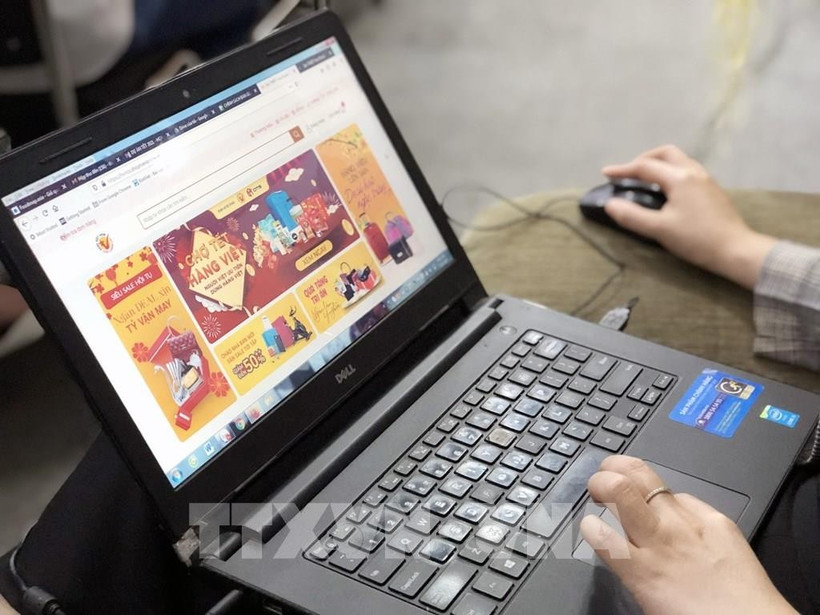
Vietnamese consumers shift toward greener e-commerce (Photo: VNA)

Hanoi (VNA) – The rapid growth of e-commerce in Vietnam has brought undeniable convenience, yet it also generates mounting environmental challenges, from excessive plastic packaging to increased transport emissions.

With rising consumer awareness and policy shifts, momentum is building to steer the sector toward greener practices. For years, urban office workers like Hoang Thu Phuong in Hanoi' Bach Mai ward have relied heavily on online platforms for everything from food and cosmetics to daily necessities. But the large volumes of plastic containers, styrofoam boxes, and multilayer packaging have made many rethink their consumption habits.

A 2024 survey by the Vietnam E-commerce Association (VECOM) found that 80% of online shoppers consider e-commerce harmful or very harmful to the environment, while 21% believe its negative impact surpasses that of traditional commerce.

Vietnam’s e-commerce market, valued at 25 billion USD in 2024 and accounting for 9% of total retail sales, is expected to quadruple to 100 billion USD by 2030. However, this growth comes with waste, WWF Vietnam estimated that 332,000 tonnes of packaging were used in 2023 alone, including 171,000 tonnes of plastic.

If unchecked, e-commerce-related plastic waste can reach 800,000 tonnes annually by 2030. Reports by Google, Temasek, and Bain & Company indicate that optimising delivery routes and using recyclable packaging can cut e-commerce emissions by 30–40%. This requires joint efforts from the state, businesses, and consumers.

Surveys show 79% of online shoppers expect government regulations on green packaging, 71% want businesses to disclose eco-friendly options, and 61% call for stronger public education campaigns.

Many consumers have already begun to change. Some are willing to pay extra for paper or fabric packaging, while others prefer vendors that commit to sustainability. Businesses are also responding, Viettel Post has adopted mobile sorting hubs to cut transport distances and installed solar panels in warehouses.

Multinationals like Nestlé, Coca-Cola, and Tetra Pak are pursuing circular economy goals, from recyclable packaging to energy-efficient factories. The Ministry of Industry and Trade is finalising a revised E-Commerce Law, expected to be submitted to the National Assembly in 2025, which introduces “green compliance” requirements.

Companies will be obliged to disclose their adherence to sustainable standards, allowing consumers to monitor performance. Experts stress that consumer choices remain the decisive factor.

Each decision to opt for minimal packaging or recycled materials contributes to reducing millions of tonnes of waste. As Minister of Industry and Trade Nguyen Hong Dien affirmed, Vietnam’s goal is not just rapid e-commerce growth but sustainable development aligned with its Net Zero commitment by 2050./.

VNA

See more

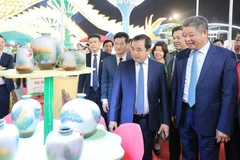
Officials visit a booth at the festival. (Photo: VNA)

Vietnam OCOP Festival 2025 opens in Hanoi

The festival functions as a space to bring together regional OCOP excellence, a forum connecting OCOP stakeholders with distributors, investors, experts and consumers, and a platform to spread pride in indigenous culture, local knowledge, and the aspiration for legitimate prosperity.

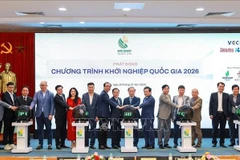
Prime Minister Pham Minh Chinh (third from right) and officials launch the Ministry of Construction’s new information technology systems at the conference on December 21. (Photo: VNA)

Modern, comprehensive infrastructure – a need for fast, sustainable development: PM

The Party and State continue to define infrastructure development as one of the three strategic breakthroughs, with priority given to building comprehensive and modern infrastructure, particularly transport facilities, technological infrastructure, and green – digital transition infrastructure, to help realise the national target of double-digit growth, the PM said.

Prime Minister Pham Minh Chinh addresses he third meeting of the National Steering Committee implementing the Politburo’s Resolution 68 in Hanoi on December 20. (Photo: VNA)

PM pushes trust, breakthroughs to accelerate private sector growth

Prime Minister Pham Minh Chinh noted that since the rollout of Resolution 68, alongside supporting resolutions from the National Assembly (NA) and Government, there has been a marked change in understanding the private sector’s critical position and role in Vietnam’s socialist-oriented market economy.

PM Pham Minh Chinh chairs the meeting (Photo: VNA)

Private sector thrives eight months after Resolution 68’s launch: PM

The private sector has shown marked progress eight months after the launch of Resolution 68, registering about 18,000 new enterprises monthly and pushing the nationwide total to nearly 1.1 million, Prime Minister Pham Minh Chinh told the third meeting of the National Steering Committee in Hanoi on December 20.

Phin Ho Tra – a national five-star OCOP product. (Illustrative photo: VNA)

Hanoi to host Vietnam OCOP Festival 2025

The festival is seen a practical activity celebrating the achievements made by the capital and the country in 2025, affirming OCOP’s role in rural economic development, contributing to realising Vietnam’s aspiration for strong economic growth in the context of deep integration.

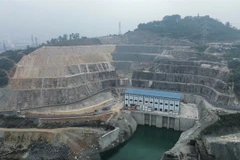
The expanded Hoa Binh Hydropower Plant (Photo baochinhphu.vn)

EVN launches major power projects

Among the flagship projects inaugurated was the expanded Hoa Binh Hydropower Plant with a total installed capacity of 480MW per year and average annual output of about 488 million kWh.

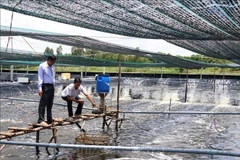
An ultra-intensive shrimp farming model linked with environmental protection in Ca Mau province. (Photo: VNA)

Fisheries take the lead in the Mekong Delta’s green transition

Across the Mekong Delta, leading aquaculture producers, processors and exporters, along with suppliers of inputs, are transitioning to circular, high-tech and clean production models that cut greenhouse gas emissions and comply with international certification standards.

A perspective view of the Red River Landscape Boulevard project in Hanoi (Photo: VNA)

Works starts on Hanoi’s Red River Landscape Boulevard Axis project

The project is among the 234 key works and projects being launched, inaugurated or technically opened simultaneously across 34 cities and provinces nationwide to mark the 14th National Party Congress. Its launch contributes to implementing the country’s strategic development orientations while concretising Hanoi’s development goals in the new period.