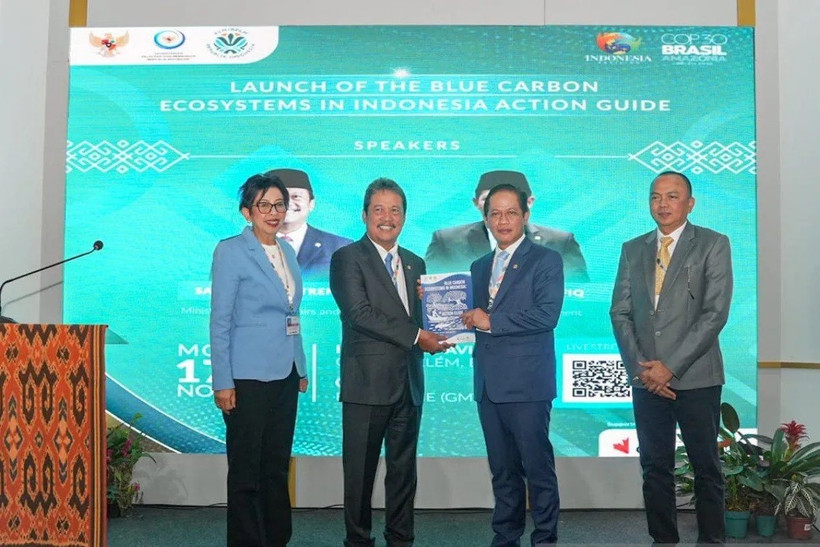
Jakarta (VNA) - The Indonesian Government has officially introduced its Green Carbon Ecosystem Roadmap along with an accompanying Action Guideline.
The roadmap is being showcased at the Indonesia Pavilion on the sidelines of the 30th Conference of the Parties to the UN Framework Convention on Climate Change (COP30), taking place in Belem, Brazil.
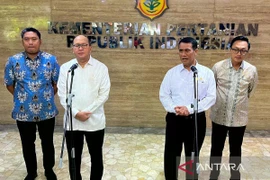
The release of this document demonstrates Indonesia’s leadership in linking land and ocean-based climate action, Environment Minister Hanif Faisol Nurofiq said at the Indonesia Pavilion at COP30 in Belém on November 17 (local time).
By strengthening scientific knowledge, strategic policy, and international cooperation, Indonesia aims to ensure that blue carbon contributions are fully integrated into the national carbon economic value system and carbon market, he added.
The document reinforces the integration of coastal and marine ecosystems into Indonesia’s Second Nationally Determined Contribution (SNDC), which forms the basis of the country’s renewed commitments on climate mitigation and adaptation.
The incorporation of blue carbon into the SNDC, submitted to the UNFCCC Secretariat, marks a significant step forward in positioning mangroves, seagrass beds, and tidal salt marshes as strategic components of emission reduction efforts and climate resilience building.
Marine Affairs and Fisheries Minister Sakti Wahyu Trenggono said the blue carbon roadmap is relevant not only to the marine sector but also represents a critical pillar of the national climate architecture.
Blue carbon ecosystems are extraordinarily valuable climate assets for Indonesia. This roadmap is not just a policy guide, it is an action framework that connects science, policy, and financing to ensure the quality and integrity of blue carbon ecosystems within the national carbon economic value system, Trenggono said.
He added that harmonising perspectives on the three blue carbon ecosystems - mangroves, seagrass beds, and salt marshes - under a unified coastal system will unlock broader benefits, including biodiversity protection, coastal resilience, blue food security, and opportunities for sustainable economic development./.