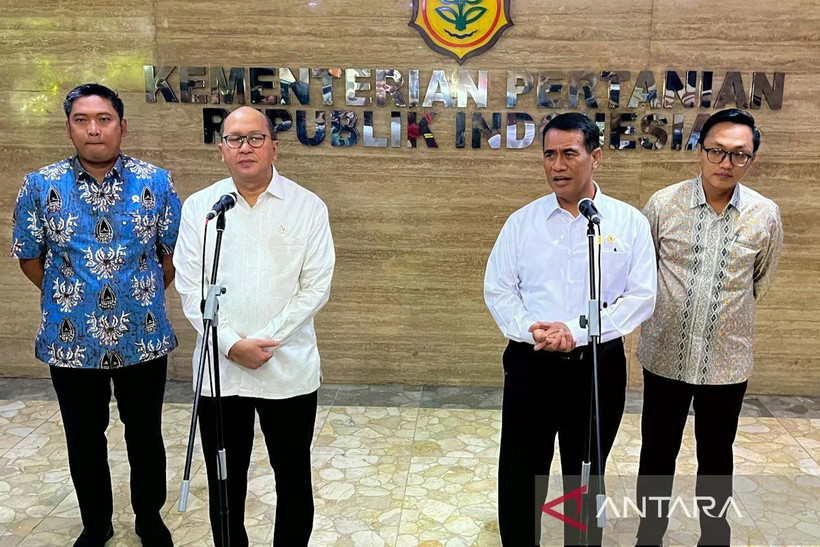
Hanoi (VNA) - Indonesia aims to achieve self-sufficiency in white sugar by 2026 as part of a national drive to strengthen food security and revive the country’s once-thriving sugar industry, Agriculture Minister Andi Amran Sulaiman has said, as reported by the country’s national news agency Antara.
The Indonesian government targets full self-sufficiency in consumer sugar within three to four years by increasing sugarcane productivity and modernising mills.
Sulaiman said the initiative marks a key step in strengthening the plantation sector and promoting economic independence amid global challenges.
He said the government aims to restore Indonesia’s sugar industry to its “glory days” of the 1930s, when the country was the world’s second-largest sugar exporter and producer after Cuba.
The plan will be supported by downstream investment worth 371 trillion IDR (22.2 billion USD) in plantations, livestock, and horticulture, including cocoa, cashews, coconuts, and sugarcane.
The Agriculture Ministry has drafted a National Sugar Self-Sufficiency Roadmap that targets consumer sugar independence by 2028 and total self-sufficiency, including industrial and bioethanol needs, by 2030. Indonesian President Prabowo Subianto has urged the ministry to accelerate that timeline.
The nation’s sugar output in 2025 is expected to reach about 2.75 million tonnes, the highest in five years, from roughly 538,000 hectares of plantations. To achieve self-sufficiency, the government plans to intensify production by clearing 275,000 hectares of ratoons by 2027, introducing improved seeds, upgrading irrigation systems, and expanding sugarcane plantations by 500,000 hectares. Ten sugar factories will also be built or reactivated in Java and other regions/.
Indonesia strengthens maritime radar network to better early warnings
Fathani said that new radar installations are under construction in Central Kalimantan and North Sumatra provinces, Riau Islands, and Bali.