Corporate bond market forecast to be robust this year

The corporate bond market in Vietnam is expected to be robust this year as the Government has issued regulations to untie the market but still aimed to ensure transparency and healthy market development.
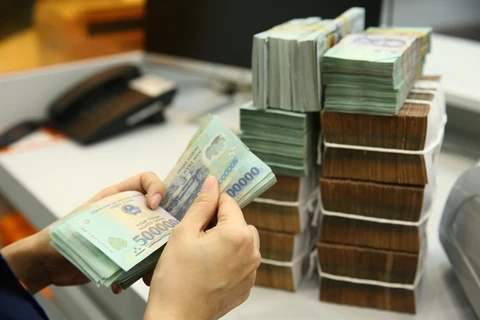
Corporate bond market forecast to be robust this year ảnh 1The corporate bond market of  Vietnam is expected to be robust this year as the Government has issued regulations to untie the market but still aimed to ensure the transparency and healthy market development. (Photo: tinnhanhchungkhoan.vn)

Hanoi (VNS/VNA)
- The corporate bond market in Vietnam is expected tobe robust this year as the Government has issued regulations to untie themarket but still aimed to ensure transparency and healthy market development.

According to Nguyen Hoang Duong, Deputy Director of the Department of Bankingand Financial Institutions under the Ministry of Finance, the corporate bondmarket had become an increasingly important channel for enterprises to raisecapital in recent years, which helped reduce pressure on banking credit.

However, not every enterprise was in a safe enough situation for bond issuance,Duong said, adding that there were many of small scale, especially thoseoperating in real estate development, but issue corporate bonds much higherthan their equity, posing risks to the market if these enterprises fell intodifficulty and failed to pay debts.

“If investors do not evaluate risks and invest in corporate bonds just becausethey're lured by high interest rates, it will be very risky,” Duong said.

A recent market report of the VNDirect Securities Company showed that the totalcorporate bonds issued in 2020 were worth nearly 437.7 trillion VND (18.87billion USD), an increase of 38.8 percent against the previous year.

Due to the rapid growth of the corporate bond market, measures to minimiserisks to the market were applied. The Government’s Decree No 81/2020/ND-CPwhich took effect from September 1 tightened private placement, including capson the outstanding corporate bonds (not exceeding five times the equity).

According to Duong, the corporate bond market lost momentum in recent monthsdue to tightened regulations.

In that context, Decree No 153/2020/ND-CP dated December 31 which took effectfrom the beginning of this year and replaced Decree No 81 untied the market tosupport transparent enterprises in raising capital through bond issuance.

Under Decree No 153, an enterprise could issue bonds if it was a joint stock orlimited liability company, paid due debts on time and adequately for threeconsecutive years, met financial safety ratios, ensured operation safety, hadapproved bond issuance plan and audited financial report.

Experts expected this would create conditions for the corporate bond market tobe robust against in 2021.

Expert Truong Thanh Duc said that tightening regulations on corporate bondissuance was not necessary because this might force small enterprises to turnto unofficial channels to raise capital, even black credit.

It would be better to have a property management mechanism to ensuretransparency and fairness in accessing investment opportunities for investors.

For the long term, improving the credit rating service for enterprises wascritical as credit rating became mandatory for enterprises in bond issuance, hesaid.

According to Asian Development Bank (ADB), reforms that drove demand for creditratings would support the development of the corporate bond market.

The ADB pointed out that after years of sluggish growth, Vietnam’s corporatebond market had blossomed. Issuances grew at a compound annual growth rate of40 percent between 2012 and 2019, and outstanding issuances amounted to around11.5 percent of Vietnam’s GDP – the fourth-highest in ASEAN, and further gainswere likely.

“A credible local rating agency is a key missing ingredient in Vietnam’sotherwise flourishing corporate bond market. Partnerships with global ratingagencies would unlock the market’s potential, but these agencies want certaintythat the demand for ratings is real,” ADB wrote./.
VNA

See more

Industrial production surges in the first two months of 2026. (Photo: VNA)

Industrial production posts strong growth in first two months

According to the National Statistics Office (NSO) under the Ministry of Finance, the index of industrial production (IIP) in February was estimated to decrease 18.4% from the previous month but increase 1% year on year. Overall, in the January–February period, the IIP rose 10.4% compared with the same period last year.

A delegation from the Nghe An provincial People’s Committee inspects production and business activities at the VSIP Nghe An Industrial, Urban and Service Park. (Photo:nhandan.vn)

Nghe An steps up reforms to attract FDI

In 2025, the provincial People’s Committee licensed 25 new FDI projects and approved capital adjustments for 20 others, bringing the total newly registered and additional investment to more than 1 billion USD. Many large-scale projects in the Southeast Nghe An Economic Zone have already become operational, contributing to export growth, state budget revenues and job creation.

Nearly 35,500 enterprises are newly registered nationwide, with total registered capital reaching nearly 313.7 trillion VND and more than 167,500 registered workers. (Photo: VNA)

Nearly 35,500 new businesses set up in first two months

The enterprises registered combined capital of about 313.7 trillion VND and more than 167,500 employees. Compared with the same period last year, the number of new businesses surged by 70.7%, while registered capital rose by 36.1% and registered labour increased by 19.1%.

The yarn factory of Unitex Textile and Dyeing Company Limited applies new technology to optimise operations using an automated model. (Photo: VNA)

Resolution 68: International lessons for private sector development

A common feature in many successful economies is a fundamental shift in the perception of private enterprises. In countries such as Singapore, Germany, Republic of Korea (RoK) and China, private firms are viewed not mainly as entities requiring strict control but as development partners and key forces generating growth, jobs and innovation.

The production line of Regza Electronics Vietnam Co., Ltd. located in Dong Nai province. (Photo: VNA)

Vietnam’s overseas investment rises 2.3-fold in first two months

During the period, 36 new overseas projects were granted investment certificates with total registered capital from Vietnamese investors reaching 532.4 million USD, up 2.3 times compared to the same period last year. In addition, three projects adjusted their capital with an additional 7.8 million USD, 1.5 times higher than a year earlier.

Workers of PTSC Thanh Hoa check the system for crude oil imports. Vietnam saw strong increase in fuel imports in the first two months of this year. (Photo" VNA)

Vietnam records strong increase in fuel imports in two months

Statistics of Vietnam Customs showed that Vietnam spent more than 1.44 billion USD importing 2.18 million tonnes of petroleum products in the first two months of this year, representing a sharp increase of 31.4% and 43%, respectively, over the same period last year.

Prime Minister Pham Minh Chinh visits a macadamia cultivation model in Huoi Tao B village, Pu Nhi commune, Dien Bien province on March 8. (Photo: VNA)

PM requests boosting agricultural development in Northwestern region

PM Chinh encouraged local residents to explore additional crops and livestock suitable for intercropping in order to maximise land use efficiency. Farmers were also urged to strengthen cooperation with one another and with businesses by joining cooperatives, consolidating land resources and working together to expand production and improve incomes.

Farmers in the Mekong Delta province of An Giang harvest rice grown under the project 'Sustainable Development of One Million Hectares of High-Quality, Low-Emission Rice Associated with Green Growth in the Mekong Delta by 2030.' (Photo: VNA)

Promoting high-quality rice exports amid mounting challenges

According to the Ministry of Agriculture and Environment (MAE), an estimated 600,000 tonnes of rice worth 370 million USD was exported in January, up 12.4% in volume and 16.9% in value year-on-year. The average export price reached 616.6 USD per tonne, up 4%.

Fuel supply in Hanoi remains stable. (Photo: VNA)

Fuel prices rise sharply from 3 pm on March 7

Since the beginning of this year, domestic fuel prices have undergone 11 adjustments. During this period, both RON95 and E5 RON92 experienced four decreases and seven increases, while diesel oil two falls and nine hikes.