CPI rises 3.25% in first eight months, pressures persists

Core inflation - stripping out volatile components such as food, fuel, and state-regulated services - rose 3.19% in the eight months, suggesting that underlying price trends remain relatively stable.

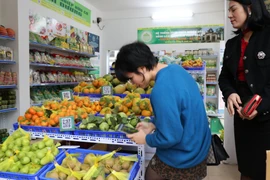
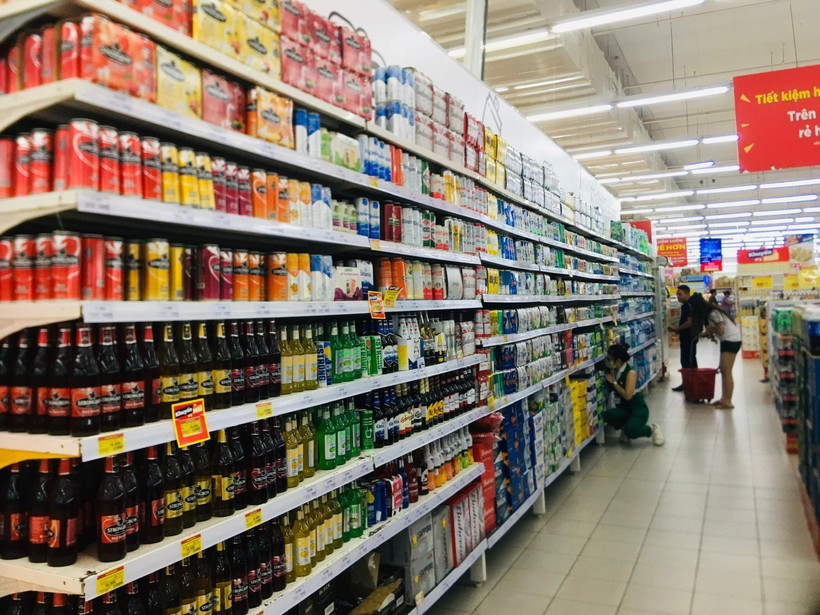
Vietnam’s consumer price index (CPI) rises 3.25% in the first eight months of 2025 compared to the same period last year. (Photo: VietnamPlus)

Hanoi (VNA) – Vietnam’s consumer price index (CPI) rose 3.25% in the first eight months of 2025 compared to the same period last year. The rate is under control, but signals the need for vigilance amid persistent pricing pressures in key sectors.

According to data released by the National Statistics Office (NSO), the CPI in August increased 0.05% month-on-month, largely driven by seasonal surges in rental housing, education, and food services, as students return to urban centres for the new academic year. On a year-on-year basis, inflation in August stood at 3.24%.

Core inflation - stripping out volatile components such as food, fuel, and state-regulated services - rose 3.19% in the eight months, suggesting that underlying price trends remain relatively stable.

Nguyen Thu Oanh, head of the NSO’s Department of Service and Price Statistics, said eight of 11 major commodity and service categories saw price increases in August.

Housing and construction materials rose 0.21%, led by a 0.28% rise in rental costs in major cities. Electricity prices climbed 1.01%, reflecting elevated July consumption and extended billing cycles, while prices for home maintenance materials rose by 0.49% due to supply constraints and increased input costs.

Education-related expenses also edged up 0.21%, as private institutions adjusted tuition fees. Back-to-school spending drove up prices of school supplies, with paper, pens and stationery seeing price hikes of between 0.5% and 0.9%.

Increases were also seen in beverages and tobacco (0.17%), and household appliances (0.11%), goods and other services (0.11%).

Offsetting these rises, three key sectors experienced price declines in August.
cpi2.jpg
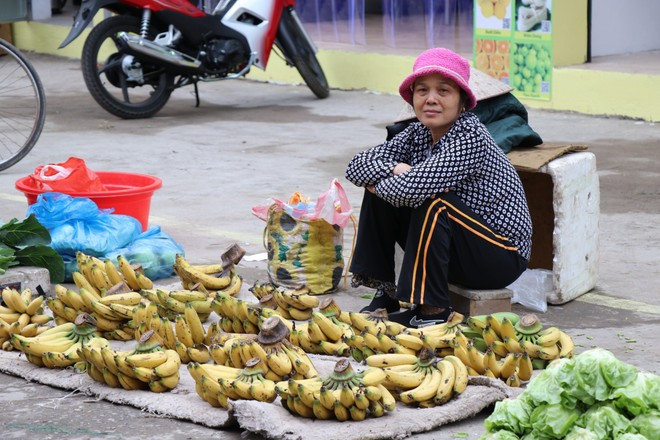
Core inflation - stripping out volatile components such as food, fuel, and state-regulated services - rises 3.19% in the eight months. (Photo: VietnamPlus)

Food and catering services dropped 0.06%, with pork prices falling by 2.42% due to concerns over African swine fever outbreaks. Related products such as frozen meat, offal, and animal fat also saw declines.

Transport costs fell by 0.11%, driven by a 2.06% drop in diesel and a 0.2% fall in petrol prices, reflecting recent domestic fuel adjustments. Used car and motorbike prices also softened as manufacturers introduced sales promotions.

Meanwhile, telecommunications prices edged down 0.04%, with smartphone and tablet prices falling due to ongoing retailer discount campaigns.

Core inflation for August rose 0.19% from the previous month, and 3.25% compared to August 2024. Over the first eight months, core inflation averaged 3.19%, slightly lower than headline CPI growth—indicating that structural inflation remains in check.

This gap reflects the impact of state-managed prices and volatile food and energy costs, which are excluded from core calculations, Oanh explained.

Meanwhile, the country’s gold market mirrored global trends in August, with prices continuing to rise amid geopolitical uncertainty and expectations of a more relaxed US monetary policy.

International gold averaged 3,418.45 USD per ounce, up 1.47% from July. Domestically, Vietnam’s gold price index rose by 1.2% in August and soared 48.62% year-on-year. From December 2024, gold prices have surged 36.51%, with the eight-month average up 40.25%—further reinforcing the precious metal’s status as a hedge against inflation.

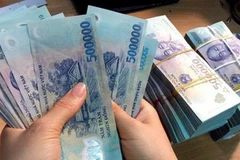
In contrast, the domestic USD/VND exchange rate rose 0.36% in August and 4.43% year-on-year. This came despite a global decline in the US dollar index, which fell 0.14% to 98.11 points. Analysts attribute the discrepancy to rising import demand, capital outflows, and interest rate differentials./.
VNA

See more

Illustrative image (Photo: VNA)

Vietnam’s auto sales up 6.5% over 11 months

The Vietnam Automobile Manufacturers’ Association (VAMA) has reported that total auto sales of its members in the first 11 months of 2025 hit 328,669 vehicles, up 6.5% year-on-year.

At the forum (Photo: VNA)

Vietnam, Cambodia bolster border trade connectivity

According to the Vietnamese Ministry of Industry and Trade (MoIT), during the first nine months of 2025, bilateral trade via land border gates reached 5.9 billion USD, up 15.5% year on year. Vietnam’s exports increased 16.6% to 5.83 billion USD, mainly textiles, steel and aquatic products, while Cambodia exported rubber, cashew nuts, and other agricultural goods.

Chairman of the People's Committee of HCM City Nguyen Van Duoc speaks at the meeting. (Photo: VNA)

HCM City ready to launch int’l financial centre on December 19

Ho Chi Minh City has readied necessary infrastructure, personnel, and investors for the operation of its International Financial Centre (IFC), slated to be inaugurated on December 19, Dr. Truong Minh Huy Vu, Director of the Ho Chi Minh City Institute for Development Studies (HIDS), has said.

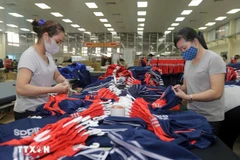
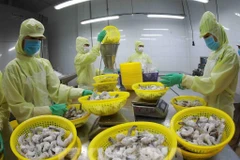
Workers produce apparel for export to the EU at a company in Thai Nguyen province. (Photo: VNA)

Vietnam's textile industry faces mounting pressure for deep restructuring

Vu Duc Giang, Chairman of the Vietnam Textile and Apparel Association (VITAS), attributed the 2-billion-USD gap to persistent global headwinds in 2025, including new US tariffs triggered by escalating US-China trade friction, subdued demand in the US and EU, and late-year typhoons that halted factories and snarled domestic logistics.

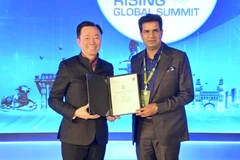
Pham Sanh Chau (L), CEO of Vingroup Asia and VinFast Asia, and Sanjay Kumar, IAS, Special Chief Secretary to the Government, Government of Telangana at the signing ceremony. (Photo: Vingroup)

Vingroup forges partnership to broaden multi-sector ecosystem in India

According to a release by the Vietnamese private conglomerate, under the MoU, both parties will collaborate to explore strategic opportunities across key sectors such as smart urban development, electric mobility solutions, healthcare, education, tourism, renewable energy, charging infrastructure across approximately 2,500 hectares, as well as electric taxi services.

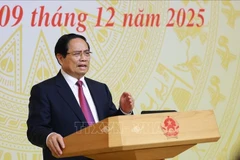
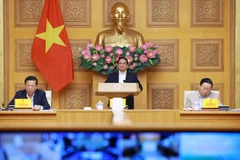
Prime Minister Pham Minh Chinh speaks at the 22nd meeting of the State steering committee for national key projects in the transport sector (Photo: VNA)

PM urges swift actions for ground-breaking, inauguration of key projects by Dec. 19

PM Chinh on December 9 requested ministries, sectors, localities, and relevant parties to continue working tirelessly to complete and open for technical traffic 3,188 km of expressways and 1,700 km of coastal roads, and ensure the commencement of technical flight operations at Long Thanh International Airport in the southern province of Dong Nai by December 19.

Illustrative photo (Photo: VNA)

Vietnam, RoK strengthen cooperation on trade remedies

Currently, both the RoK and Vietnam are each applying four trade-remedy measures on goods imported from the other. In particular, the RoK side called on Vietnam to exercise caution in its application of anti-dumping measures on four steel products from the RoK.