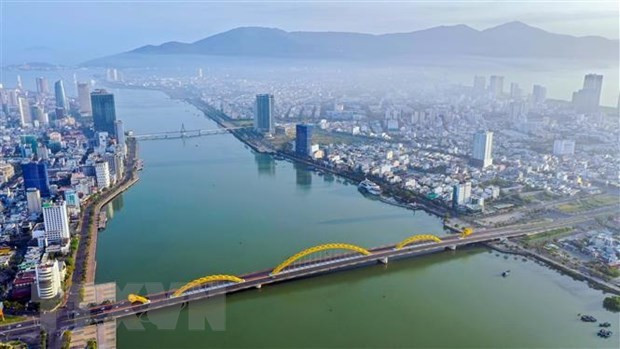
Da Nang (VNA) – The central city of Da Nang has intensified efforts to cultivate a skilled workforce to underpin its ambition of establishing a Vietnam International Financial Centre (IFC).
This initiative aligns with the city’s recently issued Resolution No. 29-NQ/TU, dated April 26, 2025, which outlines the vision of transforming Da Nang into a green, smart, and innovative financial hub adhering to advanced international standards and integrating with global financial markets.
Strategic role of the University of Da Nang
The University of Da Nang (UD), leveraging its tradition and capabilities, has been entrusted with a pivotal role in this strategic endeavor. Tasked with developing comprehensive training programmes, the university aims to supply high-quality human resources for the IFC.
These programmes encompass short-term courses and specialised training for government officials, business executives, academics, and scientists. Moreover, it is actively engaged in promoting both domestic and international investment, enhancing the branding of Da Nang’s IFC as a modern, open, reputable, and competitive entity.
Its member institutions, such as the University of Economics and the Vietnam-Korea University of Information and Communications Technology (VKU), have initiated pioneering training programmes in fields including Financial Technology (Fintech), International Business, and Artificial Intelligence applications in business.
These initiatives are designed to meet the evolving demands of the financial sector and to prepare a workforce adept in emerging technologies.
Enhancing public sector competency
In addition to academic programmes, the University of Da Nang's member universities are collaborating with municipal departments to elevate the awareness, mindset, and competencies of public officials in Da Nang.
This collaboration aims to prepare the city's workforce for new responsibilities associated with the establishment of the regional financial centre, thereby acting as a catalyst for economic growth and investment attraction.
Notably, the University of Economics has been assigned to develop a proposal focused on cultivating high-quality human resources for the IFC.
This proposal includes specialized short-term training courses for State managers, business leaders, educators, and researchers, emphasising the integration of international standards and practices.
International collaboration and practical training
The University of Da Nang is prioritising the development of English-language programmes, international training partnerships, faculty and expert exchanges, and the organisation of student activities to accumulate international certifications.
Participation in forums such as the Vietnam Fintech Forum facilitates exposure to global trends and practical experiences, enhancing the readiness of graduates for the international financial environment.
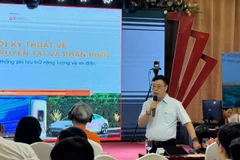
In April 2025, the University of Economics conducted training sessions to disseminate knowledge about international financial centres to officials from various city departments.
These sessions covered topics such as management models, legal operations, international experiences in developing financial centres, and the application of digital finance and financial technology trends to meet strategic objectives.
Embracing fintech and data analytics
Assoc. Prof. Dr. Dang Tung Lam, Head of the Finance Department at the University of Economics, emphasised the city's advantages, including a youthful population and high internet and smartphone penetration rates, which present significant opportunities for the growth of the Fintech industry.
He highlighted the department's efforts to encourage finance lecturers to acquire technological expertise and to recruit faculty with backgrounds in data science and artificial intelligence, thereby fostering interdisciplinary research and education in financial technology.
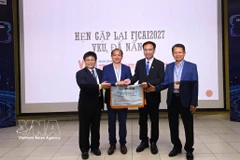
Meanwhile, the VKU has introduced four new programmes in 2025, including Fintech, Data Analytics, Game Technology, and Automotive Software Engineering. According to Assoc. Prof. Dr. Huynh Cong Phap, Rector of the VKU, the Fintech programme addresses the increasing integration of technology in financial services, transforming transactions, payments, investments, and financial management.
The Data Analytics programme responds to the growing demand for professionals capable of analyzing and processing large datasets, enabling organizations to make informed business decisions.
Through these concerted efforts in education and training, Da Nang is laying a robust foundation for the successful establishment and operation of the Vietnam International Financial Centre.
By fostering a skilled and adaptable workforce, the city aims to enhance its position in the global financial landscape and drive sustainable economic development./.