Da Nang (VNA) – The accommodation and catering services of the central city of Da Nang posted impressive growth in July and the first seven months of 2025, reflecting the strong momentum of the city’s tourism industry following its mergence with Quan Nam province, according to the municipal Statistics Office.
Integrating tourism resources and infrastructure
In recent years, both former Da Nang city and Quang Nam province ranked among Vietnam’s top tourist destinations thanks to distinctive tourism products. Since their administrative mergence into new Da Nang city on July 1, fresh socio-economic development space has opened, with sustainable integration particularly in tourism – one of the areas with the greatest potential.
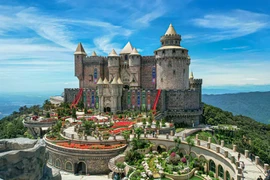
Previously, Da Nang was known for its modern, dynamic tourism sector, boasting well-developed infrastructure, including an international airport, luxury resorts, and high-end hotels. It attracted visitors with beach tourism, MICE (meetings, incentives, conferences and exhibitions) products, and major entertainment complexes such as Sun World and Ba Na Hills.
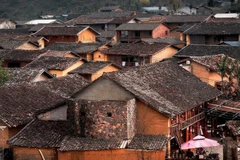
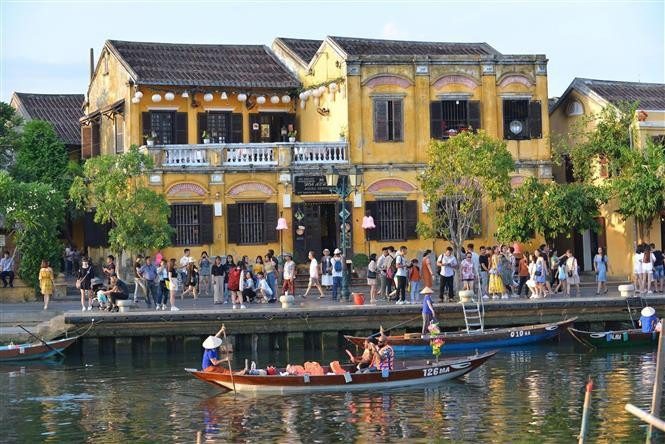
Quang Nam, meanwhile, was famed for cultural and historical tourism as a “land of heritage”, home to two UNESCO World Cultural Heritage Sites – Hoi An Ancient Town and My Son Sanctuary – as well as eco-tourism areas, traditional craft villages, and distinctive local culture.
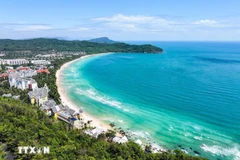
After the mergence, Da Nang now possesses an exceptionally diverse tourism resource base. Its coastline features renowned beaches such as My Khe, An Bang, and Cua Dai, along with attractions including Cu Lao Cham and Son Tra, offering continuous and appealing sea-based tourism products. The city also serves as a hub connecting central Vietnam’s cultural and natural heritage, currently home to three UNESCO-recognised sites: Hoi An Ancient Town, My Son Sanctuary, and Ma Nhai (Inscriptions) on Marble Mountains.
The two localities complement each other, offering modern facilities, luxury resorts, and major events alongside rich cultural heritage and rural charm — a harmony that underpins diverse tourism products for varied markets.
As a result, Da Nang’s tourism infrastructure has expanded in both scale and quality. Following the mergence, the city now has more than 2,200 accommodation facilities with nearly 65,000 rooms, including around 140 four- to five-star establishments offering over 27,500 premium rooms. Its accommodation and tourism services range from beachfront resorts, international golf courses, and hot-spring retreats in Hoi An, South Hoi An, and Thang Binh, to community homestays in eco-villages and luxury villas along the coast.
The integration of tourism resources and infrastructure not only maximises potential but also strengthens a strong brand, attracting both domestic and international travellers and fuelling robust sector growth.
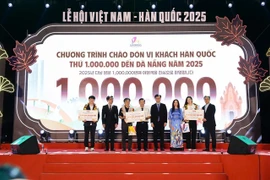
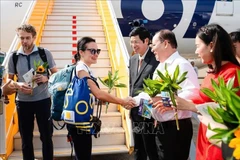
Statistics show that accommodation and catering revenues in July exceeded 5 trillion VND (nearly 222 million USD), up more than 19% year-on-year. In the first seven months, the figure topped 31 trillion VND, a 25% increase. Local establishments served an estimated 11 million guests, up nearly 20%, including 4.3 million international visitors (up 21.6%) and 6.5 million domestic visitors (up over 17%).
Aiming for regional and international tourism hub status
The mergence has reinforced tourism as a spearhead economic sector in the new city of Da Nang, contributing to its economic restructuring, promoting its image, attracting investment, generating jobs, improving living standards, and preserving cultural heritage.
Nguyen Van Quang, Secretary of the Da Nang Party Committee, said the city will focus on high-quality tourism and services, and building an internationally recognised tourism brand with an ecosystem of resorts, sightseeing, entertainment, conferences, exhibitions, and festivals.
Da Nang has set sustainable tourism development strategies through 2030, with a vision to 2045, aiming to become a high-quality tourism and service hub, a creative destination in Vietnam and Southeast Asia, and eventually one of Asia’s leading tourist destinations.
Investment will be prioritised in premium and super-premium resorts and villas, integrated financial, commercial, and entertainment complexes, casinos, high-end apartments, the Marble Mountains Cultural and Historical Park, and the My An Beach Park with leisure facilities.
The city will continue upgrading infrastructure, converting Tien Sa Port into an international-standard cruise terminal and marina; developing large-scale, multi-functional shopping and entertainment centres linked with major cultural and sporting events; and promoting MICE and wedding tourism. It is also strengthening regional linkages through the mergence of tourism associations, laying the groundwork for a professional tourism ecosystem and enhancing its position regionally and globally.
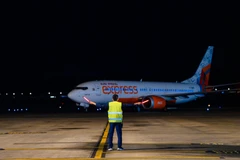
In addition, Da Nang is expanding cooperation with domestic and foreign airlines to increase direct flights, maintain existing international routes in Southeast and Northeast Asia, and open services to long-haul markets such as the US, Europe, Australia, Russia, India, and the Middle East./.