Illustrative image (Source: VNA)
 Hanoi (VNA) – The establishment of the Committeefor Management of State Capital (CMSC) aims to improve accountability for theuse and management of State capital in business operations, thereby preventingloss and wastefulness, Deputy Minister of Planning and Investment Le Quang Manhtold a press conference in Hanoi on October 1.
Manh said that on September 29, the Government issued DecreeNo.131/2018/ND-CP, regulating the function, mission, responsibility, andstructure of the CMSC as well as the legal framework for its operations.
The CMSC will manage 19 State-owned economic groups andcorporations where the State holds a 100 percent stake, as well as at jointstock companies and limited liability companies with multiple members where theState have invested its capital.
The Deputy Minister made it clear that the CSMC will only monitorthe use of State capital rather than directly intervening in their productionand trade.
According to consolidated financial statements by December31, 2017, the total value of State equity at these 19 groups and corporationsreached more than 1 quadrillion VND (43 billion USD) and the total value ofassets was 2.3 quadrillion VND (99 billion USD).
The committee, established by the Government, has onechairperson and at most four vice chairpersons appointed or dismissed by thePrime Minister.
The aforementioned 19 enterprises are run by fiveministries. Topping the list is the State Capital Investment Corporation (SCIC)under the management of the Ministry of Finance. The remaining 18 SOEs aremanaged by the Ministry of Industry and Trade (MoIT), the Ministry of Transport(MoT), the Ministry of Agriculture and Rural Development (MARD), and theMinistry of Information and Communications (MIC).
Most of the names on the list are enterprises under themanagement of the MoIT and MoT, comprised of six groups and six corporations.
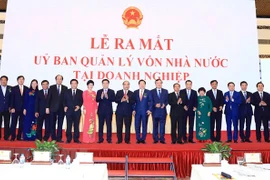
The CMSC, known as the “super committee”, made its debut inHanoi on September 30.–VNA
Manh said that on September 29, the Government issued DecreeNo.131/2018/ND-CP, regulating the function, mission, responsibility, andstructure of the CMSC as well as the legal framework for its operations.
The CMSC will manage 19 State-owned economic groups andcorporations where the State holds a 100 percent stake, as well as at jointstock companies and limited liability companies with multiple members where theState have invested its capital.
The Deputy Minister made it clear that the CSMC will only monitorthe use of State capital rather than directly intervening in their productionand trade.
According to consolidated financial statements by December31, 2017, the total value of State equity at these 19 groups and corporationsreached more than 1 quadrillion VND (43 billion USD) and the total value ofassets was 2.3 quadrillion VND (99 billion USD).
The committee, established by the Government, has onechairperson and at most four vice chairpersons appointed or dismissed by thePrime Minister.
The aforementioned 19 enterprises are run by fiveministries. Topping the list is the State Capital Investment Corporation (SCIC)under the management of the Ministry of Finance. The remaining 18 SOEs aremanaged by the Ministry of Industry and Trade (MoIT), the Ministry of Transport(MoT), the Ministry of Agriculture and Rural Development (MARD), and theMinistry of Information and Communications (MIC).
Most of the names on the list are enterprises under themanagement of the MoIT and MoT, comprised of six groups and six corporations.
The CMSC, known as the “super committee”, made its debut inHanoi on September 30.–VNA
VNA