Deputy PM urges completion of accurate, sufficient fisheries management database

Developing a unified and transparent fisheries database is a top priority to meet the European Commission (EC)’s recommendations and ensure sustainable development of Vietnam’s fisheries industry.

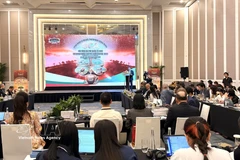
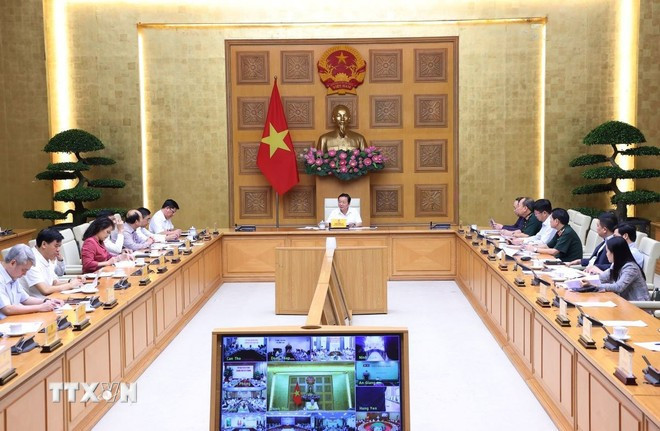
Deputy Prime Minister Tran Hong Ha chairs the 19th meeting of the National Steering Committee for Combating IUU Fishing on October 28. (Photo: VNA)

Hanoi (VNA) – Deputy Prime Minister Tran Hong Ha has called for the rapid completion of a comprehensive national fisheries management database to strengthen monitoring of fishing activities and demonstrate Vietnam’s determination to eliminate illegal, unreported and unregulated (IUU) fishing.

He made the demand while chairing the 19th meeting of the National Steering Committee for Combating IUU Fishing, which was connected with 21 coastal provinces and cities via teleconferencing, on October 28.

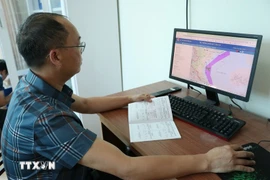
The Deputy PM stressed that developing a unified and transparent fisheries database is a top priority to meet the European Commission (EC)’s recommendations and ensure sustainable development of Vietnam’s fisheries industry.

Ha tasked the Ministry of Agriculture and Environment (MAE) with working closely with Viettel, VNPT, and related agencies and localities to integrate all relevant information – from vessel registration and voyage monitoring to law enforcement records and origin certification – into a single platform.

This database must be "accurate, sufficient, clean, and live," serving as a foundation for transparent management, he said, adding that it will also be a key source of reference in negotiations with the EC.

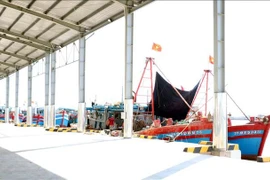
He directed the ministry to promptly issue standards for qualified fishing ports, so localities can review their port lists, coordinate with port operators, and clearly define docking and departure points for vessels.

The Deputy PM also urged the ministry to prepare a detailed plan for upcoming talks with the EC, ensuring that explanations and proposed solutions are consistent across central and local levels. The plan should clearly define the responsibilities of all relevant sides, from the PM, Deputy PMs, and ministers to law enforcement forces and 21 coastal localities.

Reports presented at the meeting showed positive progress in fisheries management. Since the previous meeting on October 21, the MAE has issued new regulations on the operation of vessel monitoring systems (VMS), electronic fishing logbooks, and tracing solutions for seafood exports, aiming to ensure coordinated, constant, and efficient monitoring and put an end to origin frauds.

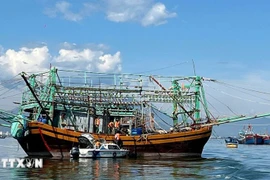
Localities have been guided to complete vessel registration, licensing, and inspection, with data uploaded to the National Fisheries Database (VNFishbase). As of now, 80,132 out of 80,273 vessels nationwide have been registered and had their information updated on the system, with 77,017 granted fishing licences – equivalent to 96.1% of the total.

Authorities have also stepped up law enforcement. Since October 1, police have initiated investigations into 19 criminal cases involving 27 defendants for IUU fishing violations. Administrative penalties have also been imposed for disrupting VMS connection or crossing maritime boundaries.

At the same time, Vietnam has been expanding international cooperation. MAE officials are currently joining a delegation in a visit to Malaysia to discuss cooperation in sustainable marine exploitation and IUU fishing combat.

The MAE called on other ministries and localities to focus resources on the month-long campaign against IUU fishing and to continue long-term efforts to sustainably develop the fisheries sector. These include installing VMS devices on smaller vessels, digitising vessel identities linked with personal codes (VNeID), piloting electronic logbooks for vessels at least 12m long, dismantling unqualified fishing boats, and providing livehoood support for fishermen.

On communication, the Ministry of Culture, Sports and Tourism reported that it has launched a comprehensive campaign targeting local communities, domestic media, and international audiences to give updates about Vietnam’s strong commitment and progress in tackling IUU fishing.

Deputy PM Ha commended ministries and localities for their proactive measures, from improving policies and applying technology to tightening on-site inspections.
He added Vietnam's recent cooperation with Malaysia reflects its substantive approach to fisheries cooperation to prevent infringements of each other's waters and ensure adherence to international law and relevant countries' regulations, and that this aspect should be included in the report sent to the EC./.
VNA

See more

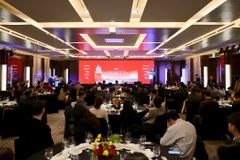
An overview of the International Coffee Conference 2026 (Photo: VNA)

Global Coffee Alliance launched to drive sustainable, inclusive growth

The Global Coffee Alliance is envisioned as a public–private partnership that bridges diplomatic efforts with business operations. Looking ahead to 2040, it aims to develop a global coffee ecosystem that is inclusive, technology-driven, and aligned with net-zero emissions goals.

At Dung Quat oil refinery (Photo: VNA)

Vietnam races to restart idle ethanol plants to meet surging demand

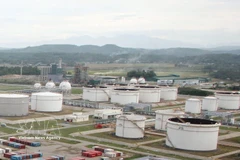
Do Van Tuan, Chairman of the Vietnam Biofuels Association, said that monthly ethanol demand for the E10 blend is projected at 92,000–100,000 cu.m. The country’s six ethanol plants have a combined design capacity of roughly 41,000 cu. m per month, but only three are now running, churning out about 25,000 cu.m, or just 25–27% of demand. Even if every plant hits full tilt, local supply would cover only around 41% of national needs.

At a supermarket in Ho Chi Minh City (Photo: VNA)

Ho Chi Minh City to pilot pork trading on Mercantile Exchange of Vietnam

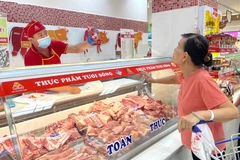
Nguyen Nguyen Phuong, Deputy Director of the municipal Department of Industry and Trade, said listing pork on the MXV will finally give consumers and firms more stable prices, while slapping on stricter food safety rules and making it easier to track where the meat actually comes from. Farmers, meanwhile, stand to gain from more predictable margins and dodge fewer of the supply-demand imbalances that routinely distort prices.

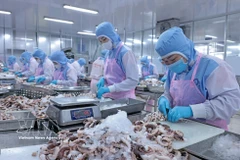
Processing octopus for export to the Japanese market at Huy Nam Company in An Giang (Photo: VNA)

Squid, octopus exports pick up early in 2026

In terms of product structure, squid has emerged as the main growth driver. Export turnover of squid exceeded 64 million USD, rising nearly 30%, while octopus exports brought in more than 47 million USD, up over 16%. The development indicates that demand for squid products is recovering faster in the short term.

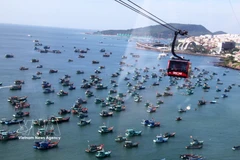
The world’s longest over-sea cable car to Hon Thom Island in the Phu Quoc special zone, An Giang province. (Photo: VNA)

An Giang steps up tourism development ahead of APEC 2027

Tourism in the province has recorded strong growth, affirming its position as one of the region’s leading destinations. Phu Quoc Island continues to attract the majority of international travellers, receiving more than 817,660 visitors, accounting for over 98.5% of total foreign arrivals to the province.

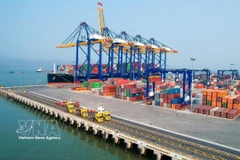
Import-export activities at Lach Huyen international port in Hai Phong (Photo: VNA)

Reducing risks, removing logistics bottlenecks amid Middle East volatility

According to Truong Xuan Trung, Trade Counsellor of Vietnam in the UAE, the Middle East serves not only as a consumption market but also as a key global transhipment hub, meaning instability in the region creates ripple effects across intercontinental transport networks. Shipping route adjustments and airspace restrictions have lengthened transit times, increased costs and disrupted delivery schedules, with some Vietnamese shipments forced to reroute or seek alternative markets.

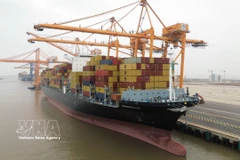
Cargo is handled at container terminals No. 3 and No. 4 of Hai Phong International Gateway Port. (Photo: VNA)

Businesses seek “survival momentum” amid global geopolitical turbulence

This is an urgent move as the challenges of 2026 differ markedly from previous ones, shaped by overlapping external shocks ranging from geopolitical tensions disrupting supply chains to surging logistics and raw material costs, exchange-rate pressures, and increasingly complex tariff barriers in global markets.

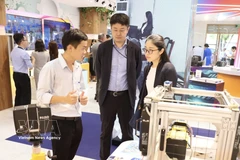
At the 2025 trade connectivity week for mechanical, electrical and digital industries. (Photo: VNA)

Ho Chi Minh City gives boost to supporting industry firms

Supporting industry firms in Ho Chi Minh City are scrambling to embed themselves more deeply into both global and domestic supply chains, backed by a suite of local incentives that are speeding up their tech upgrades and market access.

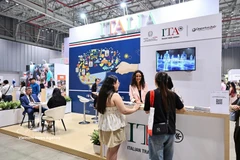
Italy's national pavilion at the ongoing Food & Hospitality Vietnam 2026 exhibition at Ho Chi Minh City's Saigon Exhibition and Convention Centre (SECC) draws visitors for hands-on experiences. (Photo: IVNA)

Italian food firms eye opportunities in Vietnam

Italy’s exports of food and beverages to Vietnam reached 105.1 million EUR in 2025, up 4% year-on-year, positioning the country among the leading EU suppliers to the Vietnamese market.

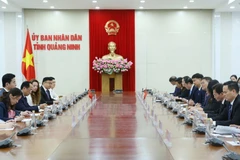
An overview of the working session (Photo: baoquangninh.vn)

Quang Ninh promotes all-round cooperation with Guangxi Zhuang Autonomous Region

Quang Ninh encourages Guangxi enterprises to invest in high-tech marine aquaculture and expand aquatic product exports in China. At the same time, the province aims to develop livestock farming in line with international standards and attract investment in deep-processing plants for agricultural products such as cinnamon, star anise and tea, linked with traceability systems at border gates.

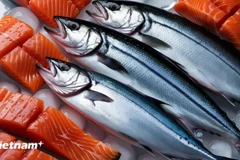
Illustrative image (Source: VNA)

Vietnam becomes fastest growing market for Norwegian salmon in Southeast Asia

The Norwegian Seafood Council (NSC) reported at the “Norwegian seafood industry in Vietnam market 2026” event held in Ho Chi Minh City on March 25 that fresh Norwegian salmon exports to Vietnam jumped 16% in volume in the first two months of 2026 compared with a year earlier, while frozen salmon shipments surged about 37%.

At a petrol station (Photo: VNA)

Energy giants work hard to roll out E10 RON95 sale ahead of schedule

Petrolimex and PVOIL, are in a strong position to accelerate the transition toward cleaner fuels. These companies have been actively preparing infrastructure, upgrading blending systems, and coordinating supply chains to ensure the availability of E10 RON95 across their nationwide retail systems.